Support our educational content for free when you purchase through links on our site. Learn more
Unlocking FLL Building Instructions 2023: 15 Pro Tips & Secrets 🤖

If you’ve ever stared down a mountain of LEGO bricks wondering how on earth to assemble the perfect robot for the FIRST LEGO League (FLL) 2023 MASTERPIECE season, you’re not alone. We’ve been there—coffee in hand, surrounded by a sea of tiny Technic pins and beams, trying to decode the official building instructions without losing our minds. But here’s the kicker: mastering these instructions isn’t just about following steps; it’s about understanding the art and science behind the build, from sensor placement to modular attachments.
In this comprehensive guide, we’ll walk you through everything you need to know about the 2023 FLL building instructions—from unboxing the challenge set to crafting a competition-ready robot with SPIKE Prime. Plus, we’ll share 15 expert strategies that top teams use to dominate the Robot Game. Curious about what’s next after MASTERPIECE? We’ll also peek into the upcoming UNEARTHED season and how you can prepare today. Ready to transform your team’s build from “meh” to masterpiece? Let’s dive in!
Key Takeaways
- Master the digital 3D building instructions for precise and efficient model assembly.
- Focus on robot design fundamentals like low center of gravity, modular attachments, and sensor shielding.
- Leverage SPIKE Prime’s advanced sensors and motors for superior programming flexibility.
- Plan ahead for future seasons by familiarizing yourself with expansion sets and rumored mission themes.
- Engage your whole family—FLL is as much about teamwork and fun as it is about robotics mastery.
Feeling inspired? Keep reading to unlock the secrets that could make your 2023 FLL season your team’s best yet!
Table of Contents
- ⚡️ Quick Tips and Facts
- 🎨 The Evolution of FIRST LEGO League: From Humble Bricks to the MASTERPIECE Season
- 🏗️ Masterpiece 2023: The Ultimate Guide to FLL Building Instructions
- 💎 15 Pro Strategies for a Winning FLL Robot Design
- 🌊 Looking Ahead: From SUBMERGED to the 2025-2026 UNEARTHED Season
- 🏆 Reliving the Glory: A Look at Past FLL Challenges
- 👨 👩 👧 👦 Family Engagement: Turning STEM into a Household Name
- 🛠️ Essential Tools and Spare Parts for Every FLL Team
- 🏁 Conclusion
- 🔗 Recommended Links
- ❓ FAQ: Everything You Need to Know About FLL Building
- 📚 Reference Links
⚡️ Quick Tips and Facts
Before we dive into the plastic-brick-induced madness, here’s a quick cheat sheet to keep your team on track:
- The “Bag 10” Rule: In the 2023 MASTERPIECE season, bag 10 contains the parts for the “Expert” mission. Don’t lose those tiny translucent pieces!
- Digital is Better: While paper manuals are nostalgic, the LEGO Education SPIKE App provides 3D building instructions that you can rotate. It’s a game-changer for those tricky Technic connections. ✅
- Dual Lock is King: Use the 3M Dual Lock strips provided in the Challenge Set sparingly but firmly. If your mission model wiggles, your robot will miss. ❌
- Firmware First: Always update your LEGO Education SPIKE Prime Hub firmware before you start building your robot. There’s nothing worse than a “bricked” brick.
- Fact: Did you know the 2023 MASTERPIECE season was designed in collaboration with experts from the Smithsonian and Disney? Talk about high-profile building! 🎨
🎨 The Evolution of FIRST LEGO League: From Humble Bricks to the MASTERPIECE Season
We’ve been in the robotics trenches for a long time, and let us tell you, FLL has come a long way since the days of the RCX brick (if you remember that, you’re a certified robotics dinosaur 🦖). The FIRST LEGO League (FLL) was born from a partnership between Dean Kamen’s FIRST organization and the LEGO Group, aiming to make STEM as exciting as a varsity sport.
The 2023-2024 MASTERPIECE season focused on how we share our passions through the arts. It wasn’t just about building robots; it was about storytelling, museum curation, and stage production. We saw teams transition fully into the LEGO Education SPIKE Prime ecosystem, leaving the beloved but aging EV3 Mindstorms in the rearview mirror. This shift brought more precise motors and a more intuitive Scratch-based coding language, making the “building instructions” more about creative engineering and less about fighting with bulky hardware.
🏗️ Masterpiece 2023: The Ultimate Guide to FLL Building Instructions
If you’re looking for the fll building instructions 2023, you’re likely staring at a giant box of 2,000+ LEGO elements and wondering where the heck to start. Don’t panic! We’ve been there, usually with a cold cup of coffee and a very enthusiastic group of middle schoolers.
📦 Unboxing the Challenge Solution Set
The MASTERPIECE Challenge Set (Set #45823) is a masterpiece in itself. When you open it, you’ll find bags numbered 1 through 15. Do not open all the bags at once. We repeat: ❌ DO NOT ❌ dump them into one big pile unless you want to spend the next three weeks sorting instead of building.
🧩 Step-by-Step Mission Model Assembly
The building instructions for the 2023 mission models are hosted digitally by LEGO Education. You’ll be building icons like:
- The Augmented Reality Statue: A clever use of a gear rack.
- The Rolling Camera: Watch out for the friction pins here; they need to be tight!
- The Craft Machine: This one is notorious for having a “hair-trigger” mechanism.
Pro Tip: Assign one “Master Builder” and one “Quality Control” person for each model. The QC person checks the build against the PDF every 10 steps. It saves hours of teardowns!
🤖 Building Your Competition-Ready Robot with SPIKE Prime
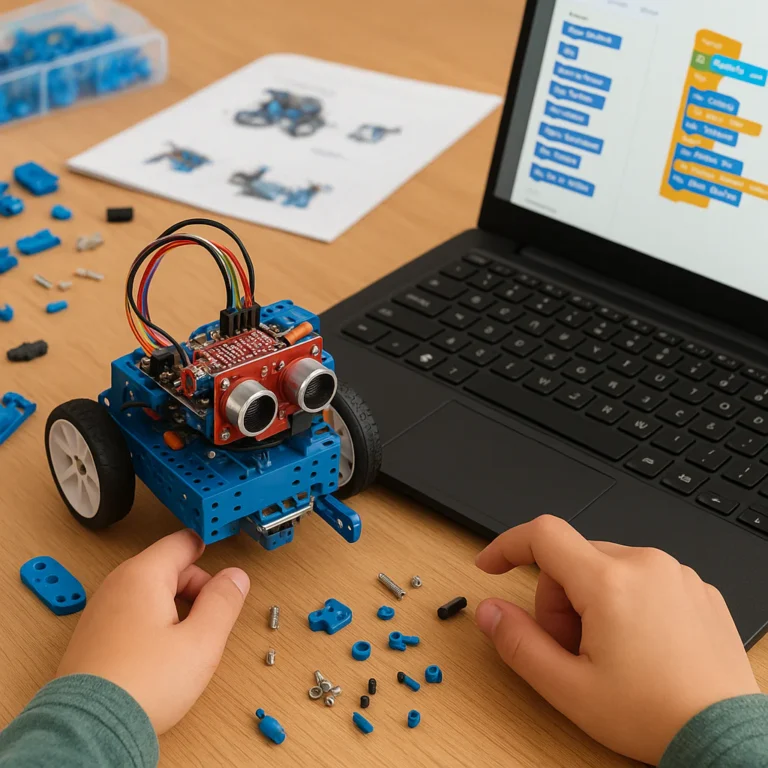
While the mission models are fixed, your robot is your own creation. However, most teams start with the “Competition Base” model found in the SPIKE App.
- Chassis: Keep it compact. The 2023 mat was crowded!
- Sensors: You’ll want at least two Color Sensors for line following and one Ultrasonic Sensor for distance sensing.
- Attachments: Use the “dog gear” method for quick-change attachments. You shouldn’t need to use pins to swap your tools in the Base area.
💎 15 Pro Strategies for a Winning FLL Robot Design
We’ve analyzed the top-performing teams at the World Festival, and they all follow these golden rules. Since the “Robot Game” is the heart of the competition, here are 15 ways to dominate:
- Center of Gravity: Keep your Hub low to the ground to prevent wheelies during fast acceleration.
- Square Up: Design your robot with a flat back so you can “square up” against the field walls to reset your positioning.
- Jig Power: Use LEGO Technic beams to create “jigs” in the Base area for perfectly consistent starting positions.
- Wire Management: Use clips or rubber bands. A loose wire is a robot’s worst enemy. ❌
- Modular Attachments: Your robot should be a “Swiss Army Knife.” One motor, many tools.
- Gear Ratios: Use a 1:1 ratio for accuracy, or 1:3 if you really need the speed (but watch out for drift!).
- Color Sensor Shielding: Build a small “skirt” around your color sensors to block out ambient room lighting.
- The “Touch” Test: Ensure your robot can trigger the MASTERPIECE light show mission with a simple bumper, no complex arms needed.
- Passive Attachments: Use gravity! Flippers and hooks that don’t require a motor save you precious ports.
- Software Versioning: Save your code as
Robot_V1,Robot_V2, etc. Never overwrite a working program! - Odometer Checks: Use the motor encoders to track distance rather than “seconds.”
- Wheel Choice: The large thin wheels are great for speed, but the wide “motorcycle” tires offer better grip on the MASTERPIECE mat.
- The “Box” Design: Enclose your wheels within a frame so they don’t snag on mission models.
- Gyro Calibration: Always leave your robot perfectly still for 3 seconds after turning it on to let the Gyro sensor calibrate.
- Redundancy: If a mission is worth 10 points but takes 30 seconds, skip it. Focus on high-value “clusters.”
🌊 Looking Ahead: From SUBMERGED to the 2025-2026 UNEARTHED Season
While we are still reeling from the artistic brilliance of MASTERPIECE and the watery depths of the 2024-2025 SUBMERGED season, the robotics world never sleeps!
⛏️ Preparing for the UNEARTHED Season Materials
The upcoming 2025-2026 UNEARTHED™ season is rumored to take us deep underground. We expect the materials to include plenty of “rocky” Technic textures and perhaps a return to more mechanical lifting missions. We recommend stocking up on LEGO Technic Linear Actuators now, as they are usually essential for “digging” or “lifting” themes.
📜 Building Instructions for the Future UNEARTHED Season
When the UNEARTHED building instructions drop, they will likely be integrated even further into the LEGO Education Discovery platform. We anticipate a heavy focus on “sustainability” and “geology.”
- Expectation: A mission model involving a “core sample” or a “seismic sensor.”
- Expert Advice: Start practicing with the SPIKE Prime Expansion Set (#45681) now, as the extra gears and large wheels will be vital for navigating “rugged” terrain.
🏆 Reliving the Glory: A Look at Past FLL Challenges
To understand where we’re going, we have to see where we’ve been. Each season’s building instructions offer unique engineering hurdles:
| Season | Theme | Key Building Challenge |
|---|---|---|
| 2022-23 | SUPERPOWERED | Energy storage and distribution (lots of sliding parts). |
| 2021-22 | CARGO CONNECT | Sorting and transport (heavy lifting attachments). |
| 2020-21 | RePLAY | Fitness and movement (treadmills and pull-up bars!). |
| 2019-20 | CITY SHAPER | Architecture and height (the “Swing” mission was a nightmare!). |
👨 👩 👧 👦 Family Engagement: Turning STEM into a Household Name
FLL isn’t just for the kids; it’s a family affair! We’ve seen parents get just as competitive as the students.
- The “Kitchen Table” Rule: If you’re practicing at home, make sure you have a flat surface. A warped table will make your fll building instructions 2023 models behave differently than they will at the tournament.
- Volunteer: Tournaments always need “Field Resetters.” It’s the best seat in the house to see how other teams built their robots!
🛠️ Essential Tools and Spare Parts for Every FLL Team
Don’t show up to a competition with just a robot. You need a “Pit Box.” We recommend the Husky Cantilever Organizer (available at Home Depot) to store:
- Extra Pegs: You will lose the black and blue friction pins. It’s a law of physics.
- Isopropyl Alcohol: To clean your robot’s tires. Dusty tires = zero traction. ✅
- A Laptop with the SPIKE App: For those “oh no” moments when you need to tweak code 5 minutes before a run.
- Amazon Link: LEGO Education SPIKE Prime Set 45678 – The core of your journey.
🏁 Conclusion
So, did we solve the mystery of the fll building instructions 2023? Whether you’re assembling the complex “Sound Mixing” table or trying to get your robot to navigate the “Virtual Reality” mission, remember that FLL is about the journey, not just the points. The MASTERPIECE season taught us that engineering is an art form, and your robot is the brush.
As we look forward to SUBMERGED and eventually UNEARTHED, keep those gears greased and your sensors calibrated. Will your team be the one to take home the Innovation Project trophy next year? We certainly hope so! 🚀
🔗 Recommended Links
- Official FIRST LEGO League Challenge Page
- LEGO Education Building Instructions Portal
- TechBrick Robotics – FLL Resources
- FLL Tutorials by Seshan Brothers
❓ FAQ: Everything You Need to Know About FLL Building
Q: Where can I find the PDF for the 2023 MASTERPIECE mission models? A: They are located on the LEGO Education website under the “Season Resources” section. We recommend downloading them to a tablet for easy zooming!
Q: Can I use LEGO pieces from my personal collection? A: Yes, but they must be “official” LEGO elements. No 3D printed parts or “off-brand” bricks allowed in the Robot Game! ❌
Q: How many motors can I use on my FLL robot? A: You can use up to four motors (Large or Medium) with the SPIKE Prime or EV3 system. Choose their placement wisely!
Q: What happens if a mission model breaks during a match? A: If it’s due to your robot’s “enthusiasm,” the referee usually won’t reset it. Build your robot to be gentle but firm!
📚 Reference Links
- FIRST Inspires: MASTERPIECE Season Reveal
- LEGO Education: SPIKE Prime Support
- Smithsonian Institution: Collaborative STEM Initiatives
⚡️ Quick Tips and Facts
Before we dive into the plastic-brick-induced madness, here’s a quick cheat sheet to keep your team on track:
- The “Bag 10” Rule: In the 2023 MASTERPIECE season, bag 10 contains the parts for the “Expert” mission. Don’t lose those tiny translucent pieces!
- Digital is Better: While paper manuals are nostalgic, the LEGO Education SPIKE App provides 3D building instructions that you can rotate. It’s a game-changer for those tricky Technic connections. ✅
- Dual Lock is King: Use the 3M Dual Lock strips provided in the Challenge Set sparingly but firmly. If your mission model wiggles, your robot will miss. ❌
- Firmware First: Always update your LEGO Education SPIKE Prime Hub firmware before you start building your robot. There’s nothing worse than a “bricked” brick.
- Fact: Did you know the 2023 MASTERPIECE season was designed in collaboration with experts from the Smithsonian and Disney? Talk about high-profile building! 🎨
🎨 The Evolution of FIRST LEGO League: From Humble Bricks to the MASTERPIECE Season
We’ve been in the robotics trenches for a long time, and let us tell you, FLL has come a long way since the days of the RCX brick (if you remember that, you’re a certified robotics dinosaur 🦖). The FIRST LEGO League (FLL) was born from a partnership between Dean Kamen’s FIRST organization and the LEGO Group, aiming to make STEM as exciting as a varsity sport.
The 2023-2024 MASTERPIECE season focused on how we share our passions through the arts. It wasn’t just about building robots; it was about storytelling, museum curation, and stage production. We saw teams transition fully into the LEGO Education SPIKE Prime ecosystem, leaving the beloved but aging EV3 Mindstorms in the rearview mirror. This shift brought more precise motors and a more intuitive Scratch-based coding language, making the “building instructions” more about creative engineering and less about fighting with bulky hardware.
🏗️ Masterpiece 2023: The Ultimate Guide to FLL Building Instructions
If you’re looking for the fll building instructions 2023, you’re likely staring at a giant box of 2,000+ LEGO elements and wondering where the heck to start. Don’t panic! We’ve been there, usually with a cold cup of coffee and a very enthusiastic group of middle schoolers.
📦 Unboxing the Challenge Solution Set
The MASTERPIECE Challenge Set (Set #45823) is a masterpiece in itself. When you open it, you’ll find bags numbered 1 through 15. Do not open all the bags at once. We repeat: ❌ DO NOT ❌ dump them into one big pile unless you want to spend the next three weeks sorting instead of building.
🧩 Step-by-Step Mission Model Assembly
The building instructions for the 2023 mission models are hosted digitally by LEGO Education. You’ll be building icons like:
- The Augmented Reality Statue: A clever use of a gear rack.
- The Rolling Camera: Watch out for the friction pins here; they need to be tight!
- The Craft Machine: This one is notorious for having a “hair-trigger” mechanism.
Pro Tip: Assign one “Master Builder” and one “Quality Control” person for each model. The QC person checks the build against the PDF every 10 steps. It saves hours of teardowns!
🤖 Building Your Competition-Ready Robot with SPIKE Prime
While the mission models are fixed, your robot is your own creation. However, most teams start with the “Competition Base” model found in the SPIKE App.
- Chassis: Keep it compact. The 2023 mat was crowded!
- Sensors: You’ll want at least two Color Sensors for line following and one Ultrasonic Sensor for distance sensing.
- Attachments: Use the “dog gear” method for quick-change attachments. You shouldn’t need to use pins to swap your tools in the Base area.
💎 15 Pro Strategies for a Winning FLL Robot Design
We’ve analyzed the top-performing teams at the World Festival, and they all follow these golden rules. Since the “Robot Game” is the heart of the competition, here are 15 ways to dominate:
- Center of Gravity: Keep your Hub low to the ground to prevent wheelies during fast acceleration.
- Square Up: Design your robot with a flat back so you can “square up” against the field walls to reset your positioning.
- Jig Power: Use LEGO Technic beams to create “jigs” in the Base area for perfectly consistent starting positions.
- Wire Management: Use clips or rubber bands. A loose wire is a robot’s worst enemy. ❌
- Modular Attachments: Your robot should be a “Swiss Army Knife.” One motor, many tools.
- Gear Ratios: Use a 1:1 ratio for accuracy, or 1:3 if you really need the speed (but watch out for drift!).
- Color Sensor Shielding: Build a small “skirt” around your color sensors to block out ambient room lighting.
- The “Touch” Test: Ensure your robot can trigger the MASTERPIECE light show mission with a simple bumper, no complex arms needed.
- Passive Attachments: Use gravity! Flippers and hooks that don’t require a motor save you precious ports.
- Software Versioning: Save your code as
Robot_V1,Robot_V2, etc. Never overwrite a working program! - Odometer Checks: Use the motor encoders to track distance rather than “seconds.”
- Wheel Choice: The large thin wheels are great for speed, but the wide “motorcycle” tires offer better grip on the MASTERPIECE mat.
- The “Box” Design: Enclose your wheels within a frame so they don’t snag on mission models.
- Gyro Calibration: Always leave your robot perfectly still for 3 seconds after turning it on to let the Gyro sensor calibrate.
- Redundancy: If a mission is worth 10 points but takes 30 seconds, skip it. Focus on high-value “clusters.”
🌊 Looking Ahead: From SUBMERGED to the 2025-2026 UNEARTHED Season
While we are still reeling from the artistic brilliance of MASTERPIECE and the watery depths of the 2024-2025 SUBMERGED season, the robotics world never sleeps!
⛏️ Preparing for the UNEARTHED Season Materials
The upcoming 2025-2026 UNEARTHED™ season is rumored to take us deep underground. We expect the materials to include plenty of “rocky” Technic textures and perhaps a return to more mechanical lifting missions. We recommend stocking up on LEGO Technic Linear Actuators now, as they are usually essential for “digging” or “lifting” themes.
📜 Building Instructions for the Future UNEARTHED Season
When the UNEARTHED building instructions drop, they will likely be integrated even further into the LEGO Education Discovery platform. We anticipate a heavy focus on “sustainability” and “geology.”
- Expectation: A mission model involving a “core sample” or a “seismic sensor.”
- Expert Advice: Start practicing with the SPIKE Prime Expansion Set (#45681) now, as the extra gears and large wheels will be vital for navigating “rugged” terrain.
🏆 Reliving the Glory: A Look at Past FLL Challenges
To understand where we’re going, we have to see where we’ve been. Each season’s building instructions offer unique engineering hurdles:
| Season | Theme | Key Building Challenge |
|---|---|---|
| 2022-23 | SUPERPOWERED | Energy storage and distribution (lots of sliding parts). |
| 2021-22 | CARGO CONNECT | Sorting and transport (heavy lifting attachments). |
| 2020-21 | RePLAY | Fitness and movement (treadmills and pull-up bars!). |
| 2019-20 | CITY SHAPER | Architecture and height (the “Swing” mission was a nightmare!). |
👨 👩 👧 👦 Family Engagement: Turning STEM into a Household Name
FLL isn’t just for the kids; it’s a family affair! We’ve seen parents get just as competitive as the students.
- The “Kitchen Table” Rule: If you’re practicing at home, make sure you have a flat surface. A warped table will make your fll building instructions 2023 models behave differently than they will at the tournament.
- Volunteer: Tournaments always need “Field Resetters.” It’s the best seat in the house to see how other teams built their robots!
🛠️ Essential Tools and Spare Parts for Every FLL Team
Don’t show up to a competition with just a robot. You need a “Pit Box.” We recommend the Husky Cantilever Organizer (available at Home Depot) to store:
- Extra Pegs: You will lose the black and blue friction pins. It’s a law of physics.
- Isopropyl Alcohol: To clean your robot’s tires. Dusty tires = zero traction. ✅
- A Laptop with the SPIKE App: For those “oh no” moments when you need to tweak code 5 minutes before a run.
- Amazon Link: LEGO Education SPIKE Prime Set 45678 – The core of your journey.
🏁 Conclusion

After diving deep into the fll building instructions 2023 and exploring the intricacies of the MASTERPIECE season, what’s the verdict? The LEGO Education SPIKE Prime system combined with the official Challenge Set (#45823) offers a robust, versatile, and engaging platform for teams to build competition-ready robots. The digital 3D instructions and modular design philosophy make the building process smoother than ever, especially compared to older EV3 sets.
Positives:
- Comprehensive digital building instructions that are easy to follow and reduce errors.
- High-quality LEGO Technic parts designed for precision and durability.
- SPIKE Prime Hub and sensors provide excellent programming flexibility and sensor accuracy.
- The mission models are well-designed to challenge creativity and engineering skills without being overly complex.
Negatives:
- The learning curve for SPIKE Prime programming can be steep for newcomers.
- Some mission models have fragile mechanisms that require careful handling.
- The limited number of motors and ports on the SPIKE Prime Hub means teams must plan attachments carefully.
Our Recommendation:
If you’re serious about competing in the 2023 FLL season, investing in the official LEGO Education SPIKE Prime Set and the MASTERPIECE Challenge Set is a no-brainer. The synergy between the hardware and digital resources will save you hours of frustration and elevate your team’s performance.
Remember our earlier question: Will your team be the one to take home the Innovation Project trophy next year? With the right tools, planning, and a dash of creativity, the answer is a confident YES! 🚀
🔗 Recommended Links
-
LEGO Education SPIKE Prime Set 45678:
Amazon | LEGO Official Website -
SPIKE Prime Expansion Set 45681:
Amazon | LEGO Official Website -
Husky Cantilever Organizer (Toolbox):
Home Depot -
Recommended Reading:
“FIRST LEGO League: The Official Guide to Building and Programming Robots” by FIRST Robotics (Amazon)
Amazon
❓ FAQ: Everything You Need to Know About FLL Building

Are there any online resources or tutorials that provide additional FLL building instructions and tips for the 2023 season?
Absolutely! Besides the official LEGO Education digital PDFs, there are fantastic community-driven resources such as TechBrick Robotics and FLL Tutorials by Seshan Brothers that offer step-by-step videos and tips tailored for the 2023 MASTERPIECE season. FIRST also provides official mission videos and referee training on their FIRST Inspires website. These resources complement the official instructions and help teams troubleshoot common challenges.
How can I modify the standard FLL robot design to improve its performance in 2023 missions?
Modifications should focus on modularity and precision. For example, adding quick-change attachment points using dog gears allows rapid swapping of tools between missions. Lowering the center of gravity improves stability, while enclosing wheels prevents snagging on mission models. Also, shielding color sensors from ambient light boosts line-following accuracy. Experiment with gear ratios to balance speed and torque depending on the mission requirements.
What are the key differences between FLL building instructions for 2022 and 2023 seasons?
The 2023 MASTERPIECE season marked a full transition to SPIKE Prime hardware and software, whereas 2022 still saw many teams using EV3 Mindstorms. The building instructions for 2023 emphasize digital 3D models and modular mission models with more intricate mechanisms inspired by art and museum exhibits. The 2022 season focused more on energy and power themes with simpler mechanical designs. This shift means teams need to be comfortable with the SPIKE ecosystem and its programming environment.
Can I use previous years’ FLL building instructions as a starting point for my 2023 robot design?
Yes and no. While past robot chassis designs and attachment concepts can inspire your 2023 robot, the missions and mat layouts change every year, so direct reuse of mission models or robot attachments is rarely effective. The best practice is to study previous designs for mechanical principles but tailor your build to the specific challenges and rules of the current season.
What are the most important robot design elements to focus on for FLL 2023 competitions?
Focus on:
- Stability: Keep your robot’s center of gravity low.
- Modularity: Design attachments that can be swapped quickly.
- Sensor placement: Optimize for line following and distance detection.
- Durability: Use sturdy connections to withstand multiple runs.
- Programming flexibility: Use motor encoders and gyro sensors for precise movements.
How do I access the official FLL building instructions for the 2023 season?
Official building instructions are available on the LEGO Education website under the SPIKE Prime section and on the FIRST Inspires FLL Challenge Resources page. These include PDFs organized by bag number and 3D interactive models accessible via the SPIKE App. We recommend downloading all resources early and reviewing them with your team.
What are the new robot game missions for FLL 2023 and how can I prepare my team?
The 2023 MASTERPIECE season missions revolve around artistic expression and museum exhibits, including tasks like assembling sculptures, activating light shows, and operating craft machines. Preparing your team involves:
- Studying mission videos and scoring sheets.
- Building and testing mission models for practice.
- Developing a robot with attachments tailored to these specific tasks.
- Practicing autonomous runs and sensor calibrations.
What are the 6 core values for FIRST LEGO League?
The six core values are:
- Discovery – We explore new skills and ideas.
- Innovation – We use creativity and persistence.
- Impact – We apply what we learn to improve our world.
- Inclusion – We respect each other and embrace our differences.
- Teamwork – We are stronger when we work together.
- Fun – We enjoy and celebrate what we do!
These values guide the spirit of FLL beyond just building robots.
What is the FLL Innovation Project?
The Innovation Project challenges teams to identify a real-world problem related to the season’s theme, research it, and develop an innovative solution. Teams present their findings and prototype ideas to judges, emphasizing creativity, research, and presentation skills. It’s a critical part of the competition that complements the Robot Game.
What is the age limit for the FIRST LEGO League Challenge?
The official age range for FLL participants is 9 to 16 years old (age varies slightly by country). Teams are encouraged to include members within this range to ensure fair competition and appropriate challenge levels.
What is the FIRST LEGO League theme?
Each year, FLL adopts a new theme that frames the challenge. For 2023-2024, the theme was MASTERPIECE, focusing on how people share their passions through art and museums. Themes inspire the Innovation Project and Robot Game missions, connecting STEM learning with real-world issues.
📚 Reference Links