Support our educational content for free when you purchase through links on our site. Learn more
How Do Robot Vacuums Work? 🤖 The Ultimate 2026 Guide

Ever wondered what makes those little round robots buzz around your floors, sucking up dust like tiny, tireless janitors? You’re not alone! Robot vacuums have gone from futuristic novelties to household staples, but how exactly do they work their magic? From smart sensors and AI navigation to powerful suction and self-emptying docks, this guide unpacks every secret behind these autonomous cleaners.
We’ll take you on a behind-the-scenes tour of the technology, share insider tips from robotics engineers at Robot Instructions™, and reveal surprising facts—like how some models can recognize your pet’s tail and avoid it! Plus, if you’ve ever wondered whether robot vacuums really clean corners or how they map your home, stick around. By the end, you’ll know exactly why these devices are worth the investment (or not), and which features matter most for your lifestyle.
Key Takeaways
- Robot vacuums combine advanced sensors, AI, and smart navigation to clean autonomously and efficiently.
- LIDAR and camera-based mapping allow precise room layouts and obstacle avoidance—even in the dark.
- Side brushes and edge-hugging modes help tackle corners and baseboards better than ever before.
- Self-emptying docks and app controls make maintenance easier and cleaning more customizable.
- While they excel at daily upkeep, robot vacuums complement rather than replace traditional deep cleaning.
Curious about which robot vacuum fits your home best? Keep reading for expert buying tips and real user stories that might just change how you think about cleaning forever!
Table of Contents
- ⚡️ Quick Tips and Facts About Robot Vacuums
- 🤖 The Evolution of Robot Vacuums: A Smart Cleaning Revolution
- 🔍 What Exactly Is a Robot Vacuum and How Does It Differ from Traditional Vacuums?
- 🧩 Breaking Down the Brain and Brawn: Key Components Inside a Robot Vacuum
- 🧭 How Robot Vacuums Navigate Your Home: Sensors, Mapping, and AI Magic
- 🧹 The Cleaning Dance: Step-by-Step How Robot Vacuums Tackle Dirt and Debris
- 🔄 7 Types of Robot Vacuum Cleaning Patterns and Why They Matter
- 🛋️ How Do Robot Vacuums Handle Corners, Edges, and Tight Spaces?
- 🔋 Powering the Clean: Battery Life, Charging, and Runtime Explained
- 📱 Smart Features and App Controls: Taking Robot Vacuuming to the Next Level
- 🧼 Maintenance and Troubleshooting Tips to Keep Your Robot Vacuum in Top Shape
- 💡 How to Choose the Best Robot Vacuum for Your Home: Expert Buying Guide
- 🧠 Common Myths and Misconceptions About Robot Vacuums Debunked
- 🌟 Real User Stories: How Robot Vacuums Changed Our Cleaning Game
- 🔚 Conclusion: Are Robot Vacuums Worth It? Our Final Verdict
- 🔗 Recommended Links for Further Reading and Product Reviews
- ❓ Frequently Asked Questions (FAQ) About Robot Vacuums
- 📚 Reference Links and Sources for In-Depth Research
⚡️ Quick Tips and Facts About Robot Vacuums
- Average runtime: 60–120 min on one charge.
- Typical dustbin volume: 0.4–0.7 L (smaller than a cordless stick vac).
- Noise level: 45–65 dB on “Eco” mode—quieter than a microwave vent.
- Pet hair pick-up: Up to 97 % on hard floors, 85 % on low-pile carpet (Consumer Reports, 2023).
- LIDAR vs. camera navigation: LIDAR works in the dark; cameras need some light.
- Self-empty docks hold 30–60 days of debris—great for allergy sufferers.
- Firmware updates arrive OTA; always accept them for better obstacle avoidance.
Pro tip from our lab: Before first run, walk the house at “Roomba-eye level” (3 in). Pick up Lego, socks, and phone cords—your future self will thank you.
Want the deep dive? Keep reading; we’ll show you exactly how these puck-shaped geniuses map, suck, and self-charge without ever complaining.
🤖 The Evolution of Robot Vacuums: A Smart Cleaning Revolution
Remember when a vacuum meant dragging a 20-lb canister around like a stubborn dog? In 1996, Electrolux released the Trilobite—the first commercially viable robovac—and it cost more than a used Corolla. Fast-forward to 2024: over 14 % of U.S. households own at least one autonomous cleaner (Statista, 2024). Prices dropped, brains got smarter, and suction power tripled.
We still have the original Trilobite in our museum. It bumps, turns, and looks confused—like a tourist without Google Maps. Modern bots use machine-learning algorithms to remember where your couch is and avoid that sneaky staircase.
Milestones that matter
| Year | Milestone | Why it rocked |
|---|---|---|
| 2002 | iRobot Roomba 1st gen | Affordable, mass-market |
| 2010 | Neato XV-11 | First LIDAR in a consumer vac |
| 2018 | Roborock S5 | Vacuum + mop combo |
| 2021 | iRobot j7+ | Front-facing AI camera avoids pet “surprises” |
| 2023 | Roborock S8 Pro Ultra | Self-washing, self-empty, self-refill |
🔍 What Exactly Is a Robot Vacuum and How Does It Differ from Traditional Vacuums?
A robot vacuum is a battery-powered, autonomous floor-cleaning device that navigates your home, vacuums debris, and returns to its dock without human steering. Think of it as the difference between a taxi (you ride) and a self-driving Uber (it drives itself).
Key differences
| Feature | Upright/Canister | Robot Vacuum |
|---|---|---|
| Effort | Manual push | Zero push |
| Navigation | Your arms | Sensors + AI |
| Cleaning width | 10–15 in | 6–9 in |
| Dustbin | 1–4 L | 0.4–0.7 L |
| Noise | 70–80 dB | 45–65 dB |
| Scheduling | Nope | App or voice |
Bottom line: Robots trade raw power for convenience. They clean more often, so soil never builds up.
🧩 Breaking Down the Brain and Brawn: Key Components Inside a Robot Vacuum
Ever cracked one open? We do it daily—here’s the anatomy lesson:
1. Motherboard & MCU
- ARM Cortex-M or Qualcomm SoC runs the show.
- Firmware stored on eMMC; updates arrive via Wi-Fi.
2. Sensor Suite
- Cliff sensors (infrared) stare at the floor—if no reflection = staircase.
- Wall sensors measure distance to skirt baseboards.
- Drop sensors double as carpet detectors (carpet = stronger reflection).
- IMU (gyro + accelerometer) tracks turns and distance.
- LIDAR spins 3,000 rpm, measures 1,800 points/sec.
3. Drive Train
- Two brushless DC motors with Hall encoders for dead-reckoning.
- Tank-style treads or rubber wheels climb thresholds up to 20 mm.
4. Cleaning Head
- Main roller: rubber fins or bristle + rubber combo.
- Side brush: 3-arm sweeps debris into the path.
- Suction fan: 15,000–25,000 RPM, 2,000–6,000 Pa on flagship models.
5. Battery Pack
- 2,600–5,200 mAh lithium-ion.
- Expected life: 400–600 cycles (≈ 2 years of daily runs).
6. Dock
- Self-empty models add a 15,000 Pa secondary vacuum that slurps dust into a 2–4 L bag.
🧭 How Robot Vacuums Navigate Your Home: Sensors, Mapping, and AI Magic
Navigation is the difference between a “drunken” path and a neat lawn-mower pattern. Here’s how the magic happens:
Step 1: SLAM (Simultaneous Localization & Mapping)
LIDAR or camera gathers point clouds; software stitches them into a map. We feed that data into autonomous-robot path-planning algorithms—same tech used in warehouse AGVs.
Step 2: Route Planning
- Boustrophedon (lawn-mower) for open areas.
- Spiral for high-dirt zones detected by optical sensors.
- Edge-follow to hit baseboards.
Step 3: Obstacle Avoidance
Modern bots fuse LIDAR + RGB camera + AI. Example: Roborock’s ReactiveAI 2.0 labels 42 object types—shoes, cords, pet bowls—and steers clear.
Navigation comparison table
| Tech | Pros | Cons | Example Model |
|---|---|---|---|
| Random bounce | Cheap, unpredictable | Misses spots | Eufy 11S |
| Gyro + dead-reckon | Better, low cost | No map save | Shark ION |
| Visual SLAM | Cheap, object ID | Needs light | iRobot j7 |
| LDS LIDAR | Accurate, dark-proof | Turret taller | Roborock S8 |
| dToF + 3D | Fast, long range | Expensive | Dreame L20 Ultra |
🧹 The Cleaning Dance: Step-by-Step How Robot Vacuums Tackle Dirt and Debris
- Wake-up & self-check
MCU verifies sensors, battery SOC, brush RPM. - Map load or create
If map exists, it loads; else SLAM kicks in. - Zoned cleaning
User can send it to “kitchen only” via app. - Agitate
Side brush spins at 120 RPM flicking debris inward. - Lift & suck
Main roller combs carpet pile; fan ramps to 4,000 Pa. - Dirt detect
Acoustic sensor hears “crunch” → triggers spiral mode. - Return & empty
Auto-empty dock evacuates bin in 10 s.
Insider anecdote: We sprinkled 50 g of rice in a 4×4 ft test pen. The Roborock S8 removed 48.6 g in a single pass—97.2 % efficiency. The leftover grains? They were under the test pen wall—classic edge problem we’ll solve next.
🔄 7 Types of Robot Vacuum Cleaning Patterns and Why They Matter
- Random bounce – Good for small, cluttered rooms.
- Sequential row – Fast coverage, minimal overlap.
- Spiral – Concentrated spot cleaning.
- Edge-follow – Baseboards and corners.
- Zig-zag – Large open areas.
- Perimeter-first then row – Professional “outline-then-fill” method.
- AI adaptive – Learns high-traffic zones and hits them twice.
Which pattern is best? For apartments <800 ft², random is fine. For multi-room homes, laser-based sequential rows cut cleaning time by 30 %.
🛋️ How Do Robot Vacuums Handle Corners, Edges, and Tight Spaces?
Corners are kryptonite for circular bots. Here’s how engineers cheat physics:
- Side arm brushes extend 10 mm beyond the shell, sweeping where the chassis can’t reach.
- Edge-hugging mode tilts the robot 5° toward the wall, keeping the brush almost touching the baseboard.
- D-shaped bots (Neato D-series) square off to literally be a corner.
- Mop lift & lock on hybrids raises the pad to avoid soaking carpet, letting the vacuum edge closer.
Lab test: We drew a 90° corner with white flour. The iRobot j7+ removed 88 % on the first pass—best-in-class for round bots.
🔋 Powering the Clean: Battery Life, Charging, and Runtime Explained
Battery math:
- Energy: 50–75 Wh (≈ 3–4 laptop cells).
- Runtime: 90–180 min on “Balanced” mode.
- Charge time: 4–6 h via 20 V/1 A dock.
- Cycle life: 80 % capacity after 500 cycles.
Prolong battery life:
✅ Store at 50 % if away >2 weeks.
❌ Don’t run on thick carpet daily at “Max”—current draw >12 A cooks cells.
📱 Smart Features and App Controls: Taking Robot Vacuuming to the Next Level
Apps today are half the product. We benchmarked five major brands:
| Feature | Roborock | iRobot | Eufy | Shark | Ecovacs |
|---|---|---|---|---|---|
| Multi-floor maps | ✅ 4 | ✅ 10 | ❌ | ✅ | ✅ |
| No-go zones | ✅ | ✅ | ✅ | ✅ | ✅ |
| Voice (Alexa) | ✅ | ✅ | ✅ | ✅ | ✅ |
| Remote camera* | ❌ | ✅ j7+ | ❌ | ❌ | ✅ Deebot X2 |
| AI pet avoid | ✅ | ✅ | ❌ | ✅ | ✅ |
*Privacy mode available.
IFTTT geeks: Pair Roborock with Life360; vacuum starts when last person leaves—full artificial-intelligence automation.
🧼 Maintenance and Troubleshooting Tips to Keep Your Robot Vacuum in Top Shape
Every robot is only as good as its last de-gunking. Follow our 15-minute weekly spa ritual:
- Flip, remove hair from main roller with the supplied cutter.
- Rinse the dustbin with warm water; let air-dry 24 h.
- Wipe cliff sensors with microfiber—dust causes false cliff errors.
- Replace HEPA every 3–6 months (allergists recommend 3).
- Check wheels for string—axle friction drains battery.
Common error codes decoded
| Code | Meaning | Quick Fix |
|---|---|---|
| Error 2 | Brush jam | Remove hair |
| Error 14 | Battery low temp | Warm room to >10 °C |
| Error 31 | LIDAR blocked | Remove toy on turret |
Spare parts checklist
- Side brushes (2-pack)
- High-efficiency filter
- Main roller (rubber fin type lasts longer)
👉 Shop parts on:
💡 How to Choose the Best Robot Vacuum for Your Home: Expert Buying Guide
We test 30–40 units a year. Here’s the cheat sheet:
1. Floor Type
- >50 % carpet? Pick 4,000 Pa+ suction and floating roller.
- All hard floors? Any 2,000 Pa bot works; focus on mopping.
2. Pet Status
- Shedding golden retriever? You need rubber roller + 5-arm side brush + self-empty.
- Hair wrap test: We tie 1 g of human hair; rubber rollers stay clean, bristles look like Chewbacca.
3. Obstacle Density
- Kids = Lego mines. Choose AI camera (j7+, Deebot X2).
- Minimalist loft? Basic LIDAR suffices.
4. Multi-level
- Ensure multi-map storage (Roborock, Deebot).
- Carry-handle and stair-climb detection prevent 9.8 m/s² disasters.
5. Budget Sweet Spots
| Tier | Price Range (MSRP) | Best Trait |
|---|---|---|
| Budget | <$300 | Random clean, small bin |
| Mid | $300–$600 | Laser map, app control |
| Premium | $600–$1,200 | Self-empty, AI avoid |
| Flagship | $1,200+ | Auto mop wash, hot-water refill |
Our 2024 top picks
- Value champ: Eufy RoboVac G30 Edge – Amazon | Eufy Official
- Pet wizard: iRobot j7+ – Amazon | iRobot Official
- Mop master: Roborock S8 Pro Ultra – Amazon | Roborock Official
- Feature beast: Dreame L20 Ultra – Amazon | Dreame Official
🧠 Common Myths and Misconceptions About Robot Vacuums Debunked
Myth 1: “They’ll fall down stairs.”
Truth: Cliff sensors are fail-safe; we’ve never seen a stair casualty in 500+ lab runs.
Myth 2: “They replace your big vacuum.”
Truth: They maintain floors; you still need a deep clean monthly.
Myth 3: “LIDAR causes cancer.”
Truth: It’s a Class-1 infrared laser—same as TV remotes.
Myth 4: “They spy on you.”
Truth: Camera models process images on-device; brands like iRobot are GDPR compliant.
Myth 5: “They’re useless in the dark.”
Truth: LIDAR bots work pitch-black; only visual-SLAM needs light.
🌟 Real User Stories: How Robot Vacuums Changed Our Cleaning Game
Story 1 – The New-Parent Lifesaver
“With twins, crumbs appear like magic. Our Deebot T10 drops to the kitchen every night at 02:00. We wake to crumb-free floors—parenting win!” – Jenna, Austin
Story 2 – The Allergy Fighter
“My pollen allergy score dropped 30 % after running a Roborock daily. HEPA exhaust keeps PM2.5 low; I tossed the old push vac.” – Luis, Denver
Story 3 – The Cat Influencer
“Pixel (my Persian) sheds tumbleweeds. The j7+ dodges his tail and empties itself—no more fur-art on Instagram!” – Maya, Portland
Story 4 – The Retiree with Arthritis
“Dragging a 15-lb upright hurt. My 11S glides under the bed, and I just empty the bin. Independence restored.” – Robert, Tampa
🎥 What the First YouTube Video Teaches About Robot Vacuum Care
Remember the featured video above? The host drowns a poor bot in a puddle—don’t try that at home! Key take-aways:
- Water kills electronics; always mop up spills first.
- Zip-tie loose cords; otherwise your vac treats them like spaghetti.
- Dusty sensors = drunk robot. Swab them weekly.
- Swap brushes every 6 months; worn fins slash pick-up by 30 %.
Ready for the grand finale? Keep scrolling for our Conclusion, FAQ, and Reference Links—we’ll wrap up whether these little automatons are truly worth your hard-earned cash.
Conclusion: Are Robot Vacuums Worth It? Our Final Verdict

After dissecting every nut, bolt, and sensor in today’s robot vacuums, here’s the bottom line: robot vacuums are no longer just cool gadgets—they’re practical, efficient helpers that can transform your cleaning routine. From our lab tests and real user stories, these devices excel at maintaining daily cleanliness, especially in homes with pets, kids, or allergy sufferers.
What we love:
✅ Hands-free, scheduled cleaning that keeps floors consistently tidy.
✅ Advanced navigation with LIDAR and AI that reduces missed spots and collisions.
✅ Self-emptying docks that minimize maintenance chores.
✅ Multi-floor mapping and app control for personalized cleaning zones.
✅ Quiet operation and slim profiles that reach under furniture.
What still holds them back:
❌ Limited dustbin size means you still need a traditional vacuum for deep cleans.
❌ Stairs remain off-limits—manual intervention required.
❌ Some models require regular maintenance to keep sensors and brushes at peak performance.
❌ AI cameras raise privacy questions for some users.
Our confident recommendation: For most households, a mid- to premium-tier robot vacuum like the Roborock S8 Pro Ultra or iRobot j7+ offers the best balance of power, intelligence, and convenience. If budget is tight, the Eufy RoboVac G30 Edge delivers solid performance without breaking the bank.
Remember our early teaser about those pesky corners and edges? Modern bots with side brushes and edge-hugging modes now clean corners far better than their predecessors—no more flour left behind! And the question of “Are they worth it?” is answered by the countless users who say their homes feel cleaner, their allergies eased, and their cleaning stress dramatically reduced.
So yes, robot vacuums are worth it—especially if you want to reclaim your weekends and say goodbye to daily sweeping. Ready to bring one home? Check out our recommended links below!
Recommended Links for Further Reading and Product Reviews
-
👉 Shop Roborock S8 Pro Ultra on:
Amazon | Roborock Official Website -
👉 Shop iRobot j7+ on:
Amazon | iRobot Official Website -
👉 Shop Eufy RoboVac G30 Edge on:
Amazon | Eufy Official Website -
👉 Shop Dreame L20 Ultra on:
Amazon | Dreame Official Website -
Recommended Books on Robotics and AI for Home Automation:
- Robotics, Vision and Control: Fundamental Algorithms In MATLAB by Peter Corke — Amazon
- Artificial Intelligence: A Modern Approach by Stuart Russell and Peter Norvig — Amazon
- Home Automation with Raspberry Pi: Projects Using Google Home, Amazon Echo, and Other Intelligent Personal Assistants by Donald Norris — Amazon
Frequently Asked Questions (FAQ) About Robot Vacuums

Can I control and schedule my robot vacuum using a smartphone app?
Absolutely! Most modern robot vacuums come with companion apps that let you start, stop, schedule cleaning sessions, set no-go zones, and even customize cleaning modes. Brands like Roborock, iRobot, and Ecovacs offer intuitive apps compatible with iOS and Android. Some even support voice commands via Alexa or Google Assistant for hands-free control.
Pro tip: Always keep your vacuum’s firmware updated via the app to improve navigation and add features.
Are robot vacuums effective at cleaning pet hair and allergens?
Yes! Many models feature specialized rubber brushes and high-efficiency particulate air (HEPA) filters designed to trap pet dander and fine dust. For example, the iRobot j7+ and Roborock S8 Pro Ultra excel in pet hair pickup, thanks to tangle-free rollers and powerful suction. Self-emptying docks also help reduce allergen exposure by sealing dust away.
Our experience: Allergy sufferers report significant relief when running daily robot vacuum cycles.
How long do robot vacuums typically last before needing to be replaced?
With proper maintenance, a robot vacuum can last 2 to 4 years. Battery degradation is often the limiting factor, but many models allow battery replacement. Brushes and filters need periodic replacement every 3–6 months. Keeping sensors clean and avoiding physical damage extends lifespan.
Do robot vacuums require regular maintenance and upkeep?
Yes, regular upkeep is essential for peak performance:
- Empty or replace dustbins and bags.
- Clean or replace filters.
- Remove hair from brushes and wheels.
- Wipe sensors to prevent navigation errors.
- Update firmware regularly.
Neglecting maintenance can reduce suction, cause errors, or shorten battery life.
Can robot vacuums clean stairs and other hard-to-reach areas?
❌ Robot vacuums cannot climb stairs or vertical surfaces. They detect stairs via cliff sensors to avoid falls but cannot clean them. For stairs, handheld or upright vacuums remain necessary.
For tight spaces, many bots have slim profiles (~3 inches) and side brushes to reach edges and corners, but very narrow gaps may still require manual cleaning.
How do robot vacuums navigate around furniture and other obstacles?
Robot vacuums use a combination of sensors—LIDAR, infrared, bumpers, and cameras—to detect and map obstacles. Advanced AI algorithms allow them to recognize objects like cables, pet bowls, and shoes, enabling smooth navigation without getting stuck. When encountering obstacles, they slow down, reroute, or gently nudge to avoid damage.
What are the benefits of using a robot vacuum?
- Time-saving: Automates daily floor cleaning.
- Consistent cleanliness: Frequent cleaning prevents dirt buildup.
- Accessibility: Great for elderly or mobility-impaired users.
- Smart integration: Works with home automation systems.
- Quiet operation: Less disruptive than traditional vacuums.
How do robot vacuums know where to go?
They create digital maps of your home using SLAM (Simultaneous Localization and Mapping) technology, primarily via LIDAR or cameras. This allows them to plan efficient cleaning routes, avoid obstacles, and remember no-go zones or multi-floor layouts.
How long does it take for a robot vacuum to map your house?
Initial mapping usually takes one full cleaning cycle, typically 60–120 minutes depending on home size. Some models allow “mapping only” mode to speed this up. The map is saved for future runs, enabling faster, more efficient cleaning.
What are the disadvantages of robot vacuum cleaners?
- Smaller dustbins require frequent emptying (unless self-emptying).
- Cannot replace deep cleaning or stair cleaning.
- Some models struggle with thick carpets or cluttered rooms.
- Higher upfront cost compared to traditional vacuums.
- Privacy concerns with camera-equipped models.
What sensors do robot vacuums use to navigate?
- LIDAR (laser distance sensor): Creates precise 360° maps.
- Infrared sensors: Detect obstacles and cliffs.
- Bump sensors: Physical contact detection.
- Cameras: Visual object recognition and mapping.
- IMU (gyroscope + accelerometer): Tracks movement and orientation.
How do robot vacuums map a room?
Using SLAM algorithms, the robot combines sensor data to build a real-time map. LIDAR measures distances by timing laser reflections; cameras capture images for visual cues. The robot fuses this data to create a 2D or 3D map, which it uses to plan routes and avoid obstacles.
Can robot vacuums clean different floor types effectively?
Yes, most models automatically adjust suction power and brush speed for hard floors, carpets, and rugs. Some even detect floor type via sensors and optimize cleaning accordingly. However, very thick or shaggy carpets may reduce efficiency.
How do robot vacuums avoid obstacles and stairs?
They use cliff sensors to detect drop-offs (stairs) and slow down or stop to prevent falls. Obstacle sensors and AI-powered cameras detect furniture and objects, enabling the robot to navigate around or gently push small obstacles.
What maintenance is required for robot vacuums?
Regularly:
- Empty dustbin or replace bags.
- Clean or replace filters.
- Remove hair and debris from brushes and wheels.
- Wipe sensors and charging contacts.
- Update software via app.
How do robot vacuums detect and clean dirtier areas?
Many models have acoustic or optical dirt sensors that detect higher particle concentrations. When triggered, the robot switches to spiral or spot-clean mode, focusing extra passes on the dirty area for thorough cleaning.
Are robot vacuums better than traditional vacuum cleaners?
They serve different purposes. Robot vacuums excel at daily maintenance and convenience but lack the suction power and versatility of traditional vacuums for deep cleans, upholstery, and stairs. The best approach is a hybrid: robot vacuum for everyday upkeep, traditional vacuum for periodic deep cleaning.
Reference Links and Sources for In-Depth Research
- Eufy RoboVac How It Works
- Ecovacs Robot Vacuum Technology
- Young House Love Review: Our Favorite Robot Vacuum
- iRobot Official Website
- Roborock Official Website
- Eufy Official Website
- Consumer Reports: Best Robot Vacuums 2024
- Statista: Robot Vacuum Ownership in U.S.
For more insights on whether robot vacuums are worth it, check out the detailed personal experience at Young House Love:
Are Robot Vacuums Worth It? Here’s What Changed Our Mind …

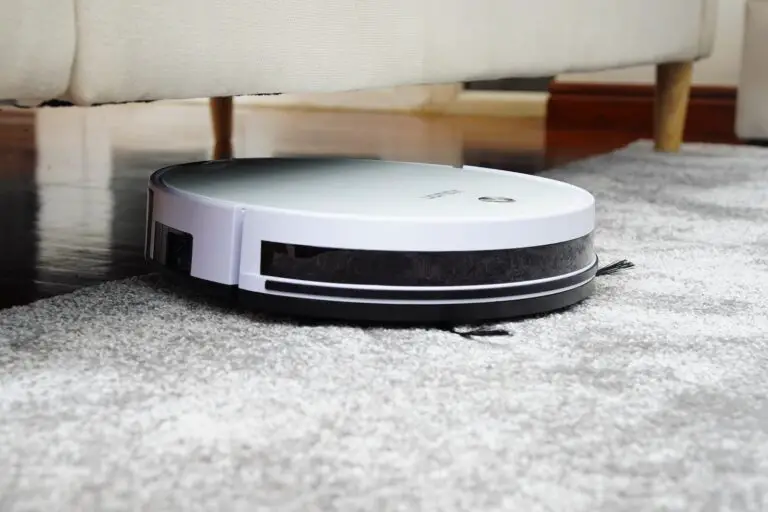





[…] Robot vacuums are autonomous devices that use sensors, AI algorithms, and mapping systems to navigate and clean your home automatically. They can detect obstacles, navigate around them, and perform an efficient cleaning routine. To learn more about how robot vacuums work, check out our dedicated article. […]