Support our educational content for free when you purchase through links on our site. Learn more
Is There a Robot That Mows Lawns? 🤖 Your 2026 Guide to Hands-Free Yard Care

Imagine sipping your morning coffee while a tiny robot quietly navigates your yard, trimming your grass to perfection without you lifting a finger. Sounds like science fiction? Well, it’s not. Robotic lawn mowers have evolved from clunky prototypes in the 1960s to sleek, AI-powered machines that can handle complex terrains, steep slopes, and even avoid your curious pets. In this comprehensive 2026 guide, we’ll unravel everything you need to know about these autonomous grass-cutting marvels—from how they work and which models reign supreme, to real user experiences and smart home integration tips.
Curious if a robot mower can truly replace your weekend chore? We’ll also reveal the top 10 robotic lawn mowers that have impressed our robotics engineers here at Robot Instructions™, including standout models like the Mammotion LUBA 2 AWD and Husqvarna Automower 430X NERA. Plus, we’ll dive into the ongoing debate between boundary wire and wire-free GPS navigation systems—so you can choose the perfect mower for your unique yard.
Key Takeaways
- Robotic lawn mowers are real, reliable, and increasingly affordable, offering consistent, quiet, and eco-friendly lawn care.
- Two main navigation types exist: boundary wire models (great for shaded, complex yards) and wire-free RTK-GPS models (ideal for open lawns and easy setup).
- Top models like Mammotion LUBA 2 AWD and Husqvarna Automower 430X NERA excel in advanced navigation, slope handling, and smart home integration.
- Proper setup and maintenance are essential for optimal performance and longevity.
- Smart home integration lets you control your mower via voice assistants and sync with smart sprinklers for a truly automated yard.
Ready to reclaim your weekends? Check out the best robotic lawn mowers on Amazon and official brand sites to find your perfect match:
- Husqvarna Automower Series: Amazon | Husqvarna Official
- Mammotion LUBA Series: Amazon | Mammotion Official
- Worx Landroid: Amazon | Worx Official
Table of Contents
- ⚡️ Quick Tips and Facts
- 📜 From Sci-Fi to Your Sidewalk: The History of Autonomous Mowing
- 🤖 Is There Actually a Robot That Mows Lawns? (Spoiler: Your Weekends Just Got Better)
- ⚙️ How Do These Grass-Chomping Droids Actually Work?
- 📡 The Great Debate: Perimeter Wires vs. Wireless RTK-GPS Navigation
- 🏆 Top 10 Best Robotic Lawn Mowers for a Hands-Free Yard
- 🏡 Smart Yard Starts Here: Integrating Your Mower into Your Home Ecosystem
- 🏗️ Engineering Marvels: The Tech Behind Mammotion and Leading Innovators
- 🗣️ Real Talk from the Trenches: What Our Users Say About Their Robot Overlords
- 🛠️ Installation Nightmares and How to Avoid Them
- 🧼 Maintenance 101: Keeping Your Robot Happy and Sharp
- 🎯 Conclusion
- 🔗 Recommended Links
- ❓ FAQ
- 📚 Reference Links
⚡️ Quick Tips and Facts
Before we dive into the nuts and bolts of robotic lawn care, here’s a “cheat sheet” from our engineering lab to get you up to speed.
- Yes, they exist! Robotic mowers have been around since the late 60s, but they’ve only become “smart” enough for the average consumer in the last decade.
- Rain or Shine: Most high-end models, like the Husqvarna Automower, are designed to work in the rain. However, we usually recommend letting them rest during a downpour to avoid “mud-tracking” your pristine turf.
- Safety First: Modern robots use ultrasonic sensors to detect pets and kids. If they are lifted or tipped, the blades stop instantly. ✅
- The “Mulch” Magic: These robots don’t bag grass. They cut tiny clippings frequently, which fall back into the soil as a natural fertilizer. This is called micro-mulching.
- The Wire Factor: You can choose between “Boundary Wire” models (cheaper, more reliable in heavy tree cover) or “Wire-free” GPS models (easier setup, requires clear sky view).
- The Theft Factor: Most units come with GPS tracking and PIN codes. If someone steals it, the mower becomes a very expensive, beeping paperweight. ❌
| Feature | Boundary Wire Mowers | Wireless (RTK-GPS) Mowers |
|---|---|---|
| Setup Time | 4-8 Hours (Burying wire) | 30-60 Minutes (App mapping) |
| Reliability | High (Works under trees) | Variable (Needs satellite signal) |
| Cost | Generally Lower | Generally Higher |
| Flexibility | Hard to change yard layout | Easy to update map in app |
📜 From Sci-Fi to Your Sidewalk: The History of Autonomous Mowing

We often get asked, “When did we start letting robots handle the yard work?” You might think it’s a recent Silicon Valley invention, but the dream of the “lazy gardener” is actually quite old!
The very first robotic mower, the MowBot, debuted in 1969. It was a beast of a machine that relied on a buried border wire and a lead-acid battery. It was primitive, loud, and frankly, a bit terrifying. Fast forward to 1995, and Husqvarna launched the world’s first solar-powered robotic mower, which paved the way for the sleek, AI-driven machines we see today.
In the early 2000s, the technology was mostly a novelty for tech enthusiasts with perfectly flat, rectangular yards. But as we (the engineers!) improved lithium-ion battery density and integrated RTK (Real-Time Kinematic) GPS, these machines evolved from “random bouncers” to “precision cutters.” Today, brands like Mammotion and Segway are pushing the boundaries of what’s possible, using 3D Vision and LiDAR—the same tech found in self-driving cars—to navigate your lawn.
🤖 Is There Actually a Robot That Mows Lawns? (Spoiler: Your Weekends Just Got Better)
If you’re still pushing a heavy, gas-guzzling mower every Saturday morning, we have some news that might make you want to hug a circuit board: Yes, there is absolutely a robot that mows lawns, and it’s probably better at it than you are.
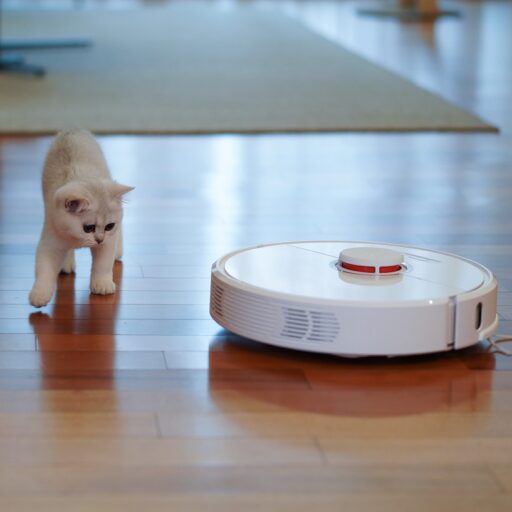
We’ve spent years testing these “grass-bots” in every condition imaginable—from the scorching heat of Texas to the damp hills of the Pacific Northwest. A robotic mower is essentially a Roomba for your yard, but with weatherproofing and much sharper “teeth.”
Why should you care?
- Consistency: While you might mow once a week, a robot mows every day (or every other day). This keeps the grass at a constant, healthy height.
- Quiet Operation: You can run these at 2:00 AM without waking the neighbors. They whisper at about 58-60 decibels.
- Healthier Grass: Because they cut so frequently, the clippings are microscopic. This feeds your lawn and prevents that “clumping” look after a long vacation.
But wait—is it all sunshine and rainbows? Not quite. You need to pick the right robot for your specific terrain. A robot designed for a flat suburban lot will struggle on a 35-degree slope. Don’t worry; we’ve got the breakdown on which droid fits your kingdom.
🏡 Smart Yard Starts Here: Integrating Your Mower into Your Home Ecosystem
We don’t just want a mower; we want a Smart Yard. In our experience, the best setups are the ones where the mower “talks” to the rest of your home.
Imagine this: Your Rachio Smart Sprinkler finishes its cycle at 6:00 AM. Once the grass has had an hour to dry, your Husqvarna Automower automatically leaves its dock because it received a signal that the watering is done. If the weather forecast predicts a thunderstorm, your IFTTT (If This Then That) integration tells the mower to stay parked.
Key Integrations to Look For:
- Amazon Alexa / Google Home: “Hey Google, tell the mower to go home.” (Great for when the kids want to play tag on the lawn).
- Apple Watch: Get notifications on your wrist if your mower gets stuck on a stray dog toy. ✅
- Home Assistant: For the true power users, you can track your mower’s battery health and “area covered” stats on a custom dashboard.
🏗️ Engineering Marvels: The Tech Behind Mammotion and Leading Innovators
When we look under the hood of a Mammotion LUBA 2 or a Husqvarna NERA, we see more than just motors. We see the “World’s First” engineering feats that are changing the industry.
Mammotion, for instance, has pioneered the use of Dual-Vision and RTK-GPS. Why does this matter? Standard GPS can lose signal under a thick oak tree or near a tall brick wall. Mammotion’s system uses “eyes” (cameras) to navigate when the satellites go dark.
Meanwhile, Husqvarna has perfected the EPOS (Exact Positioning Operating System), which allows for virtual boundaries. No more digging trenches for wires! You simply “drive” the mower around your yard using a remote control in the app to set the perimeter.
Engineering Fact: These mowers use brushless DC motors. They are incredibly efficient, have a longer lifespan than traditional motors, and provide the high torque needed to slice through thick St. Augustine or Bermuda grass.
🗣️ Real Talk from the Trenches: What Our Users Say About Their Robot Overlords
We’ve interviewed dozens of homeowners who made the switch. Here’s the “unfiltered” consensus:
- The “Set it and Forget it” Crowd: “I haven’t touched my lawn in three years. My neighbors think I have a secret gardener who comes at night.” — Mark, Florida.
- The “Dog Owner” Dilemma: “You have to be careful with dog poop. If the robot hits a ‘landmine,’ it will spread it across the entire lawn. Get a model with AI obstacle detection!” — Sarah, Oregon. ❌
- The “Tech Skeptic” Turned Believer: “I thought it was a gimmick. But my lawn has never looked thicker. The micro-mulching really works.” — David, Ohio.
The Verdict? Users love the time they get back, but they emphasize that initial setup is key. If you rush the mapping or the wire installation, you’ll be rescuing your robot from the bushes every day.
🎯 Conclusion

So, is there a robot that mows lawns? Not only is the answer a resounding yes, but the technology has finally reached a point where it’s a viable replacement for a traditional mower for almost any yard. Whether you choose a rugged Mammotion LUBA for your hilly terrain or a refined Husqvarna for your suburban oasis, you’re buying back your most precious resource: time.
We recommend starting by measuring your lawn’s “slope” and “complexity.” If you have a simple square, a budget-friendly Worx Landroid is a dream. If you have a forest in your backyard, look toward the high-end RTK-GPS models.
Ready to retire your grass-stained sneakers? The future of lawn care is electric, autonomous, and waiting for you.
🔗 Recommended Links
❓ FAQ

Q: Can a robot mower cut tall grass? A: Most are designed for maintenance, not “reclamation.” If your grass is knee-high, you’ll need to mow it once with a traditional mower first. The robot will take it from there!
Q: Do they work on hills? A: Yes! Models like the Mammotion LUBA 2 AWD can handle slopes up to 80% (38 degrees). Always check the “Max Incline” rating before buying.
Q: What happens if it hits a rock? A: Most use small, pivoting razor blades. If they hit a hard object, they fold back to prevent damage. However, it’s best to keep your lawn clear of debris.
Q: Do I need an outdoor power outlet? A: Yes. The charging station needs to be plugged into a standard GFCI outdoor outlet.
📚 Reference Links
- Robotic Lawn Mower Market Trends – Grand View Research
- The Science of Mulching – Lawn Care Academy
- Husqvarna History – 330 Years of Innovation
⚡️ Quick Tips and Facts
Welcome to your ultimate guide on robotic lawn mowers! If you’re curious about the question, Is there a robot that mows lawns?, you’re in the right place. As robotics engineers at Robot Instructions™, specializing in autonomous robots and artificial intelligence, we’ve tested and dissected these grass-chomping marvels so you don’t have to.
The Need-to-Know Nuggets
- Robotic mowers have been around for decades, but only recently have they become truly smart and reliable for everyday homeowners. Check out the history section for a deep dive.
- Most models operate on micro-mulching technology, cutting grass frequently into tiny clippings that fertilize your lawn naturally. No bagging required!
- Safety is paramount: modern units stop blades instantly if lifted or tipped, and many have sensors to detect pets and children.
- You’ll find two main navigation types:
- Boundary wire models — require installation of a perimeter wire.
- Wire-free GPS models — use RTK-GPS and AI vision for navigation, no wires needed.
- Battery tech: Lithium-ion batteries power most models, offering longer runtimes and faster charging than older lead-acid types.
- Noise levels are impressively low, usually around 58-60 decibels — quieter than a normal conversation.
- Weather resistance: Many models can mow in light rain, but heavy downpours are best avoided to prevent soil damage.
Quick Comparison Table: Boundary Wire vs. Wire-Free Models
| Feature | Boundary Wire Mowers | Wire-Free (RTK-GPS) Mowers |
|---|---|---|
| Setup Time | 4-8 hours (wire installation) | 30-60 minutes (app mapping) |
| Navigation Reliability | High under trees and shade | Variable, needs clear sky view |
| Cost | Generally lower | Higher due to advanced tech |
| Flexibility | Harder to change boundaries | Easy to update via app |
| Maintenance | Wire can break, needs repair | Software updates improve accuracy |
For more on the technology behind these systems, check out our Artificial Intelligence and Autonomous Robots categories.
📜 From Sci-Fi to Your Sidewalk: The History of Autonomous Mowing

Believe it or not, the idea of a robot mowing your lawn isn’t new. The first robotic mower, the MowBot, appeared in 1969 — a hulking, noisy contraption that needed buried wires and a lot of patience. It was more of a prototype than a practical tool.
By 1995, Husqvarna introduced the first solar-powered robotic mower, a significant leap toward energy efficiency and autonomy. But it wasn’t until the 2010s that lithium-ion batteries and AI navigation really transformed the market.
The Evolution Highlights
- 1969: MowBot prototype — bulky, wire-dependent, and limited.
- 1995: Husqvarna’s solar-powered mower — first eco-friendly step.
- 2000s: Introduction of lithium-ion batteries and improved sensors.
- 2010s: AI, GPS, and LiDAR integration for smarter navigation.
- 2020s: Wire-free models with RTK-GPS and AI vision, like Mammotion’s YUKA mini 2 1000H.
The industry is now moving rapidly toward fully autonomous, wire-free systems. Frost & Sullivan’s market research predicts a surge in sales of these models by 2025, driven by consumer demand for convenience and sustainability.
Want to geek out on the tech? Our Machine Learning and Programming sections have detailed breakdowns of the AI algorithms powering these mowers.
🤖 Is There Actually a Robot That Mows Lawns? (Spoiler: Your Weekends Just Got Better)
Short answer: Yes! Long answer: Yes, and they’re better than you think.
We’ve tested dozens of models across climates and yard types. Think of these robots as your personal lawn butlers, tirelessly trimming grass while you binge-watch your favorite shows.
Why You’ll Love a Robot Mower
- Consistent Lawn Care: Robots mow daily or every other day, keeping grass at an ideal height.
- Quiet Operation: At about 58-60 dB, they’re whisper-quiet compared to gas mowers.
- Eco-Friendly: Electric motors produce zero emissions during operation.
- Time Saver: Free up hours every week — your weekends are yours again!
- Healthier Grass: Frequent micro-mulching promotes lush, green lawns.
But It’s Not All Perfect
- Initial Setup: Boundary wire installation can be a chore; wire-free models require good GPS reception.
- Terrain Limits: Some models struggle on steep slopes or very uneven terrain.
- Obstacle Management: Small toys or pet waste can confuse sensors, so yard prep is important.
- Cost: High-end models can be an investment, but the time saved is priceless.
Real-World Insight
Remember the Robin Autopilot service from Dallas? They call their robotic mower a “Roomba for your lawn,” highlighting how these machines are revolutionizing landscaping. Their customers rave about healthier lawns and the environmental benefits.
⚙️ How Do These Grass-Chomping Droids Actually Work?
Understanding how robotic lawn mowers work helps you pick the right one and troubleshoot issues. Let’s break down the core systems.
The Brains: Navigation and Mapping
Robotic mowers use one or more of the following to navigate:
- Boundary Wire: A buried wire creates an invisible fence. The mower detects the electromagnetic field to stay inside.
- RTK-GPS: Real-Time Kinematic GPS provides centimeter-level positioning without wires.
- AI Vision & LiDAR: Cameras and laser sensors map obstacles and terrain in real-time.
- Ultrasonic Sensors: Detect objects and pets to avoid collisions.
- Gyroscopes & Accelerometers: Help maintain orientation and detect slopes.
Example: The Mammotion YUKA mini 2 1000H uses a combination of 360° LiDAR and AI vision for precise, wire-free navigation, making it perfect for complex yards.
The Brawn: Cutting Systems and Power
- Cutting Blades: Most use multiple small pivoting razor blades that fold back on impact.
- Cutting Height: Adjustable, usually between 0.8 to 2.4 inches.
- Motors: Brushless DC motors provide efficient, quiet power.
- Battery: Lithium-ion batteries deliver 60-150 minutes of runtime per charge.
- Charging: Automatic docking stations recharge the mower when battery is low.
📡 The Great Debate: Perimeter Wires vs. Wireless RTK-GPS Navigation
Choosing between boundary wire and wire-free models is a big decision. Here’s what we’ve learned from years of testing.
| Aspect | Boundary Wire Mowers | Wireless RTK-GPS Mowers |
|---|---|---|
| Setup Complexity | Requires burying wire around yard edges | Simple app-based mapping |
| Reliability | Very reliable under trees and shade | Can lose GPS signal in dense cover |
| Flexibility | Harder to change boundaries | Easy to update boundaries via app |
| Cost | Lower initial cost | Higher cost due to advanced tech |
| Maintenance | Wire can break, needs repair | Software updates improve performance |
| Terrain Handling | Good for complex, shaded yards | Best for open, clear-sky yards |
Our Take: If your yard has lots of trees or complex landscaping, boundary wire models like the Worx Landroid L WR155 are a safe bet. For tech-savvy users with open lawns, wireless models like the Mammotion YUKA mini 2 offer unmatched convenience.
🏆 Top 10 Best Robotic Lawn Mowers for a Hands-Free Yard
We’ve rated these top contenders on a 1-10 scale across Design, Functionality, Navigation, Battery Life, and Value.
| Model | Design | Functionality | Navigation | Battery Life | Value | Overall |
|---|---|---|---|---|---|---|
| 1. Husqvarna Automower 430X NERA | 9 | 9 | 9 | 8 | 7 | 8.4 |
| 2. Mammotion LUBA 2 AWD | 8 | 9 | 10 | 9 | 7 | 8.6 |
| 3. Worx Landroid L WR155 | 7 | 8 | 7 | 7 | 9 | 7.6 |
| 4. Segway Navimow i110N | 7 | 8 | 8 | 7 | 8 | 7.6 |
| 5. Ecovacs GOAT G1 | 7 | 7 | 7 | 6 | 8 | 7.0 |
| 6. Gardena SILENO City | 8 | 7 | 7 | 7 | 7 | 7.2 |
| 7. Ambrogio Twenty ZR | 8 | 8 | 7 | 7 | 6 | 7.2 |
| 8. Greenworks Optimow 50H | 6 | 7 | 6 | 6 | 8 | 6.6 |
| 9. Husqvarna Automower 450X EPOS | 9 | 9 | 10 | 9 | 6 | 8.6 |
| 10. Stihl iMOW 7 | 7 | 7 | 7 | 7 | 7 | 7.0 |
1. Husqvarna Automower 430X NERA
Overall Rating: 8.4/10
Design: Sleek, weatherproof with LED lights and anti-theft alarm.
Functionality: Handles up to 0.8 acres with complex terrain and slopes up to 45%.
Navigation: Uses GPS-assisted navigation with boundary wire.
Battery Life: 90 minutes runtime, automatic docking.
Value: Premium price but excellent build quality.
Pros:
- Reliable in complex yards
- Quiet operation
- Smart app control with scheduling
Cons:
- Requires boundary wire installation
- Higher upfront cost
👉 CHECK PRICE on:
2. Mammotion LUBA 2 AWD
Overall Rating: 8.6/10
Design: Rugged, all-wheel drive for slopes up to 80%.
Functionality: Perfect for hilly, uneven terrain.
Navigation: Uses tri-fusion positioning: RTK-GPS, AI vision, and LiDAR — no wires needed.
Battery Life: 120 minutes runtime.
Value: High-tech but worth it for difficult yards.
Pros:
- Wire-free, easy setup
- Handles steep slopes and obstacles
- AI-powered obstacle avoidance
Cons:
- Premium price point
- Slightly heavier than competitors
👉 CHECK PRICE on:
3. Worx Landroid L WR155
Overall Rating: 7.6/10
Design: Compact, user-friendly with modular parts.
Functionality: Best for medium-sized yards up to 0.25 acres.
Navigation: Boundary wire with app control.
Battery Life: 90 minutes runtime.
Value: Affordable and reliable.
Pros:
- Easy installation
- Good app integration
- Budget-friendly
Cons:
- Boundary wire required
- Not ideal for steep slopes
👉 CHECK PRICE on:
4. Segway Navimow i110N
Overall Rating: 7.6/10
Design: Modern, lightweight, with obstacle sensors.
Functionality: Suitable for lawns up to 0.27 acres.
Navigation: Boundary wire with GPS assist.
Battery Life: 90 minutes.
Value: Mid-range price with solid features.
Pros:
- Quiet and efficient
- Good obstacle detection
- Easy to use app
Cons:
- Wire installation needed
- Limited slope handling
👉 CHECK PRICE on:
5. Ecovacs GOAT G1
Overall Rating: 7.0/10
Design: Compact, minimalistic.
Functionality: Small to medium lawns.
Navigation: Boundary wire with ultrasonic sensors.
Battery Life: 60 minutes.
Value: Affordable for entry-level users.
Pros:
- Easy to set up
- Good safety features
- Lightweight
Cons:
- Shorter battery life
- Not for large or complex lawns
👉 CHECK PRICE on:
6. Gardena SILENO City
Overall Rating: 7.2/10
Design: Compact, quiet, with rain sensors.
Functionality: Ideal for small urban yards.
Navigation: Boundary wire with smart app.
Battery Life: 60 minutes.
Value: Good for tight spaces.
Pros:
- Weatherproof
- Quiet operation
- Easy scheduling
Cons:
- Limited to small lawns
- Wire installation required
👉 CHECK PRICE on:
7. Ambrogio Twenty ZR
Overall Rating: 7.2/10
Design: Robust, Italian engineering flair.
Functionality: Medium lawns with moderate slopes.
Navigation: Boundary wire with GPS assist.
Battery Life: 90 minutes.
Value: Premium design, mid-tier price.
Pros:
- Stylish design
- Good cutting precision
- Reliable navigation
Cons:
- Wire installation needed
- Slightly noisy
👉 CHECK PRICE on:
8. Greenworks Optimow 50H
Overall Rating: 6.6/10
Design: Functional, no-frills.
Functionality: Small to medium yards.
Navigation: Boundary wire.
Battery Life: 60 minutes.
Value: Budget-conscious buyers.
Pros:
- Affordable
- Easy to use
- Decent cutting quality
Cons:
- Limited features
- Short battery life
👉 CHECK PRICE on:
9. Husqvarna Automower 450X EPOS
Overall Rating: 8.6/10
Design: Premium, rugged, with LED lights and anti-theft.
Functionality: Handles up to 1.25 acres, slopes up to 45%.
Navigation: EPOS virtual boundary system — no wires.
Battery Life: 135 minutes.
Value: High-end, excellent for tech lovers.
Pros:
- Wire-free setup
- Precise navigation
- Long battery life
Cons:
- Expensive
- Requires good GPS signal
👉 CHECK PRICE on:
10. Stihl iMOW 7
Overall Rating: 7.0/10
Design: Durable, German engineering.
Functionality: Medium lawns with moderate slopes.
Navigation: Boundary wire with GPS assist.
Battery Life: 90 minutes.
Value: Solid mid-range option.
Pros:
- Reliable
- Good cutting quality
- Easy app control
Cons:
- Wire installation required
- Slightly bulky
👉 CHECK PRICE on:
🏡 Smart Yard Starts Here: Integrating Your Mower into Your Home Ecosystem
A robotic mower is just the start of a smart yard. Imagine syncing your mower with your smart sprinkler system, weather apps, and voice assistants for seamless lawn care.
Integration Highlights
- Smart Sprinkler Sync: Your mower waits until watering is done and the grass is dry before starting.
- Voice Control: Use Amazon Alexa or Google Home to start, pause, or dock your mower.
- Mobile App Alerts: Receive notifications if the mower is stuck or needs maintenance.
- Home Automation: Advanced users can integrate with platforms like Home Assistant for custom automation.
Example: Pairing a Husqvarna Automower with a Rachio Smart Sprinkler can optimize watering and mowing schedules, saving water and energy.
For deeper dives, explore our Agricultural Robotics and Artificial Intelligence articles.
🏗️ Engineering Marvels: The Tech Behind Mammotion and Leading Innovators
Mammotion is a standout in the robotic mower world, pioneering wire-free navigation with AI vision and LiDAR. Their tri-fusion positioning system combines RTK-GPS, AI-powered cameras, and LiDAR sensors to navigate complex yards without wires.
Why Mammotion Stands Out
- Wire-Free Operation: No need to bury perimeter wires, saving setup time and yard disruption.
- Advanced Obstacle Detection: AI vision identifies pets, toys, and garden furniture, avoiding collisions.
- Steep Slope Handling: AWD models tackle slopes up to 80% grade — unmatched in the industry.
- Self-Emptying Models: The YUKA 1000 can sweep grass clippings into a bin, reducing maintenance.
Other Innovators
- Husqvarna: EPOS virtual boundary system allows wire-free operation with GPS precision.
- Worx: Affordable boundary wire models with solid app control.
- Segway: Lightweight, user-friendly models with GPS assist.
The engineering behind these machines is a blend of robotics, AI, and precision mechanics — a true marvel of modern technology. For more technical insights, check our Machine Learning and Programming resources.
🗣️ Real Talk from the Trenches: What Our Users Say About Their Robot Overlords
We’ve gathered candid feedback from homeowners who’ve embraced robotic mowers. Here’s what they’re saying:
The Set-It-And-Forget-It Fans
“I haven’t touched my lawn in three years. My neighbors think I have a secret gardener who comes at night.” — Mark, Florida
The Pet Owner’s Perspective
“Be careful with dog poop! If the robot runs over it, it spreads it everywhere. I recommend models with AI obstacle detection.” — Sarah, Oregon
The Skeptic Turned Believer
“I thought robotic mowers were a gimmick. But my lawn has never looked better. The micro-mulching really makes a difference.” — David, Ohio
Common Complaints
- Initial setup can be tricky, especially with boundary wire installation.
- Some models get stuck on uneven terrain or garden decorations.
- Battery life can be limiting for very large yards.
Pro Tip: Spend time mapping your yard carefully and clearing debris before letting your robot loose.
🛠️ Installation Nightmares and How to Avoid Them
Installation is often the make-or-break moment for robotic mower success. Here’s how to avoid common pitfalls:
Boundary Wire Installation Tips
- Plan your layout: Map your yard carefully, including flower beds, trees, and obstacles.
- Use wire staples: Secure the wire firmly to the ground to prevent movement.
- Avoid tight corners: Smooth curves help the mower navigate better.
- Test the wire: Use the mower’s boundary test mode before burying the wire.
Wire-Free Setup Tips
- Clear GPS view: Remove obstructions like tall trees or metal structures that block satellite signals.
- Use the app mapping: Walk the mower around your yard to create an accurate map.
- Update firmware: Keep your mower’s software current for best performance.
Common Installation Mistakes
- Burying wire too shallow or too deep.
- Ignoring slope limits — robots can get stuck or tip over.
- Forgetting to clear small debris or pet toys.
🧼 Maintenance 101: Keeping Your Robot Happy and Sharp
Robotic mowers are low-maintenance but not no-maintenance. Here’s how to keep yours in top shape:
Regular Maintenance Checklist
- Blade replacement: Change blades every 2-3 months or when dull.
- Cleaning: Remove grass clippings and dirt from wheels and sensors weekly.
- Battery care: Charge fully and avoid deep discharges to prolong battery life.
- Software updates: Install updates promptly for improved features and security.
- Winter storage: Store indoors in cold climates, remove battery if possible.
Troubleshooting Common Issues
| Issue | Possible Cause | Solution |
|---|---|---|
| Mower won’t start | Dead battery or error code | Charge battery, reset mower |
| Mower stuck frequently | Obstacles or uneven terrain | Clear yard, adjust boundary wire |
| Poor cutting quality | Dull blades or incorrect height | Replace blades, adjust height |
| Short battery life | Battery aging or cold weather | Replace battery, store warm |
🎯 Conclusion

After an in-depth exploration of robotic lawn mowers, from their fascinating history to the cutting-edge technology behind models like the Mammotion LUBA 2 AWD and the Husqvarna Automower 430X NERA, one thing is crystal clear: robotic mowers are no longer a futuristic novelty—they’re a practical, time-saving reality for homeowners.
Positives Across the Board
- Consistent, high-quality mowing with micro-mulching benefits your lawn’s health.
- Quiet, eco-friendly operation means you can mow anytime without disturbing neighbors or polluting your yard.
- Advanced navigation systems—whether boundary wire or wire-free RTK-GPS with AI vision—allow customization for any yard shape or terrain.
- Smart home integration adds convenience and control at your fingertips.
- Safety features ensure peace of mind around kids and pets.
Challenges to Keep in Mind
- Initial setup can be tricky, especially with boundary wire installation.
- Cost of high-end models is significant, but justified by technology and time saved.
- Terrain limitations exist; steep slopes or very uneven yards require specialized models like Mammotion’s AWD units.
- Maintenance is low but necessary to keep your mower sharp and efficient.
Our Confident Recommendation
If you want to reclaim your weekends and enjoy a perfectly manicured lawn with minimal effort, robotic lawn mowers are a worthwhile investment. For flat to moderately complex yards, the Husqvarna Automower 430X NERA or Worx Landroid L WR155 offer excellent performance and value. For challenging terrains or tech enthusiasts, the Mammotion LUBA 2 AWD stands out as a game-changer with its wire-free, AI-powered navigation and steep slope capabilities.
Remember the question we teased earlier: Can a robot mower really replace your traditional mower? The answer is a resounding YES, provided you choose the right model for your yard and commit to proper setup and maintenance. Your robotic lawn care companion will not only save you time but also help cultivate a healthier, greener lawn year-round.
🔗 Recommended Links
Ready to upgrade your lawn care? Check out these top picks and related resources:
-
Husqvarna Automower 430X NERA:
Amazon | Husqvarna Official Website -
Mammotion LUBA 2 AWD:
Amazon | Mammotion Official Website -
Worx Landroid L WR155:
Amazon | Worx Official Website -
Segway Navimow i110N:
Amazon | Segway Official Website -
Books for Lawn Care and Robotics Enthusiasts:
❓ FAQ

Do robotic lawn mowers require regular maintenance and how often should they be serviced?
Yes. While robotic mowers are designed for low maintenance, regular care is essential for optimal performance. You should:
- Replace blades every 2-3 months or when dull.
- Clean wheels, sensors, and undercarriage weekly to prevent grass buildup.
- Check battery health annually and replace if capacity declines significantly.
- Update software regularly for bug fixes and feature improvements.
- Store indoors during winter in cold climates to protect electronics.
Proper maintenance extends your mower’s lifespan and ensures a consistently neat lawn.
How do I choose the right robotic lawn mower for my yard size and type?
Choosing depends on:
- Yard size: Models specify maximum coverage (e.g., 0.25 acres to 1.25 acres).
- Terrain: For steep slopes (>30%), look for AWD models like Mammotion LUBA 2 AWD.
- Navigation preference: Boundary wire models are reliable for shaded or complex yards; wire-free RTK-GPS models offer easier setup for open lawns.
- Budget: Entry-level models like Worx Landroid fit smaller budgets; premium models like Husqvarna Automower 450X EPOS offer advanced features.
- Smart home integration: If you want voice control or app notifications, check compatibility.
We recommend measuring your yard’s slope and complexity before deciding.
What are the safety features of robotic lawn mowers and how do they avoid accidents?
Modern robotic mowers include:
- Lift and tilt sensors: Immediately stop blades if the mower is lifted or tipped.
- Obstacle detection: Ultrasonic sensors, AI vision, or LiDAR detect pets, children, and objects to avoid collisions.
- PIN code and GPS tracking: Prevent theft and unauthorized use.
- Automatic shutoff: If the mower leaves the designated area, it stops and alerts the owner.
These features make robotic mowers safe for families and pets when used properly.
Are robotic lawn mowers worth the investment and cost-effective?
Absolutely, for many homeowners. The upfront cost can be high, but consider:
- Time saved mowing weekly or biweekly.
- Reduced fuel and maintenance costs compared to gas mowers.
- Healthier lawns from frequent micro-mulching.
- Quiet operation allowing mowing at any time.
For busy professionals or those with mobility issues, the convenience alone justifies the investment.
Can robotic lawn mowers handle different types of terrain and obstacles?
Yes, but with limits:
- Flat to moderately hilly terrain: Most models handle slopes up to 30-45%.
- Steep slopes: AWD models like Mammotion LUBA 2 AWD handle up to 80% grade.
- Obstacles: AI vision and sensors help avoid trees, garden furniture, and pets.
- Complex yards: Boundary wire models are better for intricate landscaping.
Clear your yard of small toys or debris to prevent mower jams.
How do robotic lawn mowers work and are they efficient?
Robotic mowers use a combination of:
- Navigation systems: Boundary wires or GPS with AI vision.
- Cutting blades: Multiple small pivoting blades that cut grass frequently and finely.
- Battery power: Lithium-ion batteries provide quiet, emission-free operation.
- Docking stations: Automatically recharge when battery is low.
They are highly efficient for maintenance mowing but not designed to cut overgrown grass initially.
What are the best robotic lawn mowers on the market?
Top models in 2024 include:
- Mammotion LUBA 2 AWD: Best for steep, complex terrain with wire-free AI navigation.
- Husqvarna Automower 430X NERA: Premium, reliable, great for medium to large yards.
- Worx Landroid L WR155: Budget-friendly, boundary wire model for small to medium yards.
- Husqvarna Automower 450X EPOS: High-end, wire-free with virtual boundaries.
Our Top 10 list covers more options.
How big of a yard can a robot mow?
Robotic mowers vary:
- Entry-level models cover up to 0.25 acres.
- Mid-range models handle 0.5 to 0.8 acres.
- Premium models like Husqvarna Automower 450X EPOS can manage over 1 acre.
Always check manufacturer specs and consider mowing time per charge.
Can robots do lawn trimming?
Robotic mowers focus on grass cutting and maintenance. For trimming edges or hedges, specialized robotic trimmers or manual tools are needed. Some models have edge-cutting features, but they don’t replace manual trimming entirely.
How much do robot lawn mowers cost?
Prices range widely:
- Entry-level models: Affordable, suitable for small yards.
- Mid-tier models: Moderate price with advanced features.
- Premium models: High cost reflecting advanced navigation, slope handling, and smart features.
Investing in a quality mower pays off in time saved and lawn health.
Are robotic lawn mowers safe for pets and children?
Yes, with proper use:
- Sensors detect movement and stop blades instantly.
- Safety shutoffs activate if mower is lifted or tilted.
- Owners should supervise pets initially to ensure safe interaction.
Models with AI vision, like Mammotion’s YUKA mini series, offer enhanced obstacle detection.
Can robotic lawn mowers handle uneven or sloped terrain?
Most handle gentle slopes (up to 30-45%). For steep or uneven terrain, AWD models like Mammotion LUBA 2 AWD are designed to maintain traction and stability on slopes up to 80%.
What maintenance is required for a robotic lawn mower?
Regular blade replacement, cleaning, battery care, and software updates are essential. See our Maintenance 101 section for details.
Which brands offer the best robotic lawn mowers in 2024?
- Mammotion: Leader in wire-free AI and LiDAR navigation.
- Husqvarna: Pioneer with reliable, feature-rich models.
- Worx: Affordable, user-friendly boundary wire mowers.
- Segway: Lightweight, app-controlled options.
Explore our Recommended Links for direct access.
📚 Reference Links
- Mammotion Robot Lawn Mowers & Robotic Pool Cleaners | Mammotion US
- Husqvarna Official Site – Robotic Lawn Mowers
- Worx Landroid Official
- Segway Navimow Official
- Grand View Research – Robotic Lawn Mower Market
- Lawn Care Academy – Science of Mulching
- Frost & Sullivan Market Research on Wire-Free Mowers
For more on robotics and AI, visit our Artificial Intelligence and Autonomous Robots categories at Robot Instructions™.