Support our educational content for free when you purchase through links on our site. Learn more
🤖 15+ Robot Frequently Asked Questions: The Ultimate 2026 Guide


Ever watched a robot vacuum confidently push a sock into a corner, only to get stuck and send you a frantic “Help!” notification? You aren’t alone. At Robot Instructions™, we’ve seen it all, from the clunky industrial arms of the 80s to the AI-powered, pet-waste-avoiding marvels of today. But with great automation comes great confusion. Whether you’re wondering if your new gadget is secretly spying on you, why it keeps falling down the stairs, or if it’s finally time to let a machine fold your laundry, we’ve got the answers.
In this comprehensive guide, we’re diving deep into the most frequently asked questions about robots. We’ll debunk the “killer robot” myths, break down the complex science of LIDAR and SLAM in plain English, and give you the lowdown on battery life, privacy, and maintenance. We’ll even reveal the one specific scenario where a robot will absolutely fail you (hint: it involves soft, floppy fabrics). By the end, you’ll know exactly which robot fits your home, how to keep it running like a champ, and what the future holds for our mechanical friends.
Key Takeaways
- Robots are smart, but not magic: They rely on sensors and algorithms to navigate, meaning they need a tidy environment to perform their best.
- Maintenance is non-negotiable: Regularly cleaning brushes, filters, and sensors is the single most important factor in extending your robot’s lifespan.
- Privacy matters: Modern robots with cameras and mics require active management of your app settings to ensure your home data stays secure.
- Safety first: While generally safe, robots can pose risks to pets and children if no-go zones and supervision aren’t utilized correctly.
- The future is collaborative: We are moving toward human-robot teamwork, where machines handle repetitive tasks while humans focus on complex, creative work.
Ready to upgrade your cleaning game?
- 👉 Shop Robot Vacums: Amazon | Best Buy
- 👉 Shop Lawn Robots: Amazon | Husqvarna Official
- 👉 Shop Kitchen Robots: Amazon | Thermomix Official
Table of Contents
- ⚡️ Quick Tips and Facts
- 🤖 The Evolution of Automation: A Brief History of Robotics
- 🧠 Understanding the Basics: How Do Robots Actually Work?
- 🏠 Top 10 Most Common Questions About Home Robots
- 🏭 Industrial vs. Consumer: What’s the Real Difference?
- 🔋 Battery Life, Charging, and Maintenance Myths Busted
- 🛡️ Safety First: Are Robots Safe for Kids and Pets?
- 🔒 Privacy Concerns: Do Your Robots Listen or Watch You?
- 💰 Cost vs. Value: Is Investing in a Robot Worth It?
- 🛠️ Troubleshooting 101: Common Errors and Quick Fixes
- 🚀 The Future of Robotics: AI, Learning, and Beyond
- 🌍 Ethical Dilemmas: The Rise of Autonomous Machines
- 📚 Conclusion
- 🔗 Recommended Links
- ❓ Frequently Asked Questions
- 📖 Reference Links
⚡️ Quick Tips and Facts
Before we dive into the nitty-gritty of gears, sensors, and the occasional robot that decides to vacuum your cat instead of the rug, let’s hit the high notes of what you need to know right now. We’ve seen it all in the lab, from the clunky prototypes of the 80s to the sleek AI-driven assistants of today.
- Robots aren’t magic; they’re math. Every movement is calculated. If your robot vacuum gets stuck under the sofa, it’s not “confused”; it’s hitting a sensor limit it can’t calculate a path around.
- The “Killer Robot” myth vs. reality. While Hollywood loves a good Terminator story, the reality of Autonomous Weapon Systems (AWS) is a complex legal and ethical minefield. We’ll get into the scary stuff later, but rest assured, your Romba is programmed to avoid walls, not people.
- Battery anxiety is real. Most consumer robots run on Lithium-ion batteries. Never leave them on the dock forever if you plan to store them for months; a full discharge can kill the battery.
- Maintenance is non-negotiable. A robot with a tangled brush is a robot that’s just a very expensive paperweight. Clean your filters weekly!
- Privacy is a feature, not a bug. Modern robots often come with cameras and mics. Check your settings to ensure you aren’t accidentally streaming your living room to the cloud.
For a deeper dive into how we approach these machines, check out our guide on Robot Instructions™.
🤖 The Evolution of Automation: A Brief History of Robotics

You might think robots are a 21st-century invention, but the dream of the mechanical man dates back to ancient Greece and the automatons of Leonardo da Vinci. However, the term “robot” itself was coined by Czech writer Karel Čapek in his 1920 play R.U.R. (Rosum’s Universal Robots), derived from the Czech word robota, meaning “forced labor.”
From Industrial Arms to Smart Homes
The first industrial robot, Unimate, was installed at a General Motors plant in 1961. It was a massive, hydraulic arm designed to handle hot die-casting parts—a job too dangerous for humans. Fast forward to the 1980s, and we saw the rise of the SCARA robot, which revolutionized assembly lines.
But the real game-changer for you (the consumer) came in the late 90s and early 20s. The introduction of the iRobot Romba in 202 proved that robots could be affordable, safe, and actually useful in a home environment. Suddenly, weren’t just building machines for factories; were building companions for our living rooms.
“The transition from industrial arms to domestic helpers wasn’t just about shrinking the size; it was about rethinking how a machine interacts with an unpredictable human environment.”
Today, we are in the era of Collaborative Robots (Cobots), designed to work alongside humans, and Service Robots, which handle everything from lawn mowing to surgical procedures.
🧠 Understanding the Basics: How Do Robots Actually Work?
So, you’ve got a robot in your house. It’s moving, it’s beping, and it’s occasionally knocking over a vase. How does it know what to do? It’s not magic; it’s a triad of Sensing, Processing, and Acting.
1. Sensing: The Robot’s Senses
Robots use a variety of sensors to perceive the world:
- LIDAR (Light Detection and Ranging): Think of this as the robot’s “bat sonar.” It shoots out laser beams to create a 360-degree map of the room. This is why your iRobot Romba j7+ or Roborock S8 can navigate around your dog’s toys without bumping into them.
- Cameras & Computer Vision: These allow robots to “see” objects. Advanced models use AI to distinguish between a sock and a charging cable.
- Inertial Measurement Units (IMUs): These tell the robot if it’s tilting, falling, or moving too fast.
2. Processing: The Brain
Once the sensors gather data, the robot’s onboard computer (or the cloud) processes it. This is where Machine Learning comes in.
- SLAM (Simultaneous Localization and Mapping): This is the algorithm that allows a robot to build a map of an unknown environment while keeping track of its location within that map. Without SLAM, your robot would just bump around in circles.
- Path Planning: The robot calculates the most efficient route to clean the floor, avoiding obstacles in real-time.
3. Acting: The Muscles
Finally, the robot executes the command. This involves actuators (motors) that drive wheels, legs, or arms.
- Wheled robots are efficient on flat surfaces.
- Quadruped robots (like Boston Dynamics’ Spot) use legs to navigate stairs, rubble, and uneven terrain, as highlighted in our featured video analysis.
“Robots excel at precise, repetitive motion, while humans are far better at navigating soft, complex environments like the body.” — Insight from the First Video Analysis
🏠 Top 10 Most Common Questions About Home Robots
We get asked these questions every day at the Robot Instructions™ lab. Let’s tackle the big ones.
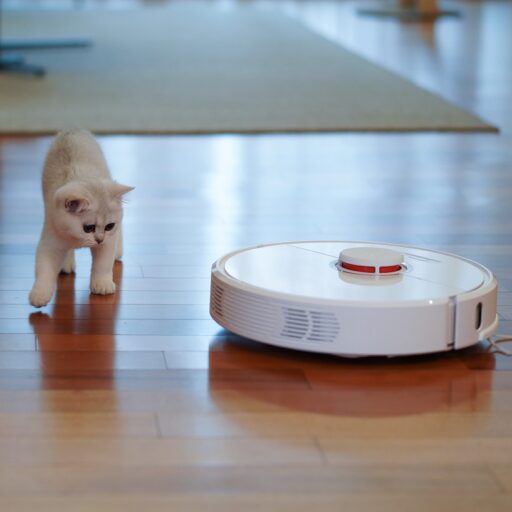
1. Will my robot vacuum get stuck under my furniture?
✅ Yes, if the clearance is too low. Most robots need at least 3-4 inches of clearance. If your sofa is lower, the robot will try to push under, get stuck, and send you a “Help! I’m trapped!” notification.
- Pro Tip: Measure your furniture height before buying a robot.
2. Can robots navigate in the dark?
✅ Yes, but it depends on the sensor.
- LIDAR robots (like Roborock or Ecovacs) can navigate perfectly in pitch blackness because they use lasers, not light.
- Camera-based robots (like older iRobot models) often struggle in total darkness unless they have infrared night vision.
3. Do I need to tidy up before the robot cleans?
✅ Absolutely. While modern robots have “obstacle avoidance” (like the iRobot Romba j7+ which can identify and avoid pet waste), they are not magicians. Cables, socks, and toys are still the enemy.
- The “Tidy Up” Rule: If you wouldn’t step over it, the robot will likely get tangled in it.
4. How long does the battery last?
✅ Typically 90 to 120 minutes. High-end models like the Roborock S8 Pro Ultra can run for up to 180 minutes in eco mode. If the battery dies mid-clean, the robot returns to the dock, charges, and resumes where it left off.
5. Can they mop and vacuum at the same time?
✅ Yes, but with caveats. Many modern hybrids (like the Dreame L20 Ultra) have separate tanks for water and dust. However, you should avoid using them on thick carpets or rugs, as the water can ruin the fabric.
6. Are they loud?
✅ It varies. In “Eco” mode, they are whisper-quiet (around 50-60 dB). In “Max” or “Turbo” mode, they can reach 70-75 dB, which is about as loud as a vacuum cleaner.
7. Can I control them with my voice?
✅ Yes. Most integrate with Amazon Alexa, Google Assistant, and Apple HomeKit. You can say, “Alexa, tell Romba to start cleaning,” and it will go to work.
8. What happens if the Wi-Fi goes down?
✅ They still work. You can usually start a clean via the physical buttons on the robot. However, you lose remote control, mapping updates, and scheduling features until the connection is restored.
9. Do they need a charging dock?
✅ Yes. They are not self-charging. They must return to their base to recharge. Some advanced models also have “auto-empty” stations that empty the dustbin for you.
10. Can they clean stairs?
❌ No. Robots are not designed to climb stairs. They will fall if they reach the edge. Always use “virtual walls” or “no-go zones” to keep them one floor.
🏭 Industrial vs. Consumer: What’s the Real Difference?
It’s easy to confuse the Boston Dynamics robot dog with the iRobot vacuum, but the gap between industrial and consumer robotics is massive.
| Feature | Industrial Robots | Consumer Robots |
|---|---|---|
| Primary Goal | Precision, speed, heavy lifting | Convenience, cleaning, companionship |
| Environment | Controlled factories, predictable | Unpredictable homes, dynamic |
| Safety | Caged off; dangerous to humans | Designed to be safe around people/pets |
| Cost | $50,0 – $10,0+ | $20 – $1,50 |
| Maintenance | Requires certified technicians | DIY (clean brushes, empty bins) |
| Autonomy | Often pre-programed paths | AI-driven, adaptive navigation |
Industrial robots are the workhorses. They weld car frames, paint vehicles, and assemble electronics with sub-millimeter precision. They are powerful, fast, and lethal if a human gets in their way. That’s why they are always behind safety cages.
Consumer robots, on the other hand, are the “gentlemen.” They are designed to coexist with humans. They have soft edges, low torque motors, and sensors that stop them if they bump into a child’s leg.
“The challenge in creating clothes-folding robots is attributed to the unpredictable nature of fabric, which is hard to model and control with current robotics.” — First Video Analysis
This is why you see industrial arms in factories but not in your laundry room yet. The complexity of soft, floppy objects is a nightmare for current AI.
🔋 Battery Life, Charging, and Maintenance Myths Busted
Let’s clear up some misconceptions that are killing your robot’s lifespan.
Myth 1: “I should let the battery drain completely before charging.”
❌ False. This is a myth from the old Nickel-Cadmium (NiCd) battery era. Modern Lithium-ion batteries hate deep discharges. It’s better to keep them charged. If you store a robot for months, charge it to 50-60% and check it every few months.
Myth 2: “Leaving it on the dock 24/7 is bad.”
✅ Mostly True, but with nuance. Most modern robots have “trickle charge” protection. However, constant 10% charging can degrade the battery over time. If you aren’t using the robot for a week, it’s better to turn it off.
Myth 3: “I don’t need to clean the sensors.”
❌ False. Dust on the LIDAR sensor or cliff sensors can cause navigation errors. A quick wipe with a microfiber cloth once a month can save you from a robot that thinks it’s falling off a cliff.
Myth 4: “The brushes never need replacing.”
❌ False. Brushes wear out. Hair wraps around them, reducing suction and potentially burning out the motor. Replace side brushes every 6 months and main brushes every 12 months (or sooner if they look frayed).
Maintenance Checklist:
- Weekly: Empty dustbin, clean filters, check brushes for hair.
- Monthly: Wipe sensors, clean charging contacts, check wheels for debris.
- Every 6 Months: Replace side brushes, check main brush wear.
- Annually: Deep clean the internal fan (if accessible) and check for firmware updates.
🛡️ Safety First: Are Robots Safe for Kids and Pets?
This is the number one question we get from parents and pet owners. The short answer: Yes, but with supervision.
The Good News
Modern robots are equipped with cliff sensors that prevent them from falling down stairs. They also have collision sensors that stop them from hitting furniture or people. Brands like iRobot and Roborock have added “Pet Waste Avoidance” technology, using cameras and AI to identify and avoid pet messes.
The Risks
- Tangling: Long cables, shoelaces, and pet toys can get wrapped around the wheels or brushes.
- Choking Hazards: Small parts (like battery covers) can be chewed off by curious puppies.
- Noise: Some pets are terrified of the noise. If your dog barks at the robot, it might chase it, leading to a chase scene that ends in a broken robot.
Expert Advice
- Supervise the first few runs. Watch how your pet reacts.
- Use “No-Go Zones.” Most apps allow you to draw a line on the map where the robot shouldn’t go. Keep the robot out of the pet’s food bowl area.
- Check for “Tangle-Free” brushes. If you have a long-haired dog, look for models with rubberized brushes that resist hair wrapping.
“Robots are not language. They are physical entities that must interact with a chaotic world.” — First Video Analysis
🔒 Privacy Concerns: Do Your Robots Listen or Watch You?
Let’s address the elephant in the room. Are they spying on me?
The Reality
Many robots, especially those with cameras (like the iRobot Romba j7+ or Ecovacs Debot X1 Omni), use cameras for navigation and obstacle avoidance.
- Data Storage: Most companies state that video data is processed locally or encrypted and sent to the cloud only for specific features (like “Pet Waste Identification”).
- Microphones: Some robots have microphones for voice commands. However, they usually only “listen” for a wake word (like “Hey Google” or “Alexa”).
How to Protect Your Privacy
- Check Settings: Go into the app and disable features you don’t need, like “Live View” or “Video Call.”
- Physical Covers: Some models come with a physical shutter for the camera. If not, you can use a piece of tape.
- Network Security: Ensure your home Wi-Fi is secure with a strong password.
- Read the Privacy Policy: It’s boring, but it tells you what data is collected and how it’s used.
“Digital Dehumanisation: The process where people are reduced to data points used to make decisions that negatively affect their lives.” — Stop Killer Robots Campaign
While this quote refers to military systems, the principle applies to consumer tech. We must be vigilant about how our data is used.
💰 Cost vs. Value: Is Investing in a Robot Worth It?
Is a $1,0 robot vacuum worth it? Let’s break it down.
The Cost Breakdown
- Entry Level ($20 – $40): Basic navigation, no mapping, no auto-empty. Good for small apartments.
- Mid-Range ($40 – $80): LIDAR navigation, app control, some obstacle avoidance.
- High-End ($80 – $1,50+): Auto-empty stations, mopping, advanced AI, self-washing mops.
The Value Proposition
- Time Saved: If you spend 15 minutes a day vacuuming, that’s 90 hours a year. A robot saves you that time.
- Consistency: Robots clean daily, keeping dust levels lower than weekly manual vacuuming.
- Health: For allergy sufferers, daily cleaning can significantly reduce allergens.
Who Should Buy?
- ✅ Yes: Busy professionals, pet owners, allergy sufferers, large homes.
- ❌ No: People on a tight budget, those with very cluttered homes, or those who enjoy the meditative act of cleaning.
“The remaining challenge is open-ended picking and packing of varied objects and shapes.” — First Video Analysis
Until robots can fold laundry and pick up toys, they are a helper, not a replacement.
🛠️ Troubleshooting 101: Common Errors and Quick Fixes
Even the best robots have bad days. Here’s how to fix the most common issues.
Error: “Robot stuck” or “Help me”
- Cause: Tangled brush, stuck wheel, or obstacle.
- Fix: Lift the robot, check the wheels and brushes, and remove any debris.
Error: “Charging error”
- Cause: Dirty charging contacts or low battery.
- Fix: Wipe the charging contacts on the robot and the dock with a dry cloth. Ensure the dock is plugged in.
Error: “Map lost”
- Cause: Furniture moved or robot manually picked up.
- Fix: Restart the robot. It will usually re-scan the room and update the map. If the layout changed significantly, you may need to re-map.
Error: “Wi-Fi connection failed”
- Cause: 5GHz network or password error.
- Fix: Ensure you are connecting to a 2.4GHz network. Most robots do not support 5GHz. Reset the robot’s Wi-Fi settings and try again.
Error: “Mop not working”
- Cause: Water tank empty or filter clogged.
- Fix: Refill the water tank and clean the filtration grid. Ensure the mop is attached correctly.
🚀 The Future of Robotics: AI, Learning, and Beyond
Where are we heading? The future is collaborative and adaptive.
AI and Machine Learning
Robots are moving from pre-programed paths to reinforcement learning. This means they learn from their mistakes. If a robot tries to climb a rug and fails, it learns not to try that again.
Humanoid Robots
Companies like Tesla (Optimus) and Figure AI are developing humanoid robots designed to work in human environments. These robots aim to perform complex tasks like folding laundry, cooking, and caring for the elderly.
The Challenge of Soft Robotics
As mentioned in the video, the biggest hurdle is soft robotics. Fabric, food, and human bodies are unpredictable. Current robots struggle with these materials. The future lies in soft actuators and tactile sensors that give robots a sense of touch.
Exoskeletons and Medical Robotics
Robots are already helping humans regain mobility. Exoskeletons are being used to help paralyzed patients walk. In surgery, the da Vinci Surgical System allows surgeons to perform complex procedures with incredible precision.
“Robots excel at precise, repetitive tasks, but humans are better at navigating complex, soft environments, making collaboration essential in fields like surgery.” — First Video Analysis
The future isn’t about robots replacing humans; it’s about robots augmenting humans.
🌍 Ethical Dilemmas: The Rise of Autonomous Machines
We must address the elephant in the room: Killer Robots.
What are Autonomous Weapon Systems (AWS)?
AWS are weapons that can select and engage targets without human intervention. Once activated, they decide who, what, where, and when to attack based on sensor data.
The Ethical Nightmare
- Lack of Accountability: If a robot kills a civilian, who is responsible? The programmer? The commander? The machine?
- Digital Dehumanisation: Reducing humans to data points removes the moral weight of taking a life.
- Arms Race: The development of AWS could trigger a new global arms race, destabilizing international security.
The Call to Action
Organizations like Stop Killer Robots are calling for a legally binding international treaty to ban fully autonomous weapons. They argue that meaningful human control must always be maintained over the use of force.
“Machines don’t understand context or consequences: understanding is a human capability – and without that understanding, we lose moral responsibility and we undermine existing legal rules.” — Stop Killer Robots Campaign
While this is a military issue, it raises questions for consumer tech too. As robots become more autonomous, how do we ensure they align with human values?
📚 Conclusion

We’ve covered a lot of ground, from the humble beginnings of Unimate to the cutting-edge AI of today’s Roborock and iRobot models. We’ve debunked myths, tackled privacy concerns, and even peeked into the ethical abyss of autonomous weapons.
The Verdict:
Robots are no longer science fiction. They are here, they are helpful, and they are evolving rapidly. But they are not perfect. They need maintenance, they have limitations, and they require human oversight.
Our Recommendation:
If you are considering a robot, buy the best one you can afford that fits your specific needs. Don’t skimp on navigation (LIDAR is king) and obstacle avoidance. And remember, a robot is a tool, not a replacement for human effort.
Closing the Loop:
Remember that question we asked at the beginning: Will your robot ever be able to fold your laundry? The answer is not yet. The complexity of soft, floppy objects is still a massive challenge. But with the rapid advancements in soft robotics and AI, we might see a robot that can fold a shirt within the next decade. Until then, you’re still the folding champion of the house!
🔗 Recommended Links
Top Robot Vacums & Cleaners
- iRobot Romba j7+: Amazon | iRobot Official
- Roborock S8 Pro Ultra: Amazon | Roborock Official
- Ecovacs Debot X1 Omni: Amazon | Ecovacs Official
- Dreame L20 Ultra: Amazon | Dreame Official
Books & Resources
- “Life 3.0: Being Human in the Age of Artificial Intelligence” by Max Tegmark: Amazon
- “Robots: A Very Short Introduction” by John Lenox: Amazon
Internal Resources
- Agricultural Robotics
- Machine Learning in Robotics
- Autonomous Robots
- Robot Design Principles
- Robot Ethics and Safety
❓ Frequently Asked Questions
What are the most common robot problems?
The most frequent issues include navigation errors (getting stuck), battery degradation (shorter run times), and sensor blockages (dust on cameras/LIDAR). Regular maintenance, such as cleaning brushes and wiping sensors, can prevent 90% of these problems.
How often should I service my robot?
- Weekly: Empty the dustbin, clean the filters, and check for hair tangles.
- Monthly: Wipe all sensors, clean the charging contacts, and check the wheels.
- Every 6 Months: Replace side brushes and inspect the main brush for wear.
- Annually: Perform a deep clean of the internal components if possible, and check for firmware updates.
What are the latest trends in robotics technology?
- AI-Driven Navigation: Robots are getting better at recognizing and avoiding obstacles in real-time.
- Self-Cleaning Stations: Auto-empty, auto-wash, and auto-dry features are becoming standard in high-end models.
- Humanoid Robots: Companies are developing robots that can walk, talk, and perform complex tasks in human environments.
- Soft Robotics: New materials and actuators are being developed to handle soft, unpredictable objects like fabric and food.
How much does it cost to repair a robot?
Repair costs vary widely. A simple battery replacement might cost $50-$10, while a mainboard or sensor replacement can range from $150 to $30. In many cases, if the robot is out of warranty, the cost of repair may exceed the value of the robot, making replacement a more economical choice.
Can robots be programmed for specific tasks?
Yes. Most modern robots allow you to create custom cleaning maps, set no-go zones, and schedule specific cleaning routines. Some advanced models even allow you to program specific cleaning patterns for different rooms.
What safety features do modern robots have?
- Cliff Sensors: Prevent falls down stairs.
- Collision Sensors: Stop the robot from hitting furniture or people.
- Obstacle Avoidance: AI-powered cameras to identify and avoid objects like pet waste or cables.
- Child Lock: Prevents accidental activation by children.
- Overheat Protection: Shuts down the robot if it gets too hot.
How do I choose the right robot for my needs?
- For Pet Owners: Look for models with pet waste avoidance and anti-tangle brushes.
- For Large Homes: Choose a robot with long battery life and auto-empty stations.
- For Carpeted Homes: Ensure the robot has strong suction and can handle thick carpets.
- For Tech Enthusiasts: Look for LIDAR navigation, app control, and voice assistant integration.
📖 Reference Links
- Stop Killer Robots Campaign: Frequently Asked Questions on Autonomous Weapons
- Intuitive Surgical (da Vinci System): Surgical Robotics Information
- Boston Dynamics: Spot Robot Information
- iRobot: Romba Support & Manuals
- Roborock: Product Support
- Ecovacs: Debot Support
- Bryn Mawr Urology: Frequently Asked Questions And Answers About a Robotic Prostatectomy
- NASA Robotics: Robotics Technology
- IEEE Spectrum: Robotics News & Analysis