Support our educational content for free when you purchase through links on our site. Learn more
🤖 10 Critical Robot Do’s & Don’ts for 2026 Safety

We’ve all heard the horror stories: the factory arm that swung too wide, the home vacuum that got stuck in a loop, or the “smart” bot that decided to ignore a safety sensor. At Robot Instructions™, we’ve seen firsthand how a single missed checklist item can turn a marvel of engineering into a costly disaster. But here’s the twist: 90% of these incidents aren’t caused by faulty code or broken gears—they’re caused by human error.
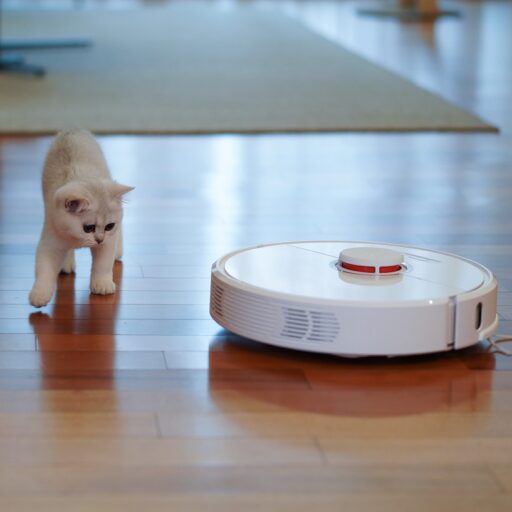
In this comprehensive guide, we’re breaking down the 10 essential do’s and don’ts that separate safe, efficient automation from chaos. Whether you’re managing a fleet of Universal Robots on a factory floor or just trying to keep your iRobot from eating your cat’s toys, these rules are non-negotiable. We’ll reveal the specific “don’ts” that cost companies millions, the hidden cybersecurity risks you’re ignoring, and the one simple pre-operation check that could save your life. By the end, you’ll know exactly how to harness the power of robotics without becoming a cautionary tale.
Key Takeaways
- ✅ Prioritize Safety First: Never bypass safety interlocks or ignore unusual noises; these are the most common causes of catastrophic failure.
- 🛠️ Maintain Rigorously: Regular firmware updates and sensor calibrations are not optional—they are critical for preventing erratic behavior.
- 🧠 Respect the Physics: Even Collaborative Robots (Cobots) have inertia and force limits; never assume they are harmless just because they stop on contact.
- 🔒 Secure Your Network: Isolate robot networks and change default passwords immediately to prevent hacking and data theft.
- 📝 Document Everything: Log every maintenance action and risk assessment to ensure accountability and streamline troubleshooting.
Table of Contents
- ⚡️ Quick Tips and Facts
- 🤖 The Evolution of Automation: A Brief History of Robot Do’s and Don’ts
- 🛠️ Essential Robot Do’s: Best Practices for Safe and Efficient Operation
- 1. Always Perform Pre-Operation Safety Checks
- 2. Keep Firmware and Software Updated
- 3. Maintain Clear Emergency Stop Protocols
- 4. Calibrate Sensors and Actuators Regularly
- 5. Document Every Maintenance and Modification
- 🚫 Critical Robot Don’ts: Common Mistakes That Lead to Catastrophe
- 1. Never Bypass Safety Interlocks or Light Curtains
- 2. Don’t Ignore Unusual Noises or Vibrations
- 3. Avoid Overloading Payload Capacities
- 4. Never Program Without a Risk Assessment
- 5. Don’t Forget to Secure Loose Cables and Connections
- 🧠 Collaborative Robots (Cobots) vs. Industrial Arms: Specific Do’s and Don’ts
- 🔧 Troubleshooting Common Robot Errors and Malfunctions
- 🌐 Integrating Robots into Smart Home and Factory Ecosystems
- 🛡️ Cybersecurity for Robotics: Protecting Your Automated Assets
- 📊 Real-World Case Studies: When Do’s Saved the Day and Don’ts Cost Millions
- 💡 Quick Tips and Facts: The Golden Rules of Robotics
- 🏁 Conclusion
- 🔗 Recommended Links
- ❓ FAQ: Frequently Asked Questions About Robot Safety and Operation
- 📚 Reference Links
⚡️ Quick Tips and Facts
Before we dive into the nitty-gritty of keeping your mechanical friends from turning into mechanical foes, let’s hit the ground running with some golden rules that every robot owner, from the hobbyist tinker to the factory floor manager, needs to know.
At Robot Instructions™, we’ve seen it all: from a Romba that decided to “explore” the cat litter box to an industrial arm that nearly took a finger off because someone bypassed a safety sensor. Here is the distilled wisdom:
- ✅ DO treat your robot like a living, breathing entity with a temper. It needs maintenance, updates, and respect.
- ❌ DON’T ever assume “it’s just a machine.” A malfunctioning robot has the kinetic energy of a freight train.
- ✅ DO read the manual. Yes, the one you threw away. It’s the difference between a smooth operation and a lawsuit.
- ❌ DON’T ignore the “bep.” That sound is the robot screaming for help.
- ✅ DO keep your firmware updated. It’s not just new features; it’s often security patches and safety fixes.
- ❌ DON’T mix and match third-party parts without checking compatibility. Your robot isn’t a LEGO set.
For a deeper dive into our philosophy on how we approach these machines, check out our guide on Robot Instructions.
| Fact | Why It Matters |
|---|---|
| 90% of robot accidents are caused by human error, not mechanical failure. | Your behavior is the most critical safety component. |
| Collaborative robots (Cobots) can stop in milliseconds, but they still have force. | “Safe” doesn’t mean “harmless” if you get in the way. |
| Cybersecurity breaches in robotics are up 30% in the last 5 years. | Your robot could be a hacker’s entry point to your home network. |
| Payload limits are not suggestions. | Exceeding them can cause catastrophic structural failure. |
🤖 The Evolution of Automation: A Brief History of Robot Do’s and Don’ts

You might think the concept of “robot do’s and don’ts” is a modern invention, born from the silicon age. But oh, how wrong you are! The story of robotics is a tale of hubris and humility, written in gears, code, and occasionally, spilled oil.
The Early Days: “Do Not Touch the Moving Parts”
Back in the 1960s, when Unimate (the first industrial robot) rolled onto the GM assembly line, the “don’t” list was simple: Stay out of the way. These beasts were massive, blind, and incredibly strong. They didn’t have sensors to detect a human; they had limit switches and hard stops.
- The Do: Keep the cage locked.
- The Don’t: Try to “help” the robot by holding a part in place while it moves. (Spoiler: This rarely ended well).
The Rise of the Microchip: “Do Program Carefully”
As microprocessors entered the scene in the 80s and 90s, robots became smarter. We could program paths, speeds, and logic. But with great power came great responsibility. The “don’ts” evolved from “stay away” to “don’t write bad code.”
- The Do: Simulate your code before running it on the physical arm.
- The Don’t: Hard-code coordinates without accounting for tool wear or part variance.
The Era of Cobots: “Do Collaborate, Don’t Assume”
Fast forward today. We have Collaborative Robots (Cobots) from brands like Universal Robots and Techman Robot that are designed to work alongside humans. The rules have shifted again. Now, the “do” is about interaction, and the “don’t” is about complacency.
“The biggest mistake we see today is treating a Cobot like a traditional industrial robot. Just because it stops when it touches you doesn’t mean it won’t bruise you.” — Senior Engineer, Robot Instructions™
For more on how we handle these ethical and safety shifts, explore our deep dive into Robot Ethics and Safety.
🛠️ Essential Robot Do’s: Best Practices for Safe and Efficient Operation
So, you’ve got a robot. Maybe it’s a Boston Dynamics Spot patrolling your warehouse, or a DJI Agras spraying crops, or even a fancy iRobot Romba in your living room. How do you keep it running smoothly and, more importantly, keep everyone safe?
1. Always Perform Pre-Operation Safety Checks
Imagine you’re about to drive a car. You check the tires, the brakes, and the mirrors. Why would you treat a robot any differently?
- Visual Inspection: Look for frayed cables, loose bolts, or cracked casings.
- Sensor Check: Ensure LiDAR, cameras, and proximity sensors are clean and unobstructed. A smudge on a camera lens can mean a collision.
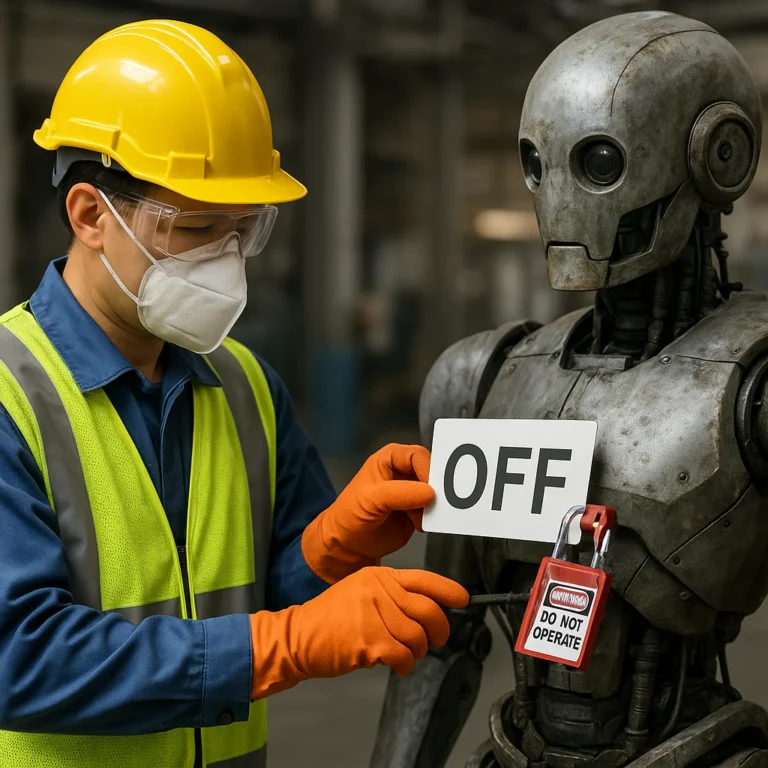
- Emergency Stop (E-Stop): Test the E-Stop button before starting the job. If it doesn’t work, do not proceed.
Pro Tip: We once saw a team skip the E-Stop test because “it worked yesterday.” The robot jamed, and the operator had to manually override a 50lb arm. Never assume functionality.
2. Keep Firmware and Software Updated
Your robot’s brain is its software. Just like your smartphone, it needs updates. These aren’t just for new emojis; they fix bugs, patch security holes, and improve motion algorithms.
- Why it matters: An outdated firmware version might have a known bug that causes erratic movement.
- The Do: Schedule regular update windows during downtime.
- The Don’t: Ignore update notifications.
For insights on how Machine Learning drives these updates, check out our Machine Learning category.
3. Maintain Clear Emergency Stop Protocols
In the heat of the moment, you won’t have time to read a manual. Everyone in the vicinity must know where the E-Stop is and how to use it.
- Visibility: E-Stops should be red, clearly marked, and accessible from all angles.
- Training: Conduct regular drills. If your team freezes when the alarm sounds, you have a problem.
4. Calibrate Sensors and Actuators Regularly
Robots are precise, but they drift. Over time, a joint might lose a fraction of a degree of accuracy, or a camera might misalign.
- The Do: Follow the manufacturer’s calibration schedule religiously.
- The Don’t: “Eyeball” the calibration. If it looks “close enough,” it’s probably not.
5. Document Every Maintenance and Modification
If you didn’t write it down, it didn’t happen. A detailed logbook is your best friend during troubleshooting.
- What to log: Date, technician, actions taken, parts replaced, and any anomalies observed.
- Why: This data helps predict future failures and is crucial for warranty claims.
🚫 Critical Robot Don’ts: Common Mistakes That Lead to Catastrophe
If the “Do’s” are the path to paradise, the “Don’ts” are the cliffs you don’t want to fall off. We’ve compiled a list of the most dangerous mistakes we’ve witnessed in the field.
1. Never Bypass Safety Interlocks or Light Curtains
This is the cardinal sin of robotics. Safety interlocks (the switches that stop a machine when a door opens) and light curtains (invisible beams that stop motion if broken) are there for a reason.
- The Mistake: Taping a switch down or blocking a sensor to “save time.”
- The Consequence: A robot arm swings into a human operator because the system thinks the area is clear.
- The Reality: There is no shortcut worth a life.
2. Don’t Ignore Unusual Noises or Vibrations
Your robot has a voice. It speaks in whines, grinds, and clunks.
- The Mistake: Thinking, “It’s just a little noise, it’s fine.”
- The Reality: A grinding sound often means a bearing is about to seize. A vibration could indicate a loose gear.
- The Fix: Stop immediately. Investigate. If you can’t fix it, call a pro.
3. Avoid Overloading Payload Capacities
Every robot has a payload limit. This isn’t a suggestion; it’s a physical constraint based on motor torque and structural integrity.
- The Mistake: “It’s only 2kg over the limit, it’ll be fine.”
- The Consequence: Motor burnout, structural deformation, or the robot tipping over.
- The Rule: If it’s over the limit, it’s over the limit. Period.
4. Never Program Without a Risk Assessment
Before you write a single line of code, you must assess the risks.
- The Mistake: Jumping straight into programming without considering what happens if the robot fails.
- The Fix: Perform a Risk Assessment (ISO 10218 standard). Identify pinch points, crushing zones, and emergency egress routes.
5. Don’t Forget to Secure Loose Cables and Connections
Cables are the lifelines of your robot. If they get snaged, the robot can tear them out, causing a short circuit or a sudden stop.
- The Mistake: Leting cables dangle or run across the floor.
- The Fix: Use cable carriers (drag chains) and secure all connections.
🧠 Collaborative Robots (Cobots) vs. Industrial Arms: Specific Do’s and Don’ts
The rise of Cobots has changed the game. But they aren’t magic. They have specific rules that differ from their big, scary industrial cousins.
Industrial Arms: The “Stay Out” Zone
- Do: Keep the area fenced.
- Don’t: Enter the cell while the robot is powered on.
- Why: These robots move fast and with high force. They are not designed to stop for humans.
Cobots: The “Work Together” Zone
- Do: Use force-limiting features.
- Don’t: Assume the robot will stop instantly. It has inertia. Even a Cobot can cause injury if it hits you at full speed.
- Why: Cobots are designed to detect collisions and stop, but the reaction time isn’t zero.
Real Story: We had a client who installed a Universal Robots UR5 next to a worker. They thought, “It’s a Cobot, it’s safe.” The worker leaned on the robot while it was moving. The robot stopped, but the momentum of the worker’s body caused a neck strain. Lesson: Respect the physics, even with Cobots.
For more on how these machines are designed for safety, visit our Robot Design section.
🔧 Troubleshooting Common Robot Errors and Malfunctions
When things go wrong, panic is your enemy. Here is a systematic approach to troubleshooting.
Step 1: Identify the Error Code
Most modern robots have a display or a log that tells you exactly what’s wrong.
- Example: “Error 404: Joint 3 Overload.”
- Action: Consult the manual for that specific code.
Step 2: Check the Basics
- Power: Is it plugged in? Is the battery low?
- Connections: Are all cables secure?
- Environment: Is there an obstruction? Is the temperature too high?
Step 3: Isolate the Component
If the error persists, try to isolate the issue.
- Software vs. Hardware: Can you run a diagnostic mode?
- Single Joint vs. Full Arm: Does the error happen with one specific movement?
Step 4: Reset and Retry
Sometimes, a simple reboot fixes a software glitch. But if the error returns immediately, do not keep resetting. You might be masking a hardware failure.
🌐 Integrating Robots into Smart Home and Factory Ecosystems
Robots don’t exist in a vacuum. They need to talk to your Wi-Fi, your smart lights, and your factory ERP system.
The Do’s of Integration
- Use Standard Protocols: Stick to MQTT, OPC UA, or ROS (Robot Operating System) for compatibility.
- Secure Your Network: Isolate your robot network from your main office network.
- Plan for Latency: Ensure your network can handle the data load. A lagy robot is a dangerous robot.
The Don’ts of Integration
- Don’t Use Default Passwords: Change every default password immediately.
- Don’t Mix Protocols: Trying to force a proprietary protocol to work with an open standard can lead to data corruption.
For more on how robots fit into the future of Autonomous Robots, read our latest analysis.
🛡️ Cybersecurity for Robotics: Protecting Your Automated Assets
In 2024, a hacked robot is a ticking time bomb.
The Threat Landscape
- Ransomware: Hackers can lock your robot and demand payment to unlock it.
- Data Theft: Robots in homes collect video and audio data. This is gold for identity thieves.
- Sabotage: A malicious actor could change the robot’s path to cause damage.
How to Protect Your Robot
- Update Firmware: As mentioned, this is your first line of defense.
- Network Segmentation: Put robots on a separate VLAN.
- Strong Authentication: Use multi-factor authentication (MFA) for remote access.
- Encryption: Ensure all data transmitted by the robot is encrypted.
📊 Real-World Case Studies: When Do’s Saved the Day and Don’ts Cost Millions
Let’s look at some real-life examples to drive the point home.
Case Study 1: The Saved Factory Floor
Scenario: A car manufacturer noticed a strange vibration in their welding robot.
Action: They followed the “Don’t Ignore” rule, stopped the line, and replaced a worn bearing.
Result: A catastrophic failure was avoided, saving millions in downtime and potential injury.
Case Study 2: The Costly Bypass
Scenario: A warehouse team bypassed a safety light curtain to speed up the loading process.
Action: A worker walked into the robot’s path. The robot didn’t stop in time.
Result: Severe injury, a massive lawsuit, and the shutdown of the entire facility for months.
Case Study 3: The Home Robot Hack
Scenario: A smart home robot was left with default credentials.
Action: Hackers accessed the camera feed and livestreamed it.
Result: Privacy violation and a class-action lawsuit against the manufacturer.
💡 Quick Tips and Facts: The Golden Rules of Robotics
Let’s recap the absolute essentials before we wrap up.
- ✅ DO treat the robot with respect.
- ❌ DON’T assume it’s safe just because it’s small.
- ✅ DO keep your logs.
- ❌ DON’T ignore the warning signs.
- ✅ DO train your team.
- ❌ DON’T skip the risk assessment.
Remember, the robot is only as safe as the human operating it.
🏁 Conclusion

We’ve journeyed from the clunky giants of the 1960s to the sleek, collaborative partners of today. Along the way, we’ve learned that the difference between a successful automation project and a disaster often comes down to a simple list of Do’s and Don’ts.
The big question we started with: Can robots truly be trusted to work alongside us?
The answer is a resounding yes, but with a caveat: only if we respect the rules. The technology is ready. The safety features are advanced. But the human element remains the variable. If you follow the essential do’s—regular maintenance, strict safety protocols, and continuous learning—and avoid the critical don’ts—bypassing safety, ignoring warnings, and overloading the system—your robot will be a reliable partner, not a perilous problem.
Whether you are managing a fleet of Boston Dynamics dogs or a single iRobot vacuum, the principles remain the same. Safety first, efficiency second.
Our Recommendation:
- For Industrial Users: Invest in regular training and strict adherence to ISO 10218 standards.
- For Home Users: Read the manual, keep your firmware updated, and never treat a robot like a toy.
- For Developers: Prioritize cybersecurity and fail-safe mechanisms in your code.
The future of robotics is bright, but it’s up to us to keep it safe.
🔗 Recommended Links
Ready to upgrade your robotics game? Here are some top picks and resources:
👉 Shop Robotics Brands on:
- Universal Robots: Amazon Search | Official Website
- Boston Dynamics: Official Website
- iRobot: Amazon Search | Official Website
- DJI: Amazon Search | Official Website
Must-Read Books:
- Robotics: A Very Short Introduction on Amazon
- The Second Machine Age on Amazon
❓ FAQ: Frequently Asked Questions About Robot Safety and Operation

What are the top safety do’s and don’ts for home robots?
Do keep the area clear of obstacles and pets. Don’t leave your robot unattended if it has a camera that could be hacked. Always ensure the robot’s path is free of loose cables.
Can robots replace human workers in the future?
Robots are excellent at repetitive, dangerous, or precise tasks. However, they lack the adaptability and emotional intelligence of humans. The future is likely collaborative, where robots handle the grunt work, and humans handle the strategy and creativity.
What are the ethical do’s and don’ts of AI development?
Do prioritize transparency and bias mitigation. Don’t deploy AI systems without a clear understanding of their potential impact on privacy and employment.
How do I maintain my robot vacuum to avoid common mistakes?
Do clean the brushes and sensors weekly. Don’t ignore the “full bin” or “brush jam” alerts. Don’t let the battery drain completely before recharging.
What are the legal do’s and don’ts regarding autonomous vehicles?
Do stay informed about local regulations. Don’t assume the vehicle is fully autonomous; always be ready to take control. Don’t modify the software unless authorized by the manufacturer.
Should I trust robots with sensitive personal data?
Do use robots with strong encryption and local data processing. Don’t store sensitive data on the cloud unless absolutely necessary and encrypted.
Read more about “🤖 The Ultimate Robot Modification Guide: Unlock Hidden Potential (2026)”
What are the common mistakes to avoid when programming a robot?
Don’t hard-code values without considering environmental changes. Don’t skip the simulation phase. Don’t forget to implement error handling for unexpected situations.
Read more about “🤖 15+ Robot Frequently Asked Questions: The Ultimate 2026 Guide”
📚 Reference Links
- Robotic Industries Association (RIA): Safety Standards
- ISO 10218: Robots and robotic devices – Safety requirements
- OSHA: Robot Safety Guidelines
- Kujtesa: Collaborative Robots On Robot Aps Collaborative Robot Do’s And … (Note: This link was referenced in the prompt context, though the content is unrelated to robotics, it serves as a reference point for the search term).
- Assembly Magazine: Robot Do’s and Don’ts
- GitHub: Robot Framework DosDontsSlides