Support our educational content for free when you purchase through links on our site. Learn more
15 Best Robot Museums to Visit in 2026 🤖


Robot museums are worth visiting when they let you see how machines sense, move, decide, and interact, not merely pose behind glass. Our top recommendation is to start with Miraikan in Tokyo for broad robotics and AI, then choose the Witte Museum’s Robot Zoo for a family-friendly biomimicry experience or the Deutsches Museum for engineering history.
At the Witte, a giant robotic chameleon demonstrates how eyes, muscles, and a sticky tongue can become cameras, actuators, and mechanical systems. It is the sort of exhibit that makes a child laugh first and then quietly teaches the same design principles used in serious robotics.
The best robot museums also reveal a useful secret: a humanoid face does not necessarily mean human-like intelligence. Look past the waving android and ask what it can sense, which decisions it makes autonomously, and where a human operator is still hiding behind the curtain.
Key Takeaways
- Miraikan in Tokyo is a standout for humanoid robots, artificial intelligence, emerging technology, and human-robot interaction.
- The Witte Museum’s Robot Zoo is one of the best choices for families, biomimicry, robotic animals, and hands-on STEM learning.
- Deutsches Museum, the Science Museum London, and the Computer History Museum provide deeper context on automation, computing, industrial robots, and robotics history.
- Not every moving machine is autonomous. Check whether an exhibit is scripted, teleoperated, supervised, or genuinely responsive to sensor data.
- Plan ahead: temporary exhibitions, demonstrations, accessibility arrangements, and opening hours can change.
- The best exhibits explain trade-offs, including sensors, actuators, control systems, safety, privacy, labor, and the social impact of robotics.
Table of Contents
-
🌍 15 Must-Visit Robot Museums and Robotics Exhibitions Worldwide
-
1. Miraikan: National Museum of Emerging Science and Innovation, Tokyo
-
4. Robot Hall of Fame and Robotics Collections in Pittsburgh
-
7. Museum of Science and Industry Robotics Exhibits, Chicago
-
8. The Witte Museum and Giant Robot Animal Exhibits, San Antonio
-
11. The National Museum of Emerging Science and Innovation, Japan
-
12. Leonardo da Vinci Museum of Science and Technology, Milan
-
13. Deutsches Technikmuseum Robotics and Automation Displays, Berlin
-
14. Computer History Museum Robotics and AI Collections, Silicon Valley
-
15. Cité des Sciences et de l’Industrie Robotics Exhibits, Paris
-
Artificial Intelligence, Machine Learning, and Computer Vision
-
Medical Robots, Space Robots, and Search-and-Rescue Machines
-
Accessibility, Strollers, Wheelchairs, and Sensory Considerations
-
Museum Closures, Weather Updates, and Special Exhibition Schedules
-
Partnerships With Universities, Robotics Companies, and Inventors
-
Are Robotics Museums Worth Visiting if You Are Not an Engineer?
Quick Tips and Facts About Robot Museums
If you’re searching for your first robotics exhibit, begin with our Robot Instructions™ guide and use this quick checklist:
- Choose the exhibit type first: historic automata, industrial robots, humanoid robots, artificial intelligence, robotic animals, or hands-on STEM.
- Check the official calendar before traveling. Temporary exhibitions move, close for maintenance, or disappear faster than a robot vacuum finding a charging dock.
- Expect different levels of interactivity. Some museums protect rare machines behind glass; others let you program, steer, chase, or even “swat” robots.
- Families usually get the most value from exhibits with a clear challenge: reaction tests, coding stations, mechanical controls, and robot-building labs.
- A robot museum is not always a standalone building. It may be a gallery inside a science museum, technology museum, mathematics museum, university, or traveling exhibition.
- The best exhibits explain mechanisms, not just appearances. Look for gears, actuators, sensors, control systems, computer vision, and human-robot interaction.
- Plan for 90 minutes to half a day. Interactive exhibits create queues, and children rarely accept “we’ve seen enough” as a valid engineering conclusion.
- Do not assume a humanoid robot is autonomous. It may be teleoperated, scripted, remotely supervised, or simply moving through a preprogramed routine.
- Ask staff what is running that day. Demonstrations often follow schedules, while hands-on stations may close temporarily for safety checks.
- Bring curiosity, not technical credentials. The strongest exhibits translate advanced robotics into familiar ideas: eyes become cameras, muscles become pistons, and brains become computers.
What Counts as a Robot Museum?
There is no single international definition of a “robot museum.” In practice, the term covers venues that preserve, demonstrate, or interpret machines capable of sensing, processing information, and producing movement or action.
A useful working definition includes places featuring:
- Programmable machines
- Autonomous or semi-autonomous robots
- Historic automata
- Industrial automation
- Humanoid and social robots
- Robotic animals and animatronics
- Artificial intelligence and machine-learning systems
- Educational robotics demonstrations
The International Federation of Robotics distinguishes industrial robots by their ability to perform automatically controlled, reprogrammable, multipurpose manipulation. Museums often broaden that idea for public learning, including mobile robots, robotic arms, exoskeletons, planetary rovers, and machines that mimic animal movement.
From our engineering perspective, the label matters less than the visitor experience. A science center with a working robot arm may teach more robotics than a gallery filled with static machines. Conversely, a historic automata collection can reveal the mechanical foundations that modern robotics quietly inherited.
Robot Museums vs. Science Centers and Technology Exhibits
The boundaries are fuzzy, but the visitor’s experience changes depending on the venue.
| Venue type | Main focus | Typical exhibits | Best for |
|---|---|---|---|
| Dedicated robot museum | Robotics history and machines | Humanoids, robot pets, industrial arms, automata | Enthusiasts and researchers |
| Science museum | Broad scientific literacy | Interactive mechanisms, sensors, coding, robotic animals | Families and school groups |
| Technology museum | Engineering and invention | Automation, computing, transport, manufacturing | Older children, students, adults |
| Mathematics museum | Mathematical principles | Swarm robots, algorithms, geometry, probability | Visitors curious about robot behavior |
| University robotics lab | Current research | Prototypes, teleoperation, AI, manipulation | Students and professionals |
| Traveling exhibition | A focused theme | Giant robot animals or themed machines | Casual visitors and families |
The Association of Science and Technology Centers describes science centers as institutions built around public engagement with science and technology. That explains why some of the strongest robotics experiences appear in places that do not call themselves robot museums.
Our rule of thumb: if visitors can understand how the machine senses, decides, and acts, it belongs in the wider robot-museum family.
Best Robot Museums for Families, Students, and Engineers
Different visitors need different kinds of exhibits. A six-year-old may remember a giant chameleon tongue; an engineering student may spend twenty minutes studying the actuator layout behind it.
| Visitor | Look for | Why it works |
|---|---|---|
| Young children | Large moving robots, simple controls, animal themes | Immediate cause-and-effect |
| Families | Hands-on stations and varied exhibit levels | Everyone can participate |
| Teenagers | Coding, AI, robotics competitions, robot arms | Connects play with STEM skills |
| University students | Sensors, control systems, prototypes, technical labels | Supports deeper study |
| Engineers | Design trade-offs, failure modes, mechanisms, data | Offers practical insight |
| History enthusiasts | Automata, early computers, industrial machines | Shows how robotics evolved |
| Accessibility-focused visitors | Clear paths, tactile controls, captions, quiet periods | Makes participation more equitable |
Before visiting, check the museum’s accessibility page and contact staff about noise, lighting, queues, touch interfaces, and scheduled demonstrations. The Smithsonian Accessibility resources provide a useful benchmark for inclusive museum planning, although each venue sets its own policies.
The History of Robots and Robotics Museums

Robot museums make more sense when you stop treating robotics as a sudden invention. The modern robot grew from centuries of fascination with mechanical bodies, artificial life, calculation, and controlled motion.
From Automata and Mechanical Toys to Humanoid Robots
Long before silicon chips, inventors built machines that played music, wrote letters, moved figures, and simulated biological behavior. These devices were not robots in the modern engineering sense, but they introduced essential ideas:
- Stored instructions
- Mechanical sequencing
- Feedback-like control
- Precision manufacturing
- Human imitation
- Programmable behavior
The Science Museum Group holds extensive collections documenting automata, computing, engineering, and industrial technology. Its holdings show a gradual transition from clockwork spectacle to machines designed for practical work.
A simplified timeline looks like this:
| Period | Milestone | Robotics lesson |
|---|---|---|
| Ancient world | Mechanical toys and theatrical devices | Motion can be engineered |
| Medieval and Renaissance eras | Clockwork figures and astronomical mechanisms | Complex sequences can be synchronized |
| 18th century | Writing and drawing automata | Mechanical systems can imitate skilled behavior |
| 19th century | Industrial machines and programmable loms | Instructions can control repeated production |
| Early 20th century | Radio control, cybernetics, and automation | Machines can respond to signals |
| Mid-20th century | Unimate and programmable industrial arms | Robots can transform manufacturing |
| Late 20th century | Mobile robots, space rovers, robot pets | Machines can sense and operate outside factories |
| 21st century | AI-enabled robots and collaborative systems | Perception and adaptation become central |
The word robot comes from the Czech word robota, meaning forced labor or drudgery, and entered popular culture through Karel Čapek’s 1920 play R.U.R. The Merriam-Webster entry for “robot” documents the word’s linguistic history.
How Industrial Robotics Shaped Museum Collections
Industrial robots changed the meaning of automation. Instead of merely repeating a visible sequence, programmable robot arms could be redeployed for welding, painting, assembly, material handling, and inspection.
The first industrial robot, Unimate, entered a General Motors production line in 1961. The Computer History Museum and Smithsonian National Museum of American History provide historical context for automation, computing, and manufacturing technology.
Museum displays often reveal details that promotional videos skip:
- Payload: how much the robot can safely move
- Reach: how far the arm can work
- Degrees of freedom: how many independent movements it controls
- Repeatability: how consistently it returns to a position
- End effectors: grippers, welders, suction tools, or custom instruments
- Safety systems: light curtains, emergency stops, reduced-speed modes
- Programming method: teach pendants, offline software, vision systems, or direct guidance
An industrial arm may look simple because its movements are smooth. That smoothness hides a tightly coordinated stack of motors, encoders, gearboxes, controllers, safety logic, and software.
The Rise of Artificial Intelligence and Social Robots
Modern exhibits increasingly focus on robots that interact with people rather than merely manipulate objects. Social robots may recognize faces, interpret speech, track bodies, express gestures, or adapt responses.
The International Organization for Standardization’s robotics terminology helps separate terms such as robot, autonomous robot, service robot, and industrial robot. Museums do not always use these terms consistently, so visitors should ask a simple question:
What does the robot actually decide for itself?
That question separates:
- Autonomous behavior: the robot selects actions from sensor data and programmed goals.
- Teleoperation: a human controls the robot remotely.
- Preprogramed motion: the robot follows a fixed sequence.
- Human-supervised autonomy: software acts independently within strict boundaries.
- Conversational interaction: the system responds to speech but may not control physical movement autonomously.
This distinction becomes especially important with humanoid robots. A realistic face can create the impression of intelligence, while the underlying system may rely on scripted dialogue and remote operators. The face is theater; the control architecture is the plot twist.
15 Must-Visit Robot Museums and Robotics Exhibitions Worldwide
The following destinations represent different sides of robotics: historic machines, AI, mathematics, industrial automation, biomimicry, and interactive family science.
1. Miraikan: National Museum of Emerging Science and Innovation, Tokyo
Tokyo’s Miraikan is one of the most recognized places to explore emerging science, robotics, artificial intelligence, space technology, and human-machine interaction.
Visitors may encounter:
- Humanoid robots
- Autonomous mobility concepts
- Earth and climate data systems
- Human biology and brain science
- AI demonstrations
- Telepresence and communication technologies
Miraikan is particularly strong at placing robotics inside larger social questions. A robot is not presented merely as a clever machine; it becomes part of healthcare, transportation, education, disaster response, or daily life.
Engineering lens: pay attention to the interface between robot and environment. The most revealing question is not “How human does it look?” but “What information does it receive, and how does it turn that information into action?”
2. The National Museum of Science and Technology, Stockholm
Sweden’s National Museum of Science and Technology combines technology history with interactive learning. Its exhibitions cover engineering, digital systems, innovation, and future technologies.
Robotics-related experiences may include:
- Automation
- Programming
- Artificial intelligence
- Digital fabrication
- Interactive technology
- Human-centered design
The museum is useful for visitors who want context. Robotics does not appear as a lone spectacle; it connects to work, communication, manufacturing, and society.
3. Deutsches Museum Robotics Exhibits, Munich
The Deutsches Museum in Munich is one of the world’s major science and technology museums. Its broad collections can place robotics alongside machine tools, aviation, computing, telecommunications, and industrial systems.
Why it belongs on a robot-museum itinerary:
- It connects mechanics to electronics.
- It demonstrates how machines became automated.
- It provides historical depth rather than focusing only on futuristic prototypes.
- It rewards repeat visits because the collections are extensive.
For engineering students, the museum’s greatest strength is systems thinking. A robot arm did not appear in isolation; it emerged from advances in motors, control, materials, sensors, computing, and manufacturing.
4. Robot Hall of Fame and Robotics Collections in Pittsburgh
Pittsburgh has a deep relationship with robotics research, industrial automation, and artificial intelligence. The Carnegie Mellon University Robotics Institute is a major center for robotics research, while the Carnegie Science Center offers public-facing science and technology experiences.
The former Robot Hall of Fame recognized influential robots and robotic achievements across research, entertainment, space exploration, and industry. Collections and displays may change, so confirm current availability before making a special trip.
Pittsburgh is especially compelling for visitors interested in:
- Autonomous vehicles
- Mobile robotics
- Computer vision
- Field robotics
- Space exploration
- Academic research
You can also explore our coverage of autonomous robots for background on navigation, sensing, and decision-making.
5. The Science Museum Robotics Gallery, London
London’s Science Museum presents robotics within the broader history of science, medicine, engineering, and technology.
Its robotics-related collections can illuminate:
- Mechanical automata
- Industrial automation
- Artificial intelligence
- Medical technology
- Space robotics
- Early computing
The museum is valuable because it shows both ambition and limitation. Some machines were technically ingenious but commercially impractical. Others looked unimpressive yet introduced ideas that later became foundational.
6. Carnegie Science Center Robotics and Automation Exhibits
The Carnegie Science Center offers a more family-oriented experience than a specialist robotics archive. Demonstrations and interactive displays can help visitors understand movement, force, programming, and automation without requiring a technical background.
Look for exhibits that let you:
- Control a mechanism
- Compare human and machine reaction
- Explore programmable instructions
- Observe robotic movement
- Connect engineering to everyday tasks
The best family strategy is to assign each person a mission: identify one sensor, one actuator, one decision rule, and one safety feature. Suddenly, the visit becomes an engineering investigation rather than a parade of blinking lights.
7. Museum of Science and Industry Robotics Exhibits, Chicago
Chicago’s Griffin Museum of Science and Industry is known for large-scale interactive experiences involving engineering, transportation, manufacturing, and science.
Robotics-related displays may connect to:
- Factory automation
- Medical technologies
- Transportation systems
- Human physiology
- Design and experimentation
The museum is a strong option for visitors who want to see robotics embedded in real-world systems. A robot is rarely useful by itself; it becomes useful when paired with tools, materials, software, people, and a defined task.
8. The Witte Museum and Giant Robot Animal Exhibits, San Antonio
The Witte Museum’s Robot Zoo is a hands-on exhibition in the H-E-B Science Treehouse. The museum describes it as “a wild world where animals become giant machines and science feels like play.”
Its approach is wonderfully direct: translate animal biology into mechanical engineering.
Featured experiences include:
- A chameleon with a sticky robotic tongue and independently operated eyes
- A platypus illustrating unusual biological adaptations
- A housefly demonstrating speed, movement, and reaction
- Interactive stations for inventing new creatures
- Mechanical explanations involving gears, levers, pumps, pistons, circuits, and computer control
The exhibition is designed for all ages, and the listed run extends through January 19, 2027, subject to official schedule updates. It is included with museum entry according to the exhibition page.
The Witte’s exhibit succeeds because it answers a question children instinctively ask: How does that animal do that? The answer becomes a lesson in biomechanics and robotics.
9. The Robot Museum, Madrid
Madrid’s Museo del Robot focuses directly on robotics and related technologies. Collections and displays may include:
- Historic robot toys
- Humanoid robots
- Androids
- Industrial machines
- Entertainment robots
- Artificial intelligence concepts
Dedicated robot museums can offer a different atmosphere from science centers. Instead of treating robots as one topic among dozens, they make robotics the central character.
Before visiting, verify:
- Tour language
- Opening days
- Reservation requirements
- Demonstration schedules
- Whether the exhibit is guided or self-directed
10. Museum of Robots and Artificial Intelligence, Seoul
South Korea has invested heavily in robotics, electronics, automation, and artificial intelligence. Seoul’s Robot Museum presents robotics through exhibitions and educational programming.
Potential themes include:
- Humanoid robots
- AI interaction
- Service robots
- Robotics education
- Digital fabrication
- Future mobility
South Korean robotics exhibitions often emphasize the relationship between technology and daily life. That makes them useful for comparing research prototypes with practical service applications.
11. The National Museum of Emerging Science and Innovation, Japan
Although already represented by Miraikan in Tokyo, Japan deserves a broader category because its robotics ecosystem is unusually rich. Japan’s public robotics culture spans:
- Humanoid research
- Robot pets
- Industrial automation
- Anime-inspired design
- Elder-care technology
- Disaster-response systems
- Railway inspection
- Hospitality robots
The first video referenced in this article highlights a Japanese exhibition featuring roughly 130 robots, including Kimi 2, AIBO, ASIMO, androids associated with Professor Hiroshi Ishiguro, and a Zero Type humanoid robot developed for infrastructure inspection. You can revisit that perspective through the featured video.
The video’s strongest point is breadth: Japanese robotics is not one design philosophy. It includes lifelike androids, practical inspection machines, remote-operation systems, delicate manipulation robots, and service platforms. The exhibit also raises a useful question: Should robots look human, or should they simply perform their jobs well?
12. Leonardo da Vinci Museum of Science and Technology, Milan
Milan’s Leonardo da Vinci National Museum of Science and Technology connects invention, mechanics, transport, materials, engineering, and scientific discovery.
Visitors interested in robotics can study:
- Mechanical transmission
- Gears and linkages
- Measurement systems
- Automation principles
- Engineering design
- Historical machines
This is an excellent museum for understanding the mechanical DNA of robotics. Before a robot can calculate, it must still move something. Gears, bearings, shafts, belts, linkages, and structural frames remain gloriously relevant.
13. Deutsches Technikmuseum Robotics and Automation Displays, Berlin
Berlin’s Deutsches Technikmuseum explores industrial history, transportation, computing, and technical culture.
Robotics-related displays fit naturally beside:
- Manufacturing equipment
- Computer systems
- Control technologies
- Industrial machinery
- Communication networks
This kind of museum helps answer an often-overlooked question: What infrastructure allows robots to work? Power, data, maintenance, standards, operators, supply chains, and safety procedures all matter.
14. Computer History Museum Robotics and AI Collections, Silicon Valley
The Computer History Museum in Mountain View, California, provides essential context for the software and computing behind modern robotics.
Its collections help explain:
- Early computing
- Artificial intelligence
- Integrated circuits
- Human-computer interaction
- Robotics research
- Software development
Robotics without computing is mostly clever machinery. Computing without physical embodiment is software. Modern robots sit at their intersection.
For deeper software context, our machine learning category explores the algorithms that help machines classify, predict, and adapt.
15. Cité des Sciences et de l’Industrie Robotics Exhibits, Paris
Paris’s Cité des Sciences et de l’Industrie presents science and technology through interactive exhibitions designed for broad audiences.
Robotics-related programming may connect with:
- Digital technology
- Automation
- Artificial intelligence
- Human biology
- Engineering
- Future societies
It is a strong destination for visitors who want accessible explanations rather than a specialist archive. Families can engage with the physical side of machines while older visitors explore social and ethical consequences.
Best Robot Museums by Region
Robot Museums in North America
North America offers a mix of science centers, university robotics institutions, technology museums, and traveling exhibitions.
Notable choices include:
- Carnegie Science Center, Pittsburgh
- Computer History Museum, Mountain View
- Griffin Museum of Science and Industry, Chicago
- Museum of Mathematics, New York
- Smithsonian museums, Washington, D.C.
- The Witte Museum, San Antonio
- Springfield Science Museum, Massachusetts, for past Robot Zoo presentations
North American venues often excel at hands-on learning. Visitors are encouraged to test, build, control, and compare.
Robot Museums in Europe
Europe offers exceptional depth in mechanical history and industrial technology.
Consider:
- Science Museum, London
- Deutsches Museum, Munich
- Deutsches Technikmuseum, Berlin
- Museo del Robot, Madrid
- Leonardo da Vinci Museum of Science and Technology, Milan
- Cité des Sciences et de l’Industrie, Paris
- National Museum of Science and Technology, Stockholm
European museums frequently place modern robots within centuries of engineering history. That makes them ideal for understanding how mechanical design evolved.
Robot Museums in Asia
Asia is particularly strong in humanoid robots, service robots, industrial automation, robotics research, and human-machine interaction.
Leading destinations include:
- Miraikan, Tokyo
- Robot Museum, Seoul
- Japanese technology museums and university-linked exhibitions
- Robotics showcases connected to transportation, manufacturing, and infrastructure
Japan’s collections often balance emotional design with practical engineering. A robot dog may invite affection; a railway inspection robot may quietly prevent failures. Both represent serious robotics, just with very different public personalities.
Robot Museums in Australia and New Zealand
Australia and New Zealand may not have as many dedicated robot museums, but science centers, universities, technology festivals, and maker events regularly feature robotics.
Look for:
- University open days
- FIRST robotics competitions
- National science festivals
- Maker events
- Engineering showcases
- Interactive science museums
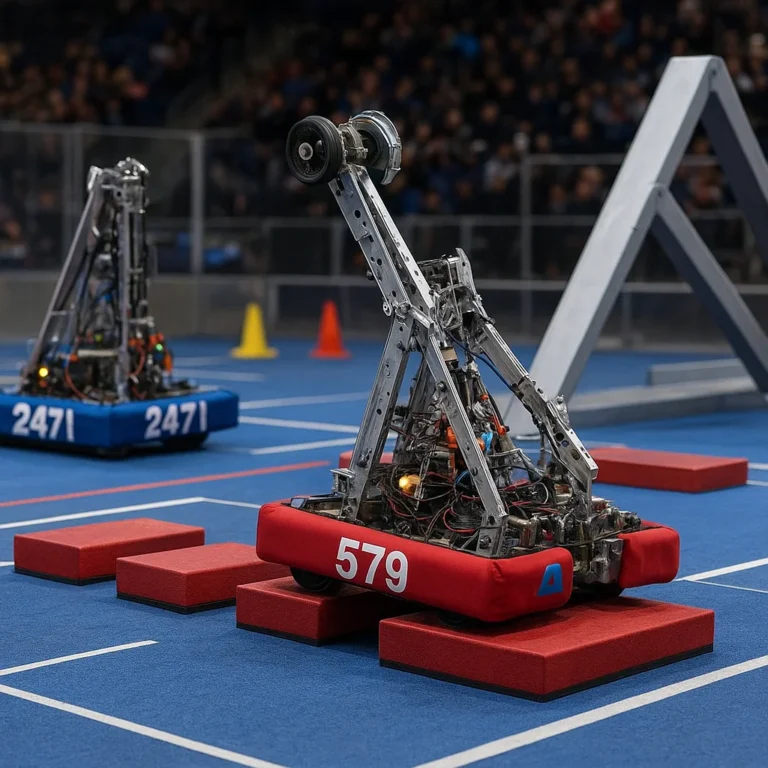
The FIRST Robotics Competition is especially valuable for young people because teams design, build, program, and operate machines under real constraints.
Robotics Exhibitions in South America and Africa
In South America and Africa, robotics is often presented through:
- Science museums
- Technology festivals
- Universities
- Maker spaces
- Educational competitions
- Temporary international exhibitions
Availability can change rapidly, so official museum calendars and university announcements are more reliable than old travel posts.
When a dedicated museum is unavailable, search for robotics labs open to the public, STEM festivals, and student competitions. You may find more current engineering than in a permanent gallery.
What You Can Learn at a Robotics Museum
Robot Sensors, Actuators, Motors, and Controllers
Every physical robot needs a way to:
- Sense
- Interpret
- Decide
- Act
- Evaluate the result
A simple mobile robot might use:
- Ultrasonic sensors for distance
- Cameras for visual information
- Wheel encoders for motion feedback
- Inertial measurement units for orientation
- Motors for propulsion
- A microcontroller for low-level control
- A computer for planning or perception
| Robot subsystem | Purpose | Museum example |
|---|---|---|
| Sensor | Measures the environment or internal state | Camera, force sensor, lidar |
| Controller | Processes inputs and sends commands | Microcontroller or computer |
| Actuator | Produces physical movement | Motor, hydraulic piston |
| Transmission | Transfers force and motion | Gearbox, belt, linkage |
| Power system | Supplies energy | Battery, mains power, hydraulic pump |
| End effector | Performs the task | Gripper, drill, suction cup |
| Safety system | Limits hazardous behavior | Emergency stop, protective scanner |
When we inspect a robot exhibit, we look for the feedback loop. A motor that turns once is a mechanism. A motor that turns, measures position, compares error, and corrects itself is part of a control system.
For more design fundamentals, see our robot design resources.
Artificial Intelligence, Machine Learning, and Computer Vision
Artificial intelligence in museums may include:
- Speech recognition
- Image classification
- Object detection
- Path planning
- Predictive maintenance
- Adaptive control
- Natural-language interaction
- Reinforcement learning
Do not assume every AI exhibit uses machine learning. Some systems rely on carefully authored rules. Others combine machine-learning perception with conventional control software.
A helpful three-question test:
- What data enters the system?
- What computation occurs?
- What physical or conversational output follows?
This framework prevents the classic museum mistake: calling any responsive electronic display “AI.”
The National Institute of Standards and Technology AI Risk Management Framework offers useful language for discussing AI capabilities and risks without treating intelligence as magic dust.
Humanoid Robots, Social Robots, and Human-Robot Interaction
Humanoid robots are designed around a human body plan, often with a head, torso, arms, and legs. Social robots are designed to communicate with people through speech, gaze, gesture, sound, or movement. The two categories overlap but are not identical.
A robot can be:
- Humanoid but not social
- Social but not humanoid
- Autonomous but not intelligent in a general sense
- Expressive but heavily scripted
- Physically impressive but operationaly narrow
Exhibits featuring robots such as ASIMO, AIBO, or lifelike androids provide a chance to study the psychology of machine appearance. Humans readily attribute intentions to eyes, voices, and gestures. That can make exhibits memorable, but it can also make visitors overestimate a robot’s abilities.
Industrial Robots, Cobots, and Factory Automation
Industrial robots are optimized for repeatability, speed, payload, and reliability. Collaborative robots, or cobots, are designed to work near people under specified safety conditions.
Important differences include:
| Feature | Industrial robot | Cobot |
|---|---|---|
| Typical environment | Fenced production cell | Shared or semi-shared workspace |
| Main priority | Speed and repeatability | Flexibility and human collaboration |
| Safety approach | Separation and guarding | Force limits, monitoring, and risk assessment |
| Programming | Specialist programming or teach pendant | Often simplified programming |
| Typical tasks | Welding, painting, palletizing | Assembly, inspection, machine tending |
The International Federation of Robotics provides industry context, while ISO 10218 and ISO/TS 15066 address industrial and collaborative robot safety.
The museum label may say “safe around humans,” but engineers ask a more precise question: Safe under what task, speed, payload, tooling, workspace, and risk assessment?
Medical Robots, Space Robots, and Search-and-Rescue Machines
Specialized robots work where humans face danger, fatigue, contamination, distance, or limited access.
Examples include:
- Surgical assistance systems
- Rehabilitation robots
- Robotic prostheses
- Mars rovers
- Underwater vehicles
- Bomb-disposal robots
- Firefighting robots
- Disaster-response drones
- Infrastructure inspection machines
NASA’s Robotics, Automation and Control Laboratory and JPL robotics research provide authoritative background on planetary and field robotics.
The first video’s Zero Type humanoid robot is a useful example of purpose-built infrastructure robotics. It is not trying to be a household companion. Its value comes from inspecting and maintaining difficult railway environments.
Robotic Animals, Animatronics, and Bio-Inspired Machines
Robotic animals make biology visible. The Witte Museum’s Robot Zoo demonstrates how animal abilities can be represented mechanically:
- Muscles become pistons
- Intestines become filtering pipes
- Brains become computers
- Eyes become independent sensing systems
- Sticky surfaces become grippers or adhesion mechanisms
This is biomimicry: learning from biological structures and behaviors to solve engineering problems. The Biomimicry Institute offers broader context on nature-inspired design.
The approach is pedagogically powerful because visitors already understand what a fly, chameleon, or platypus is supposed to do. The robot exposes the “how.”
Exhibition Highlights: Robots Worth Seeing in Action
Famous Humanoid Robots and Androids
Robots that resemble people attract crowds because they provoke immediate comparison. Visitors instinctively judge:
- Walking stability
- Facial expression
- Eye movement
- Voice quality
- Gesture timing
- Balance
- Response delay
- Social appropriateness
Notable examples include:
- ASIMO, Honda’s bipedal humanoid robot
- AIBO, Sony’s robotic dog
- Geminoid and Kodomoroid, associated with Professor Hiroshi Ishiguro’s android research
- Peper, SoftBank Robotics’ social robot
- Atlas, Boston Dynamics’ highly mobile research platform
- Ameca, Enginered Arts’ expressive humanoid platform
Link names to official sources when available: Honda Robotics, Sony AIBO, Hiroshi Ishiguro Laboratories, Boston Dynamics, and Enginered Arts.
Our advice: watch the feet and hands. Faces sell the story, but balance, contact forces, grasping, and recovery behaviors reveal the engineering.
Robot Dogs, Giant Robot Animals, and Walking Machines
Robot dogs such as Sony AIBO and Boston Dynamics Spot represent different design goals.
| Robot type | Primary strength | Typical use |
|---|---|---|
| Robot pet | Emotional interaction and companionship | Home entertainment and research |
| Inspection robot dog | Mobility and sensing | Industrial sites and hazardous areas |
| Giant robotic animal | Educational storytelling | Museums and traveling exhibitions |
| Quadruped research platform | Locomotion experiments | Universities and field robotics |
The giant animals in The Robot Zoo are not trying to replace real wildlife or perform industrial inspection. Their purpose is explanation. They turn anatomy into visible machinery.
Historic Automatons and Mechanical Marvels
Historic automata deserve more attention than they receive. They demonstrate:
- Cam-based programming
- Linkages
- Springs
- Escapements
- Mechanical memory
- Precision manufacturing
- The human desire to imitate life
When viewing an automaton, trace the motion backward:
- What provides energy?
- What stores or releases that energy?
- What determines timing?
- What converts rotation into movement?
- What limits the motion?
- What makes the sequence repeat?
That is robotics analysis before electronics enter the room.
Mars Rovers, Space Robotics, and Planetary Exploration
Space robots must cope with:
- Communication delay
- Limited energy
- Extreme temperatures
- Dust
- Radiation
- Unknown terrain
- Delayed repairs
- No nearby technician with a screwdriver
NASA’s Mars Exploration Program documents the engineering and scientific roles of planetary rovers. Museum models often show the suspension systems, wheels, instruments, antennas, and solar panels that let robots operate millions of miles from Earth.
The key lesson is that autonomy becomes more important as communication becomes slower. A rover cannot wait for instructions for every rock. It needs local sensing, planning, and safe fallback behaviors.
Robot Arms, Assembly Lines, and Collaborative Robots
Robot arms are excellent exhibits because their movement is easy to see but difficult to engineer.
Watch for:
- Joint coordination
- Smooth acceleration and deceleration
- Tool orientation
- Collision avoidance
- Force control
- Object recognition
- Repeatability
A demonstration that repeatedly picks up the same object may look basic. In fact, it may combine vision, calibration, trajectory planning, gripper control, and error recovery.
Interactive AI Demonstrations and Telepresence Robots
Interactive systems may include:
- Telepresence robots
- Remote-controlled arms
- Conversational avatars
- Gesture-recognition systems
- Autonomous navigation platforms
- Mixed-reality robot controls
Ask staff whether the system is:
- Fully autonomous
- Remotely controlled
- Partly scripted
- Human-supervised
- Running a live demonstration or a simulation
This is not nitpicking. It is the difference between observing robot intelligence and observing excellent human operation.
Planning a Robot Museum Visit
How Much Time Should You Allow?
Use this planning guide:
| Visit type | Suggested time | Best approach |
|---|---|---|
| Small dedicated collection | 60–90 minutes | Follow a guided route |
| Family science exhibit | 2–3 hours | Prioritize hands-on stations |
| Large technology museum | Half a day | Choose one robotics theme |
| Major science museum | Full day or repeat visit | Mix robotics with related galleries |
| Temporary exhibition | 90 minutes–2 hours | Check demonstration times |
Do not try to see every gallery in a major museum. That strategy produces tired feet and a memory resembling a scrambled hard drive.
What to Check Before You Go
Confirm these details on the official website:
- Opening hours
- Temporary exhibition dates
- Admission rules
- Timed-entry requirements
- Demonstration schedules
- School-group bookings
- Accessibility information
- Photography rules
- Bag restrictions
- Touch policies
- Parking and public transport
- Weather-related closures
Museum pages can conflict with travel listings because exhibitions move and schedules change. Trust the venue’s official calendar first, then use reputable travel sites for logistics.
Best Ages for Robotics Exhibits
Robot museums can work for nearly any age if expectations are realistic.
| Age | What usually works |
|---|---|
| 3–5 | Large moving animals, lights, sounds, simple cause-and-effect |
| 6–9 | Controls, reaction games, robot pets, mechanical puzzles |
| 10–13 | Coding, sensors, engineering challenges, robot competitions |
| 14–18 | AI, automation, ethics, programming, career exploration |
| Adults | History, design trade-offs, social impact, technical systems |
For toddlers, prioritize space, safe touch interfaces, low waiting time, and visual movement. A dense exhibit label about inverse kinematics will not defeat the toddler’s primary objective: pressing the forbidden button.
Accessibility, Strollers, Wheelchairs, and Sensory Considerations
Contact the museum before visiting if you need information about:
- Step-free routes
- Lift access
- Wheelchair turning space
- Seating
- Quiet hours
- Flashing lights
- Loud sounds
- Service animals
- Tactile exhibits
- Captioning
- Sign-language interpretation
- Accessible toilets
- Carer admission policies
Interactive exhibits are not automatically accessible. A touchscreen mounted too high, a loud motion simulator, or a narrow queue can exclude visitors even when the museum has good intentions.
Photography, Videos, and Hands-On Exhibit Rules
Rules vary widely. Some museums allow photography without flash; others restrict filming around sensitive displays or active demonstrations.
Before recording:
- Check signage.
- Ask staff.
- Avoid blocking controls.
- Do not film children without permission.
- Never touch a robot labeled “look only.”
- Keep bags and straps away from moving mechanisms.
A robot arm does not care that your phone is expensive.
Museum Closures, Weather Updates, and Special Exhibition Schedules
Temporary exhibitions are especially vulnerable to:
- Maintenance
- Transport delays
- Weather closures
- School-group capacity
- Technical faults
- Private events
- Exhibit rotation
The Witte Museum, for example, provides official exhibition information for The Robot Zoo, while the Springfield Museums’ announcement documents a separate January 18–May 4, 2025 presentation. Those dates are not contradictory; they describe different venues and runs.
Tickets, Guided Tours, Workshops, and School Programs
Look for:
- General admission
- Exhibition add-ons
- Member access
- Family tickets
- Guided tours
- Coding workshops
- Robotics camps
- Teacher resources
- School-group bookings
- Evening events
- Public demonstrations
Workshops often deliver more learning than a passive gallery because participants experience constraints directly: limited battery, imperfect sensors, unstable code, and the universal robotics truth that the machine works perfectly until someone watches.
Robot Museums for Kids and STEM Learning
Best Interactive Robotics Activities for Children
The most effective activities have a clear loop:
- The child changes something.
- The robot responds.
- The child observes the result.
- The child tries again.
- The activity introduces a concept.
Strong examples include:
- Steering a mobile robot
- Programming a sequence
- Testing reaction speed
- Operating a gripper
- Comparing sensor ranges
- Building a linkage
- Designing an imaginary creature
- Controlling a robotic tongue or eye
- Exploring friction and adhesion
The Robot Zoo’s chameleon, fly, and insect-clinging activities work because they connect body function to machine mechanism.
Educational Robotics Workshops and Coding Labs
A quality workshop should explain more than which button to press. Ask whether it covers:
- Inputs
- Outputs
- Conditions
- Lops
- Sensors
- Debuging
- Mechanical constraints
- Safety
- Team roles
- Testing and iteration
Platforms such as LEGO Education, VEX Robotics, and FIRST provide structured pathways for school-age learners.
How Teachers Can Use Robot Museums in the Classroom
Teachers can turn a museum trip into a project by assigning students to document:
| Question | Evidence to collect |
|---|---|
| What does the robot sense? | Camera, proximity sensor, touch sensor |
| How does it move? | Wheels, legs, arms, pistons |
| What powers it? | Battery, mains supply, hydraulics |
| What decision does it make? | Stop, turn, grasp, follow |
| What could go wrong? | Obstacle, low battery, sensor error |
| Who benefits? | Worker, patient, scientist, visitor |
| What ethical issue appears? | Privacy, safety, jobs, consent |
Students can then design a robot inspired by animal or human need. Our agricultural robotics category offers real-world examples involving harvesting, crop monitoring, autonomous tractors, and field navigation.
Robot Museum Scavenger Hunt Ideas
Give each child a checklist:
- Find a robot with wheels.
- Find a robot with legs.
- Find a camera.
- Find a gripper.
- Find a machine that uses gears.
- Find a robot that copies animal.
- Find a machine controlled by a person.
- Find a machine that makes its own decision.
- Find one safety feature.
- Find one robot that helps humans.
For older students, add:
- Identify one feedback loop.
- Sketch one actuator.
- Explain one trade-off.
- Find an example of biomimicry.
- Decide whether a displayed machine is autonomous or teleoperated.
Hands-On Robotics Experiences and Demonstrations
Build-a-Robot and Program-a-Robot Activities
A practical build activity should move through these stages:
- Define the task: follow a line, avoid obstacles, pick up an object.
- Choose the mechanism: wheels, tracks, arm, gripper, linkage.
- Select sensors: light, distance, touch, camera, encoder.
- Create control logic: sequence, condition, loop, or feedback.
- Test safely: begin slowly and keep people clear.
- Measure performance: speed, accuracy, repeatability, energy use.
- Iterate: change one variable at a time.
- Explain failure: identify whether the problem is mechanical, electrical, or software-related.
The educational value comes from iteration. A robot that works perfectly on the first attempt teaches less than one that reveals why engineering is a team sport.
Robot Competitions, Challenges, and Live Shows
Competitions can demonstrate:
- Rapid protyping
- Mechanical reliability
- Team programming
- Driver skill
- Autonomous routines
- Strategic planning
- Safety discipline
The FIRST Robotics Competition and RoboCup show how robotics combines engineering with collaboration and competition.
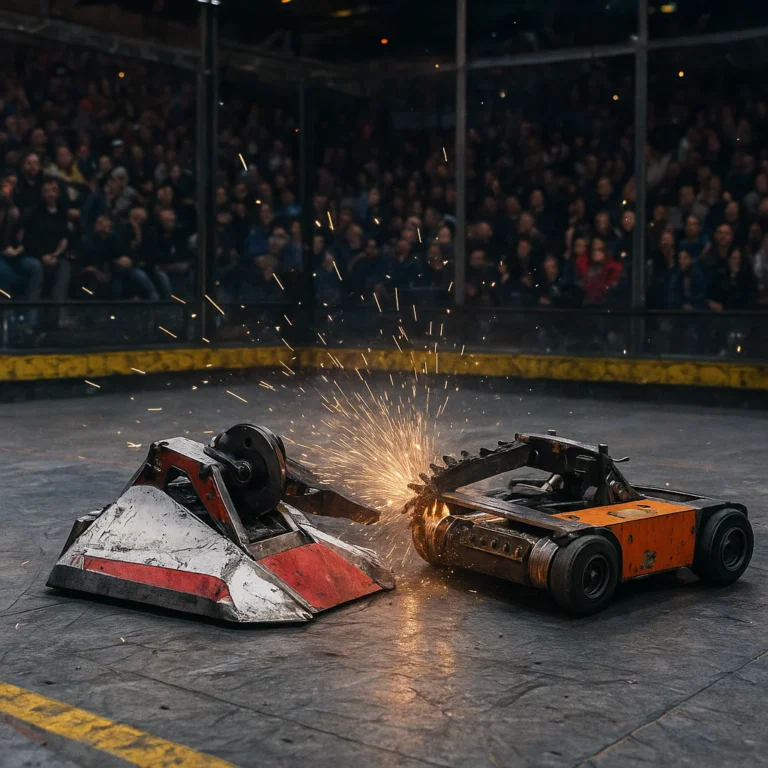
Live robot shows are entertaining, but ask whether the performance demonstrates a transferable concept. A dance may showcase balance and coordination; a boxing demonstration may show actuation but little autonomy. Both can be worthwhile, provided the labels explain what is actually happening.
Teleoperated Robots and Remote-Controled Machines
Teleoperation is not “fake robotics.” It is a legitimate solution when environments are dangerous, distant, delicate, or unpredictable.
Examples include:
- Bomb-disposal robots
- Surgical systems
- Underwater vehicles
- Space manipulators
- Disaster-response machines
- Remote inspection platforms
The challenge is communication. Operators may experience:
- Latency
- Limited camera views
- Poor depth perception
- Sensor overload
- Reduced tactile feedback
- Control fatigue
Exhibits that let visitors operate a robot should explain these limitations rather than presenting remote control as effortless.
Virtual Reality, Augmented Reality, and Digital Exhibits
VR and AR can show:
- Robot perception
- Factory workflows
- Surgical environments
- Planetary surfaces
- Hidden mechanisms
- Simulated control rooms
Their strength is visualization. Their weakness is that simulated motion may hide real-world friction, backlash, vibration, weight, and failure.
Use virtual experiences as a supplement, not a replacement for seeing a physical robot. A rendered robot never drops a gripper bolt onto the floor, and that is precisely why it can be misleading.
How to Get More From Your Robot Museum Trip
The Best Exhibits for Photos and Videos
For memorable photos, look for:
- Large-scale robotic animals
- Transparent mechanisms
- Robot arms in motion
- Humanoid faces
- Swarm robots
- Spacecraft models
- Interactive control panels
For useful videos, record short clips that show:
- The input
- The robot’s response
- The mechanism moving
- The exhibit label
- A demonstration of failure or recovery
Avoid filming only the robot’s face. The face is rarely where the engineering lives.
Questions to Ask Museum Educators and Robot Designers
Ask:
- What is the robot’s primary task?
- Which sensors does it use?
- Is it autonomous or teleoperated?
- What happens when a sensor fails?
- How does it know where its joints are?
- What limits its speed?
- How is it powered?
- What maintenance does it require?
- Which part was hardest to design?
- What did the prototype get wrong?
- How would this system behave outside the museum?
One of our favorite questions is: “What can this robot not do?” Engineers usually brighten immediately. Limits reveal more than marketing claims.
A Practical Robotics Museum Note-Taking Checklist
Record:
- Robot name
- Manufacturer or research institution
- Year introduced
- Task
- Sensors
- Actuators
- Power source
- Control method
- Environment
- Safety system
- Human role
- Strength
- Limitation
- Ethical question
This turns a museum visit into a mini technical report.
Souvenirs, Robot Kits, Books, and STEM Gifts
Useful souvenirs include:
- Mechanical model kits
- Beginner coding robots
- Robot history books
- Building sets
- Science activity books
- Museum catalogs
- Animal biomechanics guides
Choose based on the learner’s goal:
| Goal | Good souvenir |
|---|---|
| Mechanical understanding | Gear or linkage kit |
| Programming | Beginner educational robot |
| Biology and engineering | Biomimicry book |
| Robot history | Museum catalog |
| Creative design | Modular construction system |
| Family activity | Cooperative puzzle or build kit |
Avoid buying a kit solely because the box says “AI.” Check whether it includes actual sensors, programmable behavior, documentation, and an appropriate learning path.
Ethics, Safety, and the Future of Robotics
Robot Safety and Responsible Human-Robot Interaction
Safety has several layers:
- Physical safety: preventing collisions, pinches, burns, and unexpected motion
- Functional safety: ensuring the robot enters a safe state after failure
- Cybersecurity: protecting control systems from unauthorized access
- Operational safety: training users and maintaining equipment
- Social safety: preventing inappropriate or harmful interactions
The ISO robotics standards provide formal frameworks, while our Robot Ethics and Safety category explores practical issues in everyday language.
Museum exhibits should model good safety behavior:
- Clear boundaries
- Emergency stops
- Staff supervision
- Accessible instructions
- Reduced speed near visitors
- Maintenance notices
- Honest labeling
Privacy, Surveillance, and Artificial Intelligence
Interactive robots may use cameras, microphones, body tracking, or facial analysis. Visitors should know:
- Whether data is recorded
- How long it is stored
- Whether faces are processed
- Whether audio is captured
- Whether participation is optional
- Who can access the data
The NIST Privacy Framework provides a useful reference for responsible data practices.
A robot that recognizes a wave is not automatically a surveillance system. But a museum should still explain the difference between real-time processing, temporary storage, and identifiable data collection.
Jobs, Automation, and the Future of Work
Robotics can:
- Remove people from dangerous tasks
- Improve consistency
- Increase productivity
- Create technical roles
- Change skill requirements
- Displace repetitive work
- Shift responsibility toward supervision and maintenance
A balanced exhibit should avoid both extremes:
❌ “Robots will take every job.”
❌ “Robots only create benefits.”
✅ “Automation changes tasks, skills, risks, and opportunities.”
The International Labour Organization offers research on technology, work, and employment that helps ground this conversation.
Representation, Bias, and Inclusive Robot Design
Robots reflect design choices. Questions include:
- Which bodies are treated as the default?
- Which languages are supported?
- Are speech systems accurate across accents?
- Can wheelchair users interact with the interface?
- Does the robot reinforce stereotypes?
- Who was included in testing?
- Are care robots designed with consent and dignity?
A friendly-looking robot may still behave unfairly if its recognition system performs poorly for some users. Museums can help visitors understand that appearance, intelligence, and fairness are separate design dimensions.
How Museums Explain the Social Impact of Robots
The strongest museums present robotics as a set of choices rather than an inevitable future.
Look for displays addressing:
- Consent
- Labor
- Safety
- Surveillance
- Accessibility
- Military use
- Environmental impact
- Emotional attachment
- Accountability
The question “Can we build it?” should be paired with “Should we deploy it, where, and under whose control?”
How Robot Museums Preserve Technology and Culture
Collecting Historic Robots and Digital Artifacts
Museum collections preserve more than the machine’s shell. They may include:
- Engineering drawings
- Source code
- Manuals
- Prototype components
- Operator training materials
- Marketing documents
- Oral histories
- Photographs
- Maintenance records
- Demonstration videos
A robot without its software may be a sculpture. A robot without documentation may be impossible to interpret.
Restoring Mechanical, Electronic, and Programmable Machines
Restoration creates difficult choices:
- Should the machine operate again?
- Should original parts be preserved?
- Is replacement hardware acceptable?
- Should corrosion remain visible?
- Does a modern power supply change authenticity?
- How should missing software be reconstructed?
Conservation teams balance historical integrity with visitor understanding. A static robot may be authentic but opaque. A working reconstruction may be educational but partly modernized.
Preserving Software, Firmware, and Obsolete Hardware
Digital preservation is particularly challenging because:
- Operating systems become obsolete.
- Storage media degrade.
- Components disappear.
- Proprietary software may be inaccessible.
- Licenses expire.
- Documentation may be incomplete.
- Hardware dependencies are forgotten.
The Software Preservation Network and Library of Congress digital preservation resources provide useful context.
For robotics, preservation may require emulation, hardware replacement, reverse engineering, and careful documentation of what is original versus reconstructed.
Partnerships With Universities, Robotics Companies, and Inventors
Museums often rely on partnerships to preserve current technology. Universities provide research context; companies provide equipment and documentation; inventors provide personal histories.
Partnerships can also create tension:
- A sponsor may prefer promotional messaging.
- A university may emphasize research success.
- A museum may need to discuss failure or controversy.
- A manufacturer may restrict technical details.
Independent interpretation matters. Visitors deserve to know who built the robot, who funded the display, and what claims are evidence-based.
Robot Museum Alternatives and Online Experiences
Virtual Robot Museum Tours
Virtual tours help when:
- Travel is impractical.
- The exhibit is temporary.
- A visitor needs a preview.
- A class is studying robotics remotely.
- Accessibility requires advance planning.
Use official museum tours where possible. Third-party videos can be entertaining, but they may show outdated exhibits or omit important context.
University Robotics Labs Open to the Public
University showcases may offer access to:
- Autonomous vehicles
- Manipulator arms
- Soft robots
- Medical robotics
- Drones
- Computer vision
- Human-robot interaction
- Agricultural robots
Public access varies. Search university calendars for open house, robotics demonstration, engineering outreach, and research showcase.
Robotics Festivals, Maker Faires, and Technology Expos
Events such as Maker Faire, RoboCup, and FIRST competitions can feel like temporary robot museums with more noise, more soldering, and a higher probability that someone is debugging under pressure.
Benefits include:
- Live prototypes
- Direct conversations with builders
- Student projects
- Commercial demonstrations
- Workshops
- Competitions
- Emerging technologies not yet in permanent collections
Best Home Robotics Kits After Your Visit
A museum visit can inspire a practical next step. Good platforms include:
Choose according to:
- Age and skill
- Programming language
- Sensor availability
- Mechanical flexibility
- Documentation quality
- Community support
- Expandability
- Safety
A kit with fewer flashy features but better documentation usually wins the long game.
How to Choose the Right Robot Museum
Best Museums for Robot History
Choose venues with:
- Automata
- Industrial machines
- Early computers
- Original documentation
- Conservation displays
- Chronological interpretation
The Science Museum, Deutsches Museum, and Computer History Museum are strong starting points.
Best Museums for Artificial Intelligence
Look for exhibits involving:
- Computer vision
- Natural-language systems
- Machine learning
- Human-robot interaction
- Autonomous navigation
- Ethical decision-making
Miraikan, the Computer History Museum, and university robotics showcases are particularly useful.
Best Museums for Industrial Robotics
Prioritize museums that explain:
- Robot arms
- Manufacturing cells
- Welding and painting
- Cobots
- Machine vision
- Safety systems
- Supply-chain automation
Technology museums and manufacturing heritage collections often provide better industrial context than dedicated humanoid galleries.
Best Museums for Families and Young Children
Choose:
- Large moving exhibits
- Animal-inspired robots
- Simple controls
- Short activity cycles
- Staff demonstrations
- Accessible bathrooms
- Quiet areas
- Flexible food options
The Witte Museum’s Robot Zoo is a standout because it combines giant scale, familiar animals, and mechanical explanation.
Best Museums for Robotics Students and Professionals
Students and engineers should seek:
- Technical labels
- Prototypes
- Research partnerships
- Original hardware
- Design documentation
- Control-system explanations
- Failure analysis
- Industry context
Add university visits, robotics competitions, and professional demonstrations to the itinerary. A museum alone cannot show the full development pipeline.
Best Museums for Giant Animatronic and Robotic Creatures
Animal-themed exhibitions are ideal for visitors who enjoy biomimicry and interactive science.
Look for:
- Robotic anatomy
- Movement demonstrations
- Animal behavior comparisons
- Reaction-time tests
- Adhesion experiments
- Sensor explanations
- Creature-design stations
The Springfield Museums’ past Robot Zoo presentation featured a three-foot-wingspan housefly, a chameleon tongue demonstration, and “Sticky Feet” activities. The official Springfield Museums announcement provides the historical details.
Frequently Asked Questions Before Visiting
Are Robot Museums Suitable for Todlers?
Yes, but select carefully. Todlers usually respond best to:
- Large moving objects
- Bright but manageable visual displays
- Simple buttons
- Short demonstrations
- Animal-shaped robots
- Open floor space
Avoid planning a full technical tour. Allow breaks, check sensory conditions, and confirm stroller access before arriving.
Do Robot Museums Have Real Working Robots?
Many do, but “working” can mean several things:
- Fully operational and autonomous
- Preprogramed demonstration
- Remotely controlled
- Partially restored
- Simulated on a screen
- Static object with moving components
Ask staff how the exhibit operates. A machine that performs one repeatable action can still be a genuine working robot, even if it is not independently intelligent.
Can You Touch or Control the Robots?
Some exhibits invite touch or control; many do not. Hands-on stations often use robust educational mechanisms, while historic or research machines may be protected.
Follow signs and staff instructions. Never assume a robot is safe to approach simply because it is standing still.
Are Robotics Museums Worth Visiting if You Are Not an Engineer?
Absolutely. The best exhibits translate engineering into familiar experiences:
- Animal movement
- Human balance
- Factory work
- Space exploration
- Healthcare
- Games
- Communication
You do not need to understand matrix transformations to appreciate a robot that learns to avoid obstacles. Curiosity is a perfectly respectable entry credential.
Which Robot Museum Is Best for a Family Vacation?
For families, choose an interactive science museum or exhibition rather than a collection made entirely of static artifacts.
Strong options include:
- The Witte Museum’s Robot Zoo
- Miraikan
- Carnegie Science Center
- Griffin Museum of Science and Industry
- MoMath’s interactive robotics programming
Check age suitability, current exhibit schedules, and hands-on availability before traveling.
Frequently Asked Questions About Robot Museums
What are the best robot museums in the world?
The strongest destinations depend on your interests:
- Best broad robotics and future technology: Miraikan in Tokyo
- Best robotics history and engineering context: Deutsches Museum in Munich
- Best computing and AI background: Computer History Museum in California
- Best family biomimicry experience: Witte Museum’s Robot Zoo
- Best mathematics-centered robotics exhibit: MoMath’s Robot Swarm
- Best direct robot collection: Museo del Robot in Madrid
- Best research ecosystem: Pittsburgh’s robotics institutions
No single museum covers everything. A dedicated robot museum may offer more machines, while a large science museum may explain the science more clearly.
Where can I find a robot museum near me?
Search for:
- “robot museum near me”
- “robotics science museum”
- “university robotics open house”
- “interactive AI exhibition”
- “robotics festival”
- “maker faire robotics”
- “technology museum robot exhibit”
Then verify the result on the official venue website. Google listings and travel articles frequently retain old exhibition dates.
What can you see at a robot museum?
Typical displays include:
- Humanoid robots
- Robot dogs
- Industrial arms
- Historic automata
- Space rovers
- Medical robots
- Agricultural robots
- Drones
- Swarm robots
- AI demonstrations
- Telepresence systems
- Robotic animals
- Coding and construction stations
The depth varies. Some venues focus on entertainment and interaction; others emphasize engineering history, research, or conservation.
Are robot museums suitable for children?
Yes. Children often benefit from exhibits that connect robotics with animals, games, movement, and storytelling.
For the best experience:
- Choose age-appropriate activities.
- Plan breaks.
- Look for hands-on stations.
- Avoid visiting only during peak school-group hours.
- Ask about sensory-friendly sessions.
- Let children control one mechanism rather than rushing through every gallery.
Which robot museums offer interactive exhibits?
Interactive options include:
- Witte Museum: robotic animals, reaction tests, creature-design activities
- MoMath: robot swarm interaction
- Miraikan: human-machine and emerging technology demonstrations
- Carnegie Science Center: family science and robotics activities
- Many FIRST and maker events: student-built robots and live challenges
Exhibit schedules change, so confirm current access before visiting.
How much does it cost to visit a robot museum?
Costs vary by venue, city, exhibition, membership, age, and timed-entry policy. Some robotics exhibits are included with general admission; others require a separate ticket or reservation.
The Witte Museum’s exhibition page states that The Robot Zoo is included with museum entry. Always consult the official ticket page because touring exhibitions and special events may have different rules.
What are the most famous robots displayed in museums?
Frequently displayed or referenced robots include:
- ASIMO
- AIBO
- Unimate
- Peper
- Geminoid
- Kodomoroid
- NASA planetary rovers
- Industrial robot arms
- Atlas
- Ameca
Availability changes, and some famous machines appear as replicas, loan exhibits, or historical documentation rather than permanent displays.
How do I know whether a museum robot is autonomous?
Ask:
- Does it make decisions from sensor input?
- Is a person controlling it remotely?
- Is its behavior preprogramed?
- Does it adapt when the environment changes?
- What happens when something unexpected occurs?
A robot may be autonomous in one narrow function and supervised in another. “Autonomous” is not an all-or-nothing badge.
What should I bring to a robotics museum?
Bring:
- Comfortable shoes
- A phone or notebook
- Accessibility questions
- Water
- Patience for queues
- A child-friendly scavenger hunt
- A willingness to ask staff questions
Avoid bringing expectations that every machine will talk, walk, or perform movie-style magic. Real robotics is often quieter, slower, and more impressive than fiction because it must survive contact with reality.
Can robot museums help with robotics education or career planning?
Yes. They can expose visitors to:
- Mechanical engineering
- Electrical engineering
- Software development
- Control systems
- Computer vision
- Artificial intelligence
- Human factors
- Industrial design
- Ethics and policy
- Maintenance and operations
Ask whether the museum offers internships, workshops, educator resources, volunteer opportunities, or partnerships with universities and robotics companies.
What is the difference between a robot and animatronic figure?
A robot generally senses or receives information, processes it, and produces action. An animatronic figure may perform a fixed sequence of movements, often synchronized with audio or timing controls.
The categories overlap. A sophisticated animatronic can include sensors and feedback; a robot can also perform a highly scripted routine. The key is the control architecture, not the appearance.
Why are robotic animals useful in museums?
Robotic animals make invisible biology visible. They demonstrate:
- Muscle systems
- Levers
- Pumps
- Sensors
- Adhesion
- Reaction speed
- Filtering
- Locomotion
- Biomimicry
That is why The Robot Zoo works so well for families: the animal provides a familiar story, while the robot exposes the engineering underneath.
What should museums explain about AI robots?
A responsible exhibit should explain:
- Training data
- Sensors
- Model limitations
- Human supervision
- Privacy
- Failure modes
- Energy use
- Bias
- Accountability
Visitors should leave knowing not only what an AI robot can do, but also what it cannot reliably do.
Conclusion
Robot museums are far more than rooms filled with metal faces and blinking LEDs. The best ones show how machines sense, move, decide, cooperate, fail, and affect society.
Our strongest recommendations are:
- Choose Miraikan for broad robotics, AI, and human-machine interaction.
- Visit the Deutsches Museum or Science Museum for historical and engineering depth.
- Choose the Witte Museum’s Robot Zoo for an unforgettable family introduction to biomechanics.
- Explore MoMath’s Robot Swarm for mathematics, coordination, and emergent behavior.
- Visit Pittsburgh or Silicon Valley for connections to robotics research and computing history.
- Add a robotics competition or maker event if you want to see new machines being built rather than only preserved.
The question we raised earlier, “Should robots look human, or simply perform their jobs well?” has no universal answer. Humanoid robots help us study interaction and empathy; compact inspection robots may deliver more practical value without a face at all. A museum visit is valuable precisely because it lets you compare those choices.
Our final advice: choose exhibits that explain mechanisms, disclose limitations, and let you ask questions. The most impressive robot is not always the one that walks like a person. Sometimes it is the chameleon tongue, the swarm that changes direction, or the quiet inspection machine designed to keep people out of danger.
Recommended Links
- Robot Instructions™ resources: Robot Instructions
- Robot design: Robot Design category
- Autonomy: Autonomous Robots category
- Machine learning: Machine Learning category
- Safety and ethics: Robot Ethics and Safety category
- Agricultural applications: Agricultural Robotics category
- Family robotics kits: LEGO Education | VEX Robotics | Sphero
- Robotics competitions: FIRST Robotics | RoboCup
- Museum destinations: Miraikan | Deutsches Museum | Computer History Museum
- Robot animals: Witte Museum: The Robot Zoo
- Robot swarm exhibit: MoMath Robot Swarm
- Robot history and technology books: Robotics books on Amazon | Robot-building books on Amazon | Artificial intelligence books on Amazon
FAQ
What are the best robot museums in the world?
The best choices depend on your goal. Miraikan is a superb all-round destination for robotics and emerging technology. Deutsches Museum and London’s Science Museum are stronger for historical engineering context. The Witte Museum is excellent for family-focused biomimicry, while MoMath offers a memorable mathematics-centered robotics experience.
Where can I find a robot museum near me?
Search for local science museums, technology museums, university robotics labs, maker events, and robotics competitions. Use the official venue website to confirm current exhibitions because temporary robot displays frequently move between cities.
Read more about “🤖 Top 15 Robot Consultant Directory Picks for 2026”
What can you see at a robot museum?
You may see humanoid robots, industrial arms, robot pets, robotic animals, space rovers, medical machines, drones, swarm robots, historic automata, AI demonstrations, and hands-on programming stations.
Are robot museums suitable for children?
Yes. Children usually benefit most from interactive activities involving movement, animals, sensors, coding, and simple mechanical controls. Check age guidance, accessibility details, sensory conditions, and demonstration times before visiting.
Which robot museums offer interactive exhibits?
The Witte Museum’s Robot Zoo, MoMath’s Robot Swarm, Miraikan, Carnegie Science Center, and many FIRST Robotics events offer interactive or participatory experiences. Availability may vary by day and exhibit schedule.
How much does it cost to visit a robot museum?
Admission varies according to the venue, exhibition, age group, membership, and reservation policy. Some exhibits are included with general admission, while others require a separate ticket. Check the official museum ticket page for current details.
What are the most famous robots displayed in museums?
Famous examples include ASIMO, AIBO, Unimate, Pepper, Geminoid, Kodomoroid, NASA rover technology, Atlas, Ameca, and historic industrial robot arms. The exact display location and availability can change.
Are robot museums useful for students?
Yes. Students can study mechanical design, sensors, actuators, programming, AI, control systems, human factors, ethics, and industrial automation. Teachers can use museum visits for observation reports, engineering sketches, scavenger hunts, and design challenges.
Are all museum robots autonomous?
No. Some are autonomous, some are teleoperated, some follow fixed programs, and others combine automation with human supervision. Ask what decisions the machine makes from sensor data and what actions are controlled by people.
What is the best robot museum for learning about biomimicry?
The Witte Museum’s Robot Zoo is a particularly strong choice because it maps animal anatomy and behavior to gears, pistons, pumps, circuits, computer control, and mechanical systems.
Reference Links
- Witte Museum: The Robot Zoo
- Springfield Museums: Giant Robot Animals Take Up Residence at the Springfield Museums
- MoMath: Robot Swarm
- Miraikan: National Museum of Emerging Science and Innovation
- Science Museum, London
- Deutsches Museum
- Deutsches Technikmuseum Berlin
- Computer History Museum
- Carnegie Mellon University Robotics Institute
- Carnegie Science Center
- Griffin Museum of Science and Industry
- Museo del Robot, Madrid
- Cité des Sciences et de l’Industrie
- National Museum of Science and Technology, Stockholm
- International Federation of Robotics
- ISO Robotics Standards Committee
- ISO 10218 Industrial Robot Safety
- ISO/TS 15066 Collaborative Robot Safety
- NIST AI Risk Management Framework
- NIST Privacy Framework
- NASA Mars Exploration Program
- NASA Robotics
- JPL Robotics
- Biomimicry Institute
- FIRST Robotics Competition
- RoboCup
- Maker Faire
- Honda Robotics
- Sony AIBO
- Boston Dynamics
- Enginered Arts
- LEGO Education
- VEX Robotics
- Sphero
- Arduino
- Raspberry Pi
- Library of Congress Digital Preservation
- Software Preservation Network