Support our educational content for free when you purchase through links on our site. Learn more
Robot Avatar: How Remote-Controled Robots Extend Human Reach 🦾


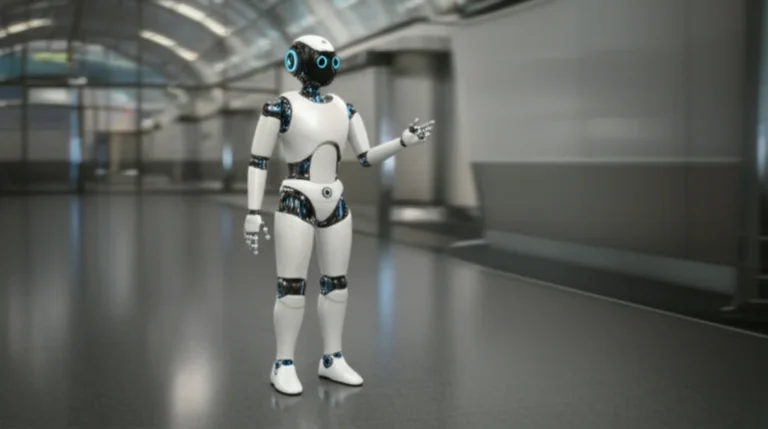
A robot avatar lets you see, move, and sometimes handle objects in a real place from somewhere else. Our recommendation: judge one by the task it can perform safely and reliably—not by its humanoid shape or an impressive demo.
We’ve seen how quickly a remote-control trial can expose the difference between “the robot moves” and “the robot is genuinely useful.” A camera angle that hides an obstacle, a hand that can’t grip the actual tool, or a lagy connection can turn a promising demonstration into a very patient game of robot charades.
Robot avatars range from simple telepresence devices to dexterous systems that combine human control with AI assistance. Honda’s avatar robot research explores the idea of acting through a robot at a distance, while companies such as Avatar Robotics apply the term to warehouse automation. The label covers different approaches, so we’ll clarify what the technology can—and can’t—do.
Key Takeaways
- A robot avatar is a physical robot operated or guided remotely by a person. It is more than a virtual character or a video-call screen.
- Capabilities vary widely. Telepresence, mobile inspection, and dexterous object handling require very different hardware and control systems.
- AI can assist without replacing the operator. Always check which actions are human-controlled, AI-assisted, or autonomous.
- Network reliability, safety, and operator comfort are essential. A capable robot is only useful if people can control it effectively in real working conditions.
- Choose based on the job, not the buzzword. An avatar robot, cobot, AMR, or simple telepresence robot may each be the right fit for a different task.
Table of Contents
- ⚡ Quick Tips and Facts
- 🤖 What Is a Robot Avatar?
- How Robot Avatars Connect People to Remote Places
- Robot Avatar, Telepresence Robot, and Humanoid Robot: What’s the Difference?
- 🕰️ Robot Avatar History: From Teleoperation to Embodied AI
- How ASIMO Helped Shape Honda’s Avatar Robot Research
- Why Robotics, AI, and Remote Work Are Converging
- 🌐 How Robot Avatar Technology Works
- Remote Control, Sensors, Cameras, and Communication Networks
- Motion Capture, Haptic Feedback, and Human-Robot Interaction
- AI-Assisted Teleoperation and Operator Intent Estimation
- 🦾 Honda Avatar Robot: Vision, Features, and Development
- Honda’s Goal: Let People Work Beyond Their Physical Location
- What Makes Honda’s Avatar Robot Different?
- Human-Like Robotic Hands: Delicate, Strong, and Adaptable
- AI That Learns and Improves Robot Movements
- Core Technologies and the Honda Avatar Robot Team
- 🏭 Robot Avatar Applications Across Industries
- Manufacturing, Warehousing, and Industrial Inspection
- Healthcare, Elder Care, and Rehabilitation
- Education, Events, and Remote Collaboration
- Disaster Response and Hazardous Environments
- Home Assistance and Everyday Tasks
- ✅ Benefits of Robot Avatars for People and Businesses
- ⚠️ Limitations, Safety Risks, and Ethical Questions
- Latency, Reliability, and Network Coverage
- Privacy, Cybersecurity, and Responsible Remote Operation
- Accessibility, Training, and Human Oversight
- 🆚 Robot Avatars vs. Warehouse Automation Robots
- Teleoperated Avatar Robots vs. Autonomous Mobile Robots
- When to Choose a Robot Avatar, Cobots, or an AMR
- 🔍 How to Choose a Robot Avatar System
- Key Features: Dexterity, Mobility, Sensors, and Control
- Deployment Checklist for Organizations
- Questions to Ask Vendors and Robotics Teams
- 🚀 The Future of Robot Avatars
- Embodied AI, Skill Learning, and More Capable Robot Hands
- How Avatar Robots Could Expand Human Potential
- Conclusion
- Recommended Links
- FAQ
- What is a robot avatar?
- How does a robot avatar work?
- Is Honda developing an avatar robot?
- What can a robot avatar do that a telepresence robot cannot?
- Are robot avatars autonomous or remotely controlled?
- Where are robot avatars used today?
- Will robot avatars replace human workers?
- Reference Links
⚡ Quick Tips and Facts
When we say robot avatar, we mean a physical robot that a person can control remotely to act in a real environment—not just a digital character on a screen. The phrase also appears in virtual-world tools, so context matters. 🦾
As we explain in our guide to robot instructions, the useful question is not only “Can I control it?” but also “What can the robot sense, reach, and do safely?”
| Quick fact | What it means |
|---|---|
| A robot avatar can put a human operator in a distant physical environment. | The operator sends commands; cameras and sensors send information back. |
| Robot avatars range from simple mobile telepresence devices to dexterous humanoid systems. | “Avatar” describes a control relationship, not one standard robot design. |
| Honda has researched avatar robotics and remote operation. | Honda’s public concept emphasizes people performing tasks through remote robotic systems; details can change as research develops. See Honda’s avatar robot page. |
| Some companies use “avatar robot” for warehouse automation. | Avatar Robotics describes a model combining humanoid robots, remote human operators, and AI autonomy. Those are company claims, not independently verified performance guarantees. |
| AI assistance does not automatically mean full autonomy. | A robot can use AI for perception or movement while still relying on a human operator for decisions. |
| Latency, safety, and task design matter as much as the robot’s shape. | A slow or unreliable control link can make delicate remote work difficult. |
Fast takeaway: Robot avatars can extend human reach, presence, and dexterity—but the right system depends on the task, environment, network, and level of human oversight. The robot’s hands may look impressive; the real test is whether they can handle your actual job safely.
🤖 What Is a Robot Avatar?
A robot avatar is a physical robot that represents a human operator in a remote location. The person sees through the robot’s cameras or sensors and sends commands that guide its movement or actions. Depending on the system, the robot may reproduce the operator’s motions directly, translate them into robot-friendly commands, or combine human control with AI assistance.
Think of it as remote presence with a body. A video call lets you see and talk to someone in another place. A robot avatar may let you look around, move through a facility, inspect equipment, or manipulate objects there too.
The word “avatar” is used loosely, though. A digital profile picture, a virtual-reality character, a telepresence robot, and a dexterous humanoid robot are not interchangeable. That distinction helps explain why two pages can both use “avatar robot” while describing very different systems.
How Robot Avatars Connect People to Remote Places
Most robot-avatar systems have four basic parts:
- A person or operator who chooses what the robot should do.
- A robot with mobility, cameras, sensors, and possibly arms or hands.
- A control interface, such as a screen, joystick, headset, motion-tracking equipment, or specialized console.
- A communication link that carries commands to the robot and sensor feedback to the operator.
A simple telepresence robot might transmit video and accept steering commands. A more advanced avatar robot may map a person’s hand motions to a robotic hand, use force or touch sensors, and apply AI to smooth movements or prevent collisions.
That last point matters: the robot does not have to copy a person’s body one-to-one. A human hand has different proportions, joints, and control limits from a robot hand. Good control software translates intent rather than blindly miroring every twitch.
Robot Avatar, Telepresence Robot, and Humanoid Robot: What’s the Difference?
| Term | What it usually describes | Typical capability |
|---|---|---|
| Robot avatar | A physical robot operated or guided by a person elsewhere | Remote presence, inspection, movement, or manipulation |
| Telepresence robot | A mobile screen-and-camera platform for remote communication | Video calls, navigation, and basic interaction |
| Humanoid robot | A robot with a body shaped in some way like a human | Walking, reaching, or using human-designed tools, depending on the model |
| Virtual avatar | A digital representation of a person in software or a virtual environment | Online identity, animation, or virtual interaction |
| Autonomous robot | A robot that carries out tasks with limited or no moment-to-moment human control | Navigation or task execution within its designed operating conditions |
These categories overlap. A humanoid robot can serve as an avatar when remotely operated; a telepresence robot can function as a very simple avatar. Shape alone does not determine whether something is an avatar. The human-to-robot control relationship does.
🕰️ Robot Avatar History: From Teleoperation to Embodied AI

Remote control is older than today’s AI boom. Industrial robots have long used human commands, and remotely operated vehicles have enabled people to inspect or work in places that are hard to reach. Modern robot avatars add better cameras, networks, wearable controllers, dexterous hands, and machine-learning tools.
The field is evolving along two tracks:
- More intuitive remote control: operators can guide robots using natural movements, visual interfaces, or haptic devices.
- More robot-side assistance: software can stabilize movement, recognize objects, or handle routine actions.
The result is not necessarily a robot that “thinks like a person.” Often it is a robot that performs a narrow task more reliably while a person stays responsible for judgment.
How ASIMO Helped Shape Honda’s Avatar Robot Research
Honda’s work on ASIMO contributed to a long-running body of research in mobility, balance, human-robot interaction, and robotics engineering. Honda’s avatar-robot research draws on this broader experience, but an avatar robot should not be treated as simply “ASIMO with a remote-control feature.” The goals and control challenges are different.
A remotely operated robot must combine:
- Reliable sensing: the operator needs useful visual and other feedback.
- Intuitive control: commands should be understandable and repeatable.
- Adaptation: the robot must cope with objects and surroundings that are not perfectly standardized.
- Safety: errors in a physical environment can affect people and property.
Honda’s official avatar robot overview is the best source for the company’s current description. Because the page’s technical detail and availability may change, we recommend checking it directly rather than relying on old summaries or speculative specifications.
Why Robotics, AI, and Remote Work Are Converging
Robot avatars draw on several fields at once:
- Teleoperation provides the remote command link.
- Computer vision helps identify scenes, objects, and movement.
- Machine learning can help robots recognize patterns and improve task execution.
- Human-robot interaction shapes how operators communicate with and control machines.
- Network engineering keeps commands and feedback moving with manageable delay.
- Safety engineering limits harmful actions and supports recovery when something goes wrong.
This is where the field gets exciting—and a little less cinematic. In the Avatar movie scene, Jake Suly pilots a body across a dramatic, dangerous landscape. Real robot avatars are far less magical: they depend on cameras, sensors, network quality, carefully designed interfaces, and human supervision. But the underlying idea—a person acting through a remote body—is a useful way to picture the technology.
🌐 How Robot Avatar Technology Works
A robot avatar forms a loop: the operator sends a command, the robot acts, sensors report what happened, and the operator adjusts. The speed and clarity of this loop influence how natural and safe control feels.
Remote Control, Sensors, Cameras, and Communication Networks
A typical control loop works like this:
- The operator receives feedback. Cameras provide video; other sensors may report position, force, distance, or system status.
- The operator chooses an action. That might mean turning, reaching, gripping, or asking the robot to perform a supported task.
- The interface encodes the command. A joystick, touchscreen, motion tracker, or control console converts the input into robot commands.
- The network transmits the command. The connection may be wired, Wi-Fi, cellular, or a combination.
- The robot moves and senses the result. The robot’s controller checks its own motion and, where available, safety conditions.
- Feedback returns to the operator. The person sees whether the action succeeded and decides what to do next.
A weak point anywhere in the loop can spoil the experience. Low video quality makes depth hard to judge. A laging connection makes motion feel delayed. Poor sensor placement can hide an obstacle. That is why we assess the whole system—not just the robot’s headline capability.
The NIST robotics program offers useful context on robotics research, measurement, and evaluation. For practical deployments, organizations should also assess their own network coverage and safety requirements rather than assuming a robot will work equally well in every building.
Motion Capture, Haptic Feedback, and Human-Robot Interaction
Some avatar systems capture the operator’s body or hand movements. Others rely on game-style controls, joysticks, or a graphical interface. A system may also provide haptic feedback, which uses touch or force cues to help the operator sense contact or resistance.
| Control method | Strength | Trade-off |
|---|---|---|
| Joystick or buttons | Familiar and relatively straightforward | Can feel indirect for precise hand work |
| Motion capture | Natural for certain body and arm movements | Calibration, fatigue, and mapping errors can complicate use |
| Head-mounted display | Can provide an immersive view | Comfort, visibility, and situational awareness need attention |
| Haptic controller | Can communicate force or contact cues | Adds hardware and control complexity |
| AI-assisted commands | Can simplify repetitive actions | Needs careful testing and human override |
The best interface depends on the task. Driving a robot through a corridor is not the same control problem as threading a cable, turning a small knob, or handling a fragile object. A system that feels intuitive in a demo may feel tiring after a full shift, so operator comfort and training time belong in the evaluation, not in the fine print.
AI-Assisted Teleoperation and Operator Intent Estimation
AI can assist a remote operator without replacing them. For example, software might smooth a hand trajectory, help a gripper align with an object, or identify an obstacle. A human can remain responsible for selecting the goal and approving the action.
That distinction is important:
- Teleoperation: a person directly controls the robot.
- Assisted teleoperation: software supports the operator with stabilization, suggestions, or partial automation.
- Supervisory control: a person sets goals while the robot carries out more of the task.
- Autonomy: the robot makes and executes decisions within defined limits.
These modes are not a simple ladder from “old” to “better.” Some tasks benefit from direct human control; others are safer and more consistent when automated. Reliable machine learning can help, but system designers must account for errors, unusual situations, and how a human can take control.
🦾 Honda Avatar Robot: Vision, Features, and Development
Honda presents avatar robotics as a way for people to act at a distance through robots. Its publicly available material emphasizes the technology direction, not a consumer-ready product with a standard specification sheet. So we should be careful not to invent a model name, performance number, release date, or feature that Honda has not confirmed.
Honda’s Goal: Let People Work Beyond Their Physical Location
The promise is straightforward: a person could perform or support work in a remote place without being physically there. That could be useful when the location is distant, inaccessible, unpleasant, or unsafe for a person.
But the value depends on what “perform work” means in practice. A robot may enable inspection or simple manipulation long before it can perform a broad range of tasks as smoothly as a human. We look for evidence of:
- The specific tasks demonstrated
- The kind of control interface used
- Whether the robot needs an expert operator
- How it handles objects it has not seen before
- What happens when the network or sensors fail
- Whether results are measured in real work settings
Honda’s official technology page should be treated as the primary source for Honda’s stated goals. It is a manufacturer’s description, though, not an independent validation of performance across every environment.
What Makes Honda’s Avatar Robot Different?
Honda’s approach is notable for focusing on the combination of remote operation, robot capability, and human-centered use. Its research should be considered in the broader avatar-robot field rather than compared as if it were a retail product with published benchmarks.
| Evaluation question | Why it matters |
|---|---|
| Can the operator see the task clearly? | Poor feedback makes accurate control harder. |
| Can the robot manipulate objects safely? | Mobility alone does not establish useful dexterity. |
| Does AI support or replace operator actions? | The level of automation changes training and risk. |
| Is performance demonstrated in real work? | A lab demonstration may not predict field reliability. |
| Are safety limits and recovery procedures clear? | A robot needs a plan for faults, collisions, and lost connection. |
Other companies use the term differently. For example, Avatar Robotics describes a warehouse and manufacturing approach combining humanoid robots, remote human operators, and AI autonomy. The company says robots can be integrated into existing workflows and that deployments can begin quickly. Those are company-stated claims; we would ask for task-level demonstrations, throughput data, safety documentation, and customer references before treating them as proven results.
The difference between the two uses of “avatar robot” is not necessarily a disagreement about technology. Honda’s material focuses on research and a human-avatar concept; Avatar Robotics describes a commercial labor and automation model. Different goals produce different claims, and neither should be mistaken for the other.
Human-Like Robotic Hands: Delicate, Strong, and Adaptable
Hands are among the hardest parts of robotics to engineer. A useful robot hand must balance reach, grip force, precision, sensing, durability, and safe interaction. Humans perform these tasks with remarkable flexibility; robot hands must reproduce useful abilities through motors, joints, sensors, and control software.
A capable robotic hand may need to:
- Grip objects with different shapes and textures
- Apply enough force to hold an item without crushing it
- Adjust when an object slips
- Coordinate several fingers
- Handle tools designed for human hands
- Work safely around people and fragile objects
The phrase “human-like hand” is not a guarantee of human-level performance. Ask what tasks the hand has actually completed, what objects it can handle, and whether demonstrations include repeated trials rather than a single successful attempt. For engineering context, the IEEE Robotics and Automation Society publishes research and resources across manipulation, sensing, and robotic systems.
AI That Learns and Improves Robot Movements
AI can help a robot refine how it moves, but “learning” can mean several things:
- A model may be trained before deployment and then used during operation.
- A robot may adapt a movement to a particular object or setup.
- A system may improve from operator corrections.
- A platform may collect data for later retraining.
These are different capabilities. A robot that updates a motion during a task is not necessarily changing its core model live, and a company’s claim that each shift generates useful training data does not by itself show how much performance improves.
For any learning system, we recommend asking:
- What data is collected?
- Does learning happen on the robot, in the cloud, or later offline?
- Who reviews changes before they affect production?
- Can the operator stop or reverse an action?
- How does the system perform on unfamiliar objects or exceptions?
Those questions are especially relevant when a robot’s performance is tied to customer workflows. Strong robot design includes not just capable movement, but transparent behavior and sensible fallback modes.
Core Technologies and the Honda Avatar Robot Team
Avatar robotics brings together expertise in mechanical engineering, control systems, AI, user-interface design, networks, sensing, and safety. The team’s job is not merely to make a robot move. It is to make movement useful, understandable, and recoverable when the environment behaves unexpectedly.
A mature development process typically includes:
- Requirements from the people who will operate or work near the robot
- Simulation and controlled testing
- Real-world trials with representative objects and workflows
- Human-factors testing for fatigue and usability
- Safety assessments and emergency procedures
- Ongoing monitoring after deployment
We recommend following Honda’s official updates for confirmed information about its research and team. Public-facing material may not disclose every engineering detail, so absence of a specification should not be filled with guesswork.
🏭 Robot Avatar Applications Across Industries
Robot avatars are most compelling where a person needs to be present or act physically, but traveling to the location is difficult, risky, or inefficient. The range of tasks is broad, yet suitability depends on the system’s mobility, manipulation ability, network, and operator training.
Manufacturing, Warehousing, and Industrial Inspection
In factories and warehouses, a robot avatar could support remote inspection, troubleshooting, handling, or work in shifts where skilled staff are hard to recruit. A humanoid form may be useful in facilities built for people, but a human-shaped body is not automatically the most efficient design for every job.
Avatar Robotics describes a warehouse and manufacturing model in which human operators handle exceptions while AI autonomy develops through operational data. The company also says its robots are intended to work with existing facilities and changing workflows. Those statements are worth investigating, not simply accepting as verified outcomes.
For a deployment review, ask for:
- A demonstration on your actual task and representative inventory
- Measured throughput, error rate, and uptime
- The amount of remote human intervention required
- What happens during network interruption
- Safety procedures for people sharing the work area
- Evidence from customers doing comparable work
Some workflows may better suited to conventional autonomous robots or fixed automation. A robot avatar is most useful when tasks vary enough to benefit from human judgment but still require a physical presence.
Healthcare, Elder Care, and Rehabilitation
Remote robotic systems can support communication and access in healthcare settings, but clinical use raises demanding questions about reliability, hygiene, privacy, and responsibility. A mobile telepresence robot may help a clinician communicate with staff or patients from another location. More dexterous systems could support remote manipulation, but that is a higher bar than video calling.
Potential benefits include:
- Reduced need for travel between sites
- Remote specialist consultation
- Support for people with limited mobility
- Communication between care teams
Potential drawbacks include:
- A robot may not provide the warmth or judgment of in-person care.
- Video and sensor data can be sensitive.
- Network or device faults can disrupt care.
- Clinical tasks may require regulatory review and human supervision.
Organizations should consult qualified clinical, legal, and safety professionals before introducing robots into care workflows. The technology should supplement appropriate human care, not be presented as a universal substitute.
Education, Events, and Remote Collaboration
A robot avatar can allow someone who cannot attend in person to move through a classroom, museum, or event space and interact with people there. This is more engaging than a static video stream: the remote participant can choose where to look and when to join a conversation.
For education and events, evaluate:
- Ease of joining and operating the system
- Audio quality and camera positioning
- Accessibility for participants with different needs
- Permission and consent for recording
- Rules for moving through shared spaces
A simple telepresence robot is often enough for these uses. The fanciest humanoid hand in the room will not improve a lecture if the microphone is poor. 🎓
Disaster Response and Hazardous Environments
Remote robots can help people observe or interact with hazardous environments while reducing direct exposure. Depending on design and task, this may include inspection, searching, or operating equipment. But “robot avatar” does not mean “safe for every hazard.” Heat, dust, water, radiation, unstable structures, and communication loss can exceed a robot’s limits.
Useful disaster-response systems require:
- Ruged hardware suited to the specific hazard
- Redundant or resilient communication where possible
- Clear remote-operator training
- Local emergency-stop and recovery procedures
- Coordination with responders and incident command
Safety planning belongs at the center of the design. See our coverage of robot ethics and safety for related issues.
Home Assistance and Everyday Tasks
At home, a robot avatar could let a remote family member check in, move around, or help with simple tasks. The actual usefulness depends on whether the robot can navigate the home, avoid obstacles, communicate clearly, and protect privacy.
A sensible home setup should include:
- Consent from household members and visitors
- Physical privacy controls, such as a camera shutter where available
- Secure account access and software updates
- A clear plan for who can control the robot
- A safe charging and storage location
For many households, a mobile telepresence device may be more practical than a humanoid robot. Start with the need—communication, monitoring, or manipulation—not the sci-fi silhouette.
✅ Benefits of Robot Avatars for People and Businesses
Robot avatars can extend human participation without requiring a person to travel to every site. The strongest benefits appear when remote human judgment is valuable and physical access is costly, difficult, or unsafe.
| Potential benefit | Why it can help | What to verify |
|---|---|---|
| Remote presence | A person can see and interact from afar | Camera coverage, audio quality, and movement |
| Reduced exposure to hazards | Operators may remain outside risky areas | Robot suitability and communication resilience |
| Access to specialist skills | Experts may support more than one location | Scheduling, latency, and task complexity |
| Flexible task handling | Human operators can manage exceptions | Training time and repeatability |
| Support for labor-constrained work | Remote operation can add capacity | Total intervention needs and real throughput |
| Data for improvement | Repeated tasks may reveal patterns | Data ownership, privacy, and validated gains |
The benefit is not “a robot replaces every worker.” A more realistic model is human skills delivered through a robotic body, sometimes with AI handling routine portions of the work. That may improve access or capacity, but it also changes job design, training, and accountability.
⚠️ Limitations, Safety Risks, and Ethical Questions
Robot avatars introduce a physical machine into spaces where people work, learn, or receive care. That creates responsibilities beyond ordinary software deployment.
Latency, Reliability, and Network Coverage
A delay between command and movement can make a robot feel sluggish or difficult to control. The effect is especially significant for delicate manipulation, rapid movement, or work near people. Connection interruptions can also leave an operator uncertain about the robot’s state.
Before deployment, test:
- Performance in every working area
- Network dead zones and handoff points
- What the robot does when commands stop arriving
- How the operator regains control after a drop
- Whether the system logs faults and recovery actions
Do not assume that a network that works for email or video meetings is automatically suitable for remote robot control.
Privacy, Cybersecurity, and Responsible Remote Operation
Cameras and microphones can capture people, documents, screens, and private spaces. Remote access also creates cybersecurity responsibilities. Organizations should establish controls for authentication, permissions, data retention, software updates, and incident response.
We recommend asking vendors:
- Is video stored, streamed only, or both?
- Who can access recordings and logs?
- How are operator accounts protected?
- Can customers control data retention?
- How are vulnerabilities reported and patched?
- Is there a visible indication when sensors are active?
For consumer avatar tools, remember that a virtual avatar generator is not a robot-control system. For example, MY BLUE ROBOT describes a free avatar generator that downloads a PNG image; that is a digital profile image, not a physical robot. Always review the service’s current privacy and usage terms before sharing account details.
Accessibility, Training, and Human Oversight
A robot can be technically capable and still be difficult for its operators. Poorly designed controls can increase fatigue, slow task completion, or exclude people who need accessible interfaces.
Good deployment practice includes:
- Hands-on operator training
- Accessible controls and adjustable interfaces
- Clear safety roles and escalation paths
- Limits on shift duration and repetitive strain
- A defined human override
- Training for people working near the robot
We advise organizations to involve operators early. They often spot practical problems a demo team misses: blocked sightlines, awkward reach, unclear alerts, or a control that is too tiring for a full workday.
🆚 Robot Avatars vs. Warehouse Automation Robots
The term “avatar robot” can refer to a remotely operated platform, while warehouse automation often refers to robots that perform defined tasks autonomously. Some commercial systems combine both: people guide robots through difficult situations while software handles routine steps.
Teleoperated Avatar Robots vs. Autonomous Mobile Robots
| Capability | Teleoperated avatar robot | Autonomous mobile robot (AMR) |
|---|---|---|
| Main control | Human operator, sometimes AI-assisted | Robot software within a defined operating area |
| Best fit | Variable tasks needing human judgment | Repetitive transport or navigation tasks |
| Human involvement | Often direct or supervisory | Usually exception handling and fleet oversight |
| Flexibility | Can adapt to unfamiliar situations with skilled operators | Depends on mapping, sensors, and software limits |
| Main challenge | Network, operator availability, and control workload | Setup, navigation edge cases, and workflow integration |
Neither category is automatically superior. An AMR may be more efficient for moving bins along predictable routes. An avatar robot may be more useful when the task involves changing objects, human tools, or unusual situations that benefit from remote judgment.
When to Choose a Robot Avatar, Cobots, or an AMR
| Choose… | When… | Watch out for… |
|---|---|---|
| Robot avatar | Remote human judgment or presence is essential | Network dependence and operator workload |
| Collaborative robot (cobot) | A repeatable task can be automated near people | Risk assessment, tooling, and task variation |
| AMR | Materials need to move along changing routes | Mapping, traffic management, and facility integration |
| Fixed industrial robot | A stable, high-volume task needs repeatable motion | Floor-space changes and retooling requirements |
| Telepresence robot | The main need is remote communication | Limited ability to manipulate objects |
Use the task—not the buzzword—to choose. A warehouse may need several types of automation, and a human-operated avatar may complement rather than replace them.
🔍 How to Choose a Robot Avatar System
Start with a real task, not a product demo. Write down what the operator must see, touch, move, and decide. Then test a representative workflow with realistic obstacles and exceptions.
Key Features: Dexterity, Mobility, Sensors, and Control
Assess these capabilities in context:
- Mobility: Can the robot reach the work area and maneuver safely?
- Manipulation: Can it grip, turn, carry, or use the tools the task requires?
- Sensing: Can the operator see depth, contact, and surroundings?
- Control: Is it easy to learn and precise enough for the job?
- Network: Does the connection meet operational requirements?
- Safety: Are there emergency stops, speed limits, and recovery procedures?
- Serviceability: Can the system be maintained without long outages?
- Data governance: Are recordings and logs handled responsibly?
Deployment Checklist for Organizations
- Define the task. Specify the objects, steps, environment, and success criteria.
- Map the workflow. Identify where people interact with the robot and where exceptions occur.
- Select a representative test area. Include real obstacles, lighting, equipment, and network conditions.
- Run supervised trials. Record completion time, errors, operator interventions, and safety events.
- Test failures deliberately. Simulate lost connection, blocked sensors, and task interruptions under controlled conditions.
- Train operators and nearby staff. Make roles, stop procedures, and escalation paths clear.
- Review data and cybersecurity. Set policies for access, retention, updates, and incident response.
- Scale only after evidence. Expand when the system meets agreed performance and safety targets.
If a vendor promises a rapid launch, ask what “launch” means: a demonstration, a supervised pilot, or sustained production. Those are very different milestones.
Questions to Ask Vendors and Robotics Teams
- What tasks has this system completed repeatedly in real environments?
- What is the average level of human intervention?
- How are throughput and reliability measured?
- What happens when the network connection drops?
- Can the robot safely stop or hold position?
- What operator training is required?
- Who owns task data and sensor recordings?
- How are software updates tested and rolled back?
- What service and support are available?
- Can we speak with customers using the system for comparable work?
For commercial providers such as Avatar Robotics, request evidence tied to your workflow. A company’s claims about speed of deployment, adaptability, or “always-on” capacity should be evaluated against documented trials and customer results.
🚀 The Future of Robot Avatars
Robot avatars are likely to become more useful as control interfaces improve, robot hands become more capable, and AI takes on carefully bounded parts of a task. The biggest advances may not look dramatic. Better sensing, lower operator fatigue, and safer recovery from errors can matter more than a flashy demo.
Embodied AI, Skill Learning, and More Capable Robot Hands
“Embodied AI” refers broadly to AI systems that interact with the physical world through a robot or other body. In avatar robotics, that could mean software that helps recognize objects, adjust a grasp, or carry out routine actions under human supervision.
Progress will depend on more than model capability. Systems also need:
- Reliable sensors and actuators
- Useful training data
- Testing beyond ideal demonstrations
- Clear limits on automated actions
- Human review of high-risk decisions
- Secure, maintainable deployment
A robot that performs a task once is a promising prototype. A robot that performs it consistently, safely, and economically across real operating conditions is a dependable tool. That gap is where careful engineering earns its keep.
How Avatar Robots Could Expand Human Potential
The strongest long-term case for robot avatars is not that machines become people. It is that people gain new ways to be present and act. A specialist might support a distant site; someone with mobility limitations might participate in an event; a worker might inspect a dangerous area without entering it.
The technology will be most valuable when it increases human agency, supports workers, and makes difficult tasks safer. It will be least convincing when a company presents autonomy as effortless or ignores the people who must operate and work alongside the robot.
So, what separates a compelling avatar robot from a clever demonstration? The answer is the same one we started with: a useful task, dependable control, clear safety boundaries, and evidence from the real world.