Support our educational content for free when you purchase through links on our site. Learn more
25 Robot Competitions That Put Bots to the Test 🤖

Robot competitions range from beginner-friendly LEGO challenges to advanced autonomous-vehicle and combat events, so the best one is the competition that fits your age, interests, resources, and appetite for building. Start by comparing the official rules and local team options; the right match makes robotics exciting without turning the season into a scramble for parts.
Some robots score by stacking game pieces, while others navigate mazes, play soccer, race outdoors, or tackle underwater missions. At a humanoid robot event, a robot can woble, tumble, and still teach engineers something valuable about balance, sensing, and recovery.
Key Takeaways
- Pick a competition that fits your experience and goals. FIRST LEGO League and VEX IQ can suit younger beginners; FTC, FRC, VEX V5, RoboCup, and RoboNation events offer different challenges for older students and university teams.
- Read the current official rules before building. Eligibility, robot limits, scoring, safety requirements, and event formats vary.
- Robotics is a team sport. Design, programming, electronics, testing, strategy, communication, and safety all contribute to performance.
- Build for reliability, not just impressive demos. A robot that completes its task consistently can be more useful than a complex machine that works only on a perfect run.
- Competition is about more than winning. Teams gain practical engineering experience, learn to work together, and improve by testing, troubleshooting, and iterating.
Table of Contents
- ⚡️ Quick Tips and Facts
- 🤖 What Are Robot Competitions?
- 📜 Robotics Competition History and Evolution
- 🏆 25 Major Robot Competitions Around the World
- 🤖 FIRST Robotics Competition, FIRST Tech Challenge, and FIRST LEGO League
- 🥇 VEX Robotics Competition and VEX IQ
- ⚙️ RoboCup and Autonomous Robot Challenges
- 🧰 BattleBots and Combat Robotics Tournaments
- 🌍 World Robot Olympiad and RoboCupJunior
- 🎓 University, Research, and Industry Robotics Contests
- 🧭 How Robot Competitions Work
- 📋 Game Rules, Match Formats, and Scoring
- 🧑 🤝 🧑 Teams, Alliances, and Competition Roles
- 🏅 Qualifiers, Regional Events, and Championships
- 🧒 Choosing a Robotics Competition by Age and Experience
- 🌱 Beginner and Elementary School Programs
- 🛠️ Middle School and High School Robotics Leagues
- 🎓 College, University, and Adult Competitions
- 🧠 Robot Competition Categories and Skills
- 🚗 Autonomous and Self-Driving Robots
- 🦾 Industrial, Humanoid, and Service Robots
- ⚔️ Combat Robots, Sumo, and Robot Soccer
- 💻 Programming, AI, and Engineering Design
- 🔧 Building a Competition Robot
- 🧩 Choosing a Kit, Chassis, Motors, and Sensors
- 🖥️ Robot Programming Languages and Control Systems
- 🧪 Prototyping, Testing, and Iteration
- 🛡️ Safety, Inspection, and Competition Readiness
- 🗓️ How to Start or Join a Robotics Team
- 🔎 Finding Competitions, Teams, and Local Clubs
- 👩 🏫 Coaches, Mentors, and Team Roles
- 💰 Fundraising, Sponsorships, and Managing Costs
- 🚀 Preparing for Competition Day
- 📦 Tools, Spare Parts, and Travel Checklist
- 🎯 Strategy, Drive Practice, and Match Preparation
- 🤝 Teamwork, Sportsmanship, and Gracious Professionalism
- 📈 Benefits of Robot Competitions for Students and Teams
- ⚖️ Robot Competition Challenges and Common Pitfalls
- 🔮 The Future of Robotics Competitions
- ✅ Conclusion
- 🔗 Recommended Links
- ❓ FAQ
- What is the best robotics competition for beginners?
- How old do you have to be to compete in robotics?
- Do you need to know how to code to join a robotics team?
- How much does it cost to participate in a robot competition?
- Can you compete in robotics competitions as an adult?
- What should you bring to a robotics competition?
- 📚 Reference Links
Table of Contents
- ⚡️ Quick Tips and Facts
- 🤖 What Are Robot Competitions?
- 📜 Robotics Competition History and Evolution
- 🏆 25 Major Robot Competitions Around the World
- 🤖 FIRST Robotics Competition, FIRST Tech Challenge, and FIRST LEGO League
- 🥇 VEX Robotics Competition and VEX IQ
- ⚙️ RoboCup and Autonomous Robot Challenges
- 🧰 BattleBots and Combat Robotics Tournaments
- 🌍 World Robot Olympiad and RoboCupJunior
- 🎓 University, Research, and Industry Robotics Contests
- 🧭 How Robot Competitions Work
- 📋 Game Rules, Match Formats, and Scoring
- 🧑 🤝 🧑 Teams, Alliances, and Competition Roles
- 🏅 Qualifiers, Regional Events, and Championships
- 🧒 Choosing a Robotics Competition by Age and Experience
- 🌱 Beginner and Elementary School Programs
- 🛠️ Middle School and High School Robotics Leagues
- 🎓 College, University, and Adult Competitions
- 🧠 Robot Competition Categories and Skills
- 🚗 Autonomous and Self-Driving Robots
- 🦾 Industrial, Humanoid, and Service Robots
- ⚔️ Combat Robots, Sumo, and Robot Soccer
- 💻 Programming, AI, and Engineering Design
- 🔧 Building a Competition Robot
- 🧩 Choosing a Kit, Chassis, Motors, and Sensors
- 🖥️ Robot Programming Languages and Control Systems
- 🧪 Prototyping, Testing, and Iteration
- 🛡️ Safety, Inspection, and Competition Readiness
- 🗓️ How to Start or Join a Robotics Team
- 🔎 Finding Competitions, Teams, and Local Clubs
- 👩 🏫 Coaches, Mentors, and Team Roles
- 💰 Fundraising, Sponsorships, and Managing Costs
- 🚀 Preparing for Competition Day
- 📦 Tools, Spare Parts, and Travel Checklist
- 🎯 Strategy, Drive Practice, and Match Preparation
- 🤝 Teamwork, Sportsmanship, and Gracious Professionalism
- 📈 Benefits of Robot Competitions for Students and Teams
- ⚖️ Robot Competition Challenges and Common Pitfalls
- 🔮 The Future of Robotics Competitions
- ✅ Conclusion
- 🔗 Recommended Links
- ❓ FAQ
- What is the best robotics competition for beginners?
- How old do you have to be to compete in robotics?
- Do you need to know how to code to join a robotics team?
- How much does it cost to participate in a robot competition?
- Can you compete in robotics competitions as an adult?
- What should you bring to a robotics competition?
- 📚 Reference Links
⚡️ Quick Tips and Facts
Robot competitions range from classroom challenges with simple programmable bots to international events featuring autonomous cars, underwater vehicles, humanoids, and full-size student-built machines. The best event for you depends less on flashy robot videos and more on age, access to a team, rules, time, and the kind of engineering you want to practice.
Our engineers at Robot Instructions™ recommend treating a competition as a season-long engineering project, not a one-day race to bolt parts together. The robot gets the applause; the team’s process gets it across the finish line.
| Quick fact | What it means for teams |
|---|---|
| There is no single “robot competition” format | Events may focus on soccer, rescue, autonomous navigation, combat, underwater missions, or themed game challenges. |
| Age eligibility varies | Check the current official rules before building a team around an event. |
| Some events provide a kit or standardized platform | Others allow open designs, which can mean more freedom and more ways to discover that a wheel is mounted backward. |
| Competition rules change | Read the current season’s game manual, not an old blog post or last year’s team notebook. |
| Programming is only one part of robotics | Mechanical design, electronics, testing, strategy, documentation, and communication matter too. |
| Safety is part of engineering | Battery handling, tools, moving mechanisms, and protective equipment deserve attention before match day. |
| “Winning” is not the only outcome | Many programs also recognize design, teamwork, outreach, research, and sportsmanship. |
Quick recommendations
- For younger beginners: Explore FIRST LEGO League or VEX IQ.
- For middle- and high-school teams: Compare FIRST Tech Challenge, VEX V5, and BEST Robotics.
- For high-school students looking for a larger build: Consider FIRST Robotics Competition.
- For university students: Look at RoboCup, RoboNation, autonomous-vehicle challenges, and discipline-specific research events.
- For hobbyists who enjoy controlled chaos: Investigate local combat-robotics events, but read their safety and weight-class rules first. A spinning weapon is not a casual weekend accessory. ⚠️
A useful starting point is NASA’s Robotics Alliance Project competition directory, which has listed programs spanning student robotics, research, combat robotics, and underwater vehicles. Listings can change, so confirm that an event is active and accepting teams through its official organizer.
🤖 What Are Robot Competitions?
A robot competition is an organized event where teams design, build, program, operate, or demonstrate robots against a published task, score system, or judging rubric. Some robots are remote-controlled; others must sense their surroundings and act autonomously. Many combine both.
The word “competition” covers very different experiences. A FIRST team may coordinate with temporary alliance partners on a shared game field, while a Micromouse robot independently navigates a maze. An underwater robotics team may need to complete a mission in a pool; a combat-robotics team may be judged on a match between machines in a protected arena.
| Competition format | Typical challenge | Skills emphasized |
|---|---|---|
| Game-based robotics | Move, stack, sort, launch, or place game objects | Mechanisms, programming, strategy, teamwork |
| Autonomous navigation | Follow routes, avoid obstacles, reach goals | Sensors, mapping, control systems, computer vision |
| Robot sports | Play soccer, race, or complete athletic tasks | Locomotion, perception, coordination, real-time control |
| Underwater or aerial robotics | Carry out a mission in water or air | Vehicle design, autonomy, communications, environmental testing |
| Combat robotics | Disable or outscore an opponent under safety rules | Mechanical resilience, power transmission, defensive design |
| Research challenges | Demonstrate a system against a technical objective | Experiment design, reproducibility, data analysis |
Competitions can be student-oriented, professional, open-entry, or limited to selected teams. They may use a supplied kit, restrict components, or allow open hardware. That distinction matters: a standardized platform rewards clever use of common tools; an open build rewards both creativity and the ability to manage complexity.
For an overview of how robots, their designs, and their operating environments fit together, see our robot design and autonomous robots topic guides.
📜 Robotics Competition History and Evolution

Modern robotics contests grew from university engineering challenges, hobbyist events, school programs, and demonstrations of autonomous machines. One historically notable milestone is the IEEE Micromouse competition held in 1979, where small robots navigated a maze. The long-running All Japan Robot-Sumo Tournament and Trinity College Fire-Fighting Robot Contest show how enduring a well-defined challenge can be.
Student leagues expanded the field by making robotics a structured team activity rather than a specialist laboratory pursuit. FIRST was founded in 1989, while programs such as BEST Robotics, RoboCup, World Robot Olympiad, and VEX Robotics developed their own formats and communities.
The wider landscape now includes:
- School leagues: guided programs with age bands, local events, and championship pathways.
- University and research contests: challenges in autonomous driving, aerial robotics, underwater vehicles, and robot soccer.
- Hobby and public events: robot sumo, combat robotics, maze-solving, and open exhibitions.
- Commercialy visible showcases: events featuring humanoid robots and demonstrations of emerging technology.
The history is not one straight march toward increasingly polished robots. It is also a story of changing rules, access, sponsorship, and what organizers want to measure. Some events prioritize repeatable engineering; others are designed to push research frontiers or entertain a crowd. Wikipedia’s overview of robot competitions offers a broad survey, but for current dates and eligibility, the organizer’s own rulebook is the source to trust.
🏆 25 Major Robot Competitions Around the World
There are far more than 25 regional contests, so this is a practical starting list, not a definitive ranking. Programs differ in age limits, country availability, season timing, and whether they run every year. Confirm the current season details directly with each organizer.
| Competition or program | Typical participants | Main focus | Why teams consider it |
|---|---|---|---|
| 1. FIRST LEGO League | School-age teams | LEGO robot game and project | Structured entry point combining engineering and research |
| 2. FIRST Tech Challenge | Middle- and high-school teams | Compact game robots | Mix of building, programming, and match strategy |
| 3. FIRST Robotics Competition | High-school teams | Large, industrial-style robots | Large-team design and fast season-based engineering |
| 4. VEX IQ Robotics Competition | Younger students | Modular robot game | Accessible building system and age-specific events |
| 5. VEX V5 Robotics Competition | Middle- and high-school teams | Game-based robotics | Broad event ecosystem and repeated match practice |
| 6. VEX U | University teams | Advanced VEX robotics | College-level design freedom and competition experience |
| 7. BEST Robotics | Student teams | Seasonal game challenges | Emphasizes engineering, business, and team presentation |
| 8. World Robot Olympiad | Youth teams | Themed robot missions | International format and age-group categories |
| 9. RoboCup | Student and research teams | Soccer, rescue, service, and industrial robotics | Research-driven international leagues |
| 10. RoboCupJunior | School-age teams | Soccer, rescue, and creative projects | Youth pathway into autonomous robotics |
| 11. Botball | Student teams | Autonomous robotics | Focuses on programming and autonomous task completion |
| 12. Robofest | School-age teams | Multiple robot challenges | Offers different levels and challenge styles |
| 13. International Robot Olympiad | Students, with category-dependent eligibility | Robot construction and contests | International event with varied challenge formats |
| 14. National Robotics Challenge | Student teams | Multiple robotics events | Offers a range of engineering activities |
| 15. RoboGames | Students and hobbyists | Diverse robot events | Broad exhibition-style mix of robot categories |
| 16. Robot Combat Events | Hobbyists and teams | Combat robotics | Event listings and competition community |
| 17. BattleBots | Selected competitors | Television combat robotics | High-profile arena format; not the same as a local entry-level event |
| 18. RoboNation RoboSub | University teams | Autonomous underwater vehicles | Real-world perception and mission challenges |
| 19. RoboNation RoboBoat | Student teams | Autonomous surface vessels | Combines navigation, control, and maritime robotics |
| 20. MATE ROV Competition | Student teams | Remotely operated underwater vehicles | Mission-based underwater engineering |
| 21. International Aerial Robotics Competition | University and research teams | Autonomous aerial robots | Advanced autonomy and mission performance |
| 22. Intelligent Ground Vehicle Competition | University teams | Autonomous outdoor vehicles | Outdoor navigation and vehicle engineering |
| 23. IEEE Micromouse | Students and hobbyists, depending on event | Maze-solving robots | Compact challenge with a deep control and sensing problem |
| 24. All Japan Robot-Sumo Tournament | Student and hobbyist categories vary | Robot sumo | Clear objective, demanding mechanical execution |
| 25. ABU Robocon | University teams in participating countries | Annual themed robot game | Large-scale international student competition |
NASA’s robotics competition directory has also featured events such as EARLY Robotics Competition, GEAR Robotics Competition, Genius Olympiad, the Sea, Air and Land Challenge, and underwater-vehicle contests. Directory listings are useful for discovery, but they are not a guarantee that every program is currently active.
🤖 FIRST Robotics Competition, FIRST Tech Challenge, and FIRST LEGO League
FIRST runs several programs with different age ranges and build scales. Its official program pages describe:
- FIRST LEGO League: students work with LEGO robotics and a season theme.
- FIRST Tech Challenge (FTC): teams build smaller robots and compete in a themed game.
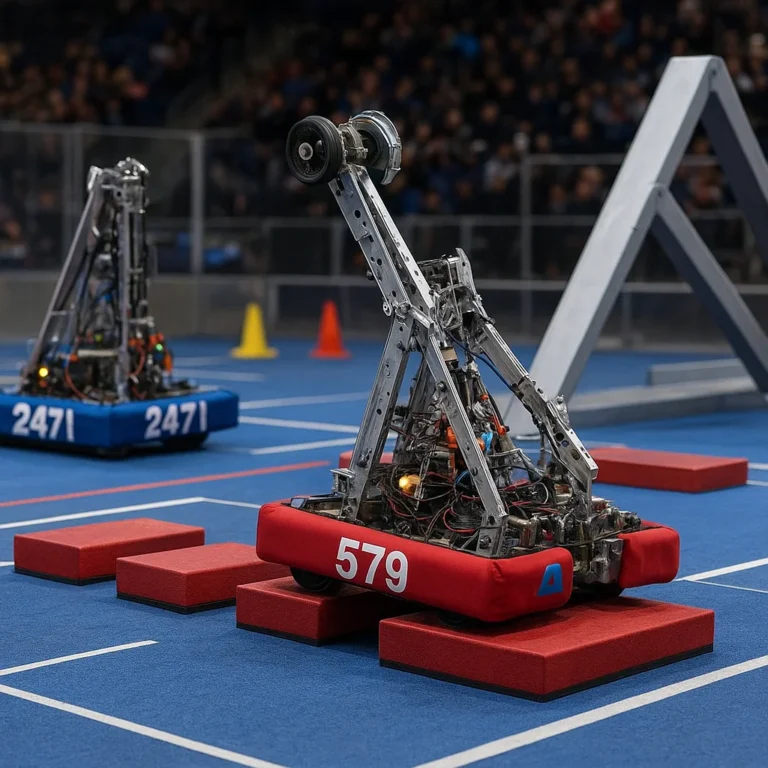
- FIRST Robotics Competition (FRC): students ages 14–18 build larger robots to play a new game released each season, subject to the current program’s eligibility rules.
In FRC, teams typically design and build around the annual game and compete in three-team alliances. The challenge is not just “make a strong robot”; teams also need to plan their role within an alliance, prepare for inspection, and keep the machine serviceable throughout an event. FIRST calls its culture of cooperation alongside competition “Copertition®.”
The reward is a broad engineering experience. Students may work on fabrication, controls, software, communications, funding, outreach, and project management. The drawback? A large robot and a compressed build season can demand substantial adult support, workspace, logistics, and team coordination.
🥇 VEX Robotics Competition and VEX IQ
VEX Robotics offers a progression of programs and hardware platforms, including VEX IQ for younger participants and VEX V5 programs for older students. The REC Foundation coordinates many VEX competition programs and event pathways.
VEX is a strong fit for teams that want:
- A defined game with repeatable match practice.
- A common hardware ecosystem and support materials.
- A competitive format that encourages iterative design and driver practice.
- A pathway from introductory building toward more advanced robot systems.
A common misconception is that a kit-based competition makes the engineering “easy.” It makes some choices easier, but it does not remove the hard parts: mechanism reliability, code quality, strategy, and diagnosing failures under time pressure.
Good fit: teams that value structured seasons, accessible components, and frequent competitive play.
Potential drawback: teams should check local event availability, rules, and hardware requirements before committing to a platform.
⚙️ RoboCup and Autonomous Robot Challenges
RoboCup is an international robotics and AI organization with leagues that include robot soccer, rescue, @home, @work, and youth activities. It is especially compelling for teams interested in autonomy: robots must perceive a changing environment, make decisions, and act without a person steering every move.
Other autonomy-focused events include RoboSub, RoboBoat, the Intelligent Ground Vehicle Competition, and Micromouse. These contests can involve mapping, localization, computer vision, obstacle avoidance, mission planning, and robust operation in conditions that are less tidy than a laboratory.
For an autonomy contest, a robot that finishes consistently often outperforms a more ambitious robot that succeeds only on its best run. Reliability is not a consolation prize. It is a control-system feature.
🧰 BattleBots and Combat Robotics Tournaments
Combat robotics ranges from small local weight classes to highly produced events such as BattleBots. The formats, safety controls, eligibility, and technical requirements vary widely. Start with an event’s official rules and safety procedures, not a build video filmed in someone’s garage.
Combat robotics offers a vivid engineering lesson in energy, materials, drivetrains, armor, and failure analysis. It also has higher safety stakes than many classroom robot games. Teams must follow rules for weapon design, battery handling, radio control, containment, and inspection. Never test an active weapon outside an approved, properly protected environment.
For a first event, a lower-energy or non-weaponized class may be a better way to learn the basics. Local organizers listed through Robot Combat Events can help you find competitions and their current requirements.
🌍 World Robot Olympiad and RoboCupJunior
The World Robot Olympiad and RoboCupJunior provide youth-focused paths into robotics. Their exact categories and age eligibility depend on the current season and national organizer, so check the rules for your location.
These programs can suit students who want to explore:
- Building and programming robots to complete a mission.
- Robot soccer and rescue challenges.
- Creative design and engineering presentations.
- Team problem-solving in an age-appropriate environment.
The key difference between events is often not “which is better?” but which challenge keeps a particular team curious long enough to learn. A student who loves soccer may gravitate toward RoboCupJunior; another who prefers themed missions may enjoy WRO. Ask to observe an event or try a local workshop before choosing.
🎓 University, Research, and Industry Robotics Contests
University and research events often tackle problems closer to deployed robotics: autonomous navigation, environmental sensing, underwater inspection, aerial flight, agricultural tasks, and human-robot interaction. Examples include RoboNation’s RoboSub and RoboBoat, IGVC, and RoboCup.
Some events are competitions; others are trials, demonstrations, or research evaluations. That distinction affects what “winning” means. For instance, the ELROB organizers have described their event as a trial rather than a competition, emphasizing real-world assessment over a simple winner-takes-all score. This is a useful reminder: a technically valuable event may not use a podium or championship bracket.
University teams should inspect:
- Whether the event is open to their institution and country.
- Required hardware, documentation, and safety reviews.
- Travel and field-testing needs.
- Whether evaluation prioritizes mission completion, research novelty, reliability, or speed.
- How results are reported and whether source code or design details must be shared.
🧭 How Robot Competitions Work
Most events follow a recognizable rhythm: organizers publish rules, teams prepare a robot, inspectors verify compliance, and the robot completes matches or missions that earn points. The details can be radically different, though. A head-to-head match rewards adaptability; a timed autonomous run rewards repeatability; a judged research event may care about the evidence behind the result.
📋 Game Rules, Match Formats, and Scoring
A rules manual usually explains the playing field, robot size and weight limits, allowed parts, match duration, scoring, penalties, inspection requirements, and safety procedures. Read it early, then revisit it as the design evolves.
A practical rules-reading method:
- Find the current season’s manual. Use the official organizer website.
- Mark hard constraints. Dimensions, weight, batteries, materials, and permitted tools can shape the entire robot.
- Translate scoring into tasks. Write each scoring action in plain language.
- List penalties and disqualifiers. Avoid designing around a move that is illegal or unreliable.
- Check inspection details. A robot that scores brilliantly but fails inspection does not make the match.
- Track official updates. Organizers may publish clarifications and rule changes during the season.
| Rule category | Questions to ask |
|---|---|
| Robot limits | How large, heavy, and powerful can the robot be? |
| Components | Are there approved motors, controllers, materials, or kits? |
| Autonomy | When may humans control the robot, and what may it do on its own? |
| Scoring | Which actions earn points, bonuses, or ranking advantages? |
| Safety | What guards, switches, or battery procedures are required? |
| Penalties | What behavior costs points or ends a match? |
For student teams, official manuals from FIRST and VEX Robotics are more dependable than informal summaries. When sources disagree, the current official rules and event-specific updates win.
🧑 🤝 🧑 Teams, Alliances, and Competition Roles
A robotics team works best when technical jobs and coordination jobs are both visible. Not every student needs to write code, and not every engineer needs to be in the workshop every meeting.
Common roles include:
- Mechanical design and fabrication: chassis, mechanisms, materials, assembly.
- Electrical systems: wiring, power distribution, connectors, sensors.
- Programming and controls: driver code, autonomous routines, debugging.
- Drive team: robot operation and match communication.
- Strategy and scouting: studying opponents and planning match roles.
- Documentation and project management: notes, schedules, checklists, presentations.
- Outreach and fundraising: community engagement and sponsor communication.
In alliance formats such as FRC, teams may be paired with partners for a match and need to coordinate quickly. That makes clear communication and flexible strategy as valuable as a clever mechanism. The best alliance robot is not always the most complicated one; it may be the one that performs its chosen job reliably.
🏅 Qualifiers, Regional Events, and Championships
Many programs use a progression of local events, qualifiers, regional or national championships, and sometimes world championships. The pathway varies by organization and geography; eligibility may depend on rankings, awards, event capacity, or qualification criteria.
Before a season starts, map:
- Registration deadlines.
- Required team paperwork and consent forms.
- Local event dates and travel time.
- Qualification rules for the next stage.
- Inspection and submission deadlines.
- Whether a team needs to qualify to attend a championship.
A first competition does not need to be a championship. A nearby, smaller event can be the better learning environment: fewer travel demands, a more manageable schedule, and a chance to discover what the team should improve before the next season.
🧒 Choosing a Robotics Competition by Age and Experience
Use age eligibility as a filter, not as the only decision. The right program also depends on team access, meeting time, available tools, adult support, travel, and whether a student likes building, programming, research, or performance.
| Participant stage | Possible starting points | What to verify |
|---|---|---|
| Elementary school | FIRST LEGO League, VEX IQ, RoboCupJunior categories | Local availability, age band, mentor support |
| Middle school | FIRST LEGO League, VEX IQ, VEX V5 programs | Team formation, build system, season schedule |
| High school | FTC, FRC, VEX V5, BEST, WRO, RoboCupJunior | Eligibility, event costs, workspace, travel |
| University | VEX U, RoboCup, RoboNation, IGVC, research contests | Team recruitment, technical requirements, lab access |
| Adult or hobbyist | Combat events, Micromouse, RoboGames, open meets | Weight class, safety rules, registration status |
🌱 Beginner and Elementary School Programs
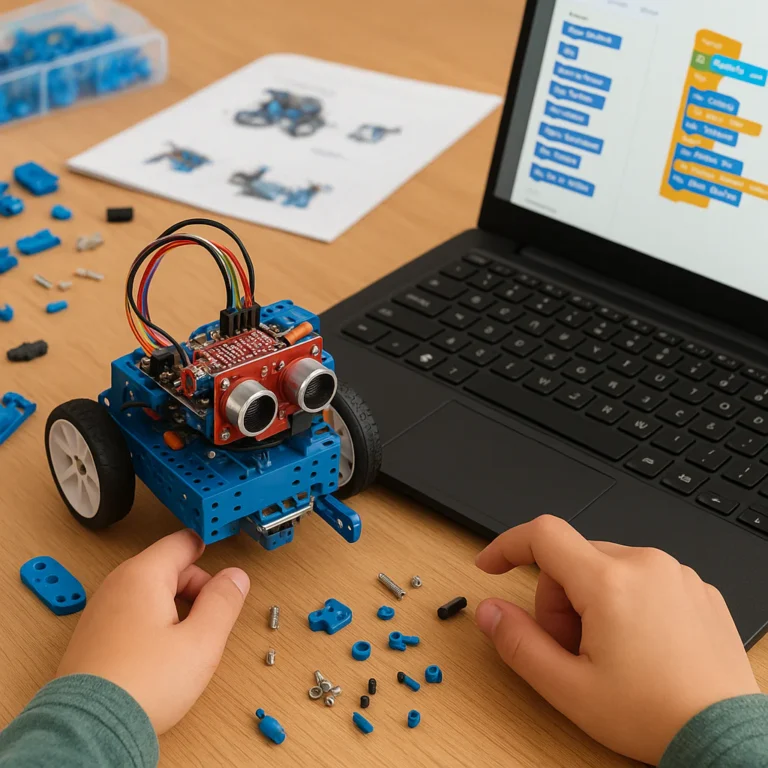
For younger builders, start with programs designed around age-appropriate materials and guided engineering. FIRST LEGO League and VEX IQ are familiar starting points, while local libraries, museums, and after-school clubs may offer introductory robotics sessions.
Look for a program that provides:
- A clear build-and-test activity.
- A safe workspace and adult supervision.
- Room for students to make design choices.
- A competition or showcase that rewards more than speed.
- Support for students with varied experience levels.
The best beginner season is not the one where adults quietly build the robot while students hold the screwdriver. Let students make decisions, test their ideas, and experience the useful little sting of a design that does not work. That is where the engineering begins.
🛠️ Middle School and High School Robotics Leagues
Middle- and high-school teams can choose between structured kits, more open builds, autonomous challenges, and large team projects. FTC and VEX programs are common choices for game-based robotics; FRC is a larger-scale commitment; BEST and WRO offer different seasonal structures.
Ask the school or club:
- How often does the team meet?
- Is there a safe workspace and trained adult supervision?
- Does the team already have tools, equipment, and a mentor network?
- What are the season’s time and travel expectations?
- Can new members join without previous coding or building experience?
A good team makes room for learners. If joining means you need to arrive already knowing CAD, Java, and the secret handshake of the soldering iron, ask whether another local program has a healthier beginner pathway.
🎓 College, University, and Adult Competitions
University students may join established engineering teams or form interdisciplinary groups. Robotics challenges can connect directly to coursework in mechanical engineering, computer science, electrical engineering, AI, marine technology, and aerospace.
Adults and hobbyists can explore robot combat events, maze-solving, robot sumo, open exhibitions, and maker groups. Check whether a contest has separate student and adult classes or restricts who may compete.
For anyone returning to robotics after a long break: modern tools may be easier to access, but the fundamentals remain familiar—measure, test, document, and change one thing at a time. The robot has no idea you were once very good at LEGO.
🧠 Robot Competition Categories and Skills
Competition categories overlap. A robot may be autonomous and aerial, or remotely operated and underwater. Choosing a category helps identify the skills, equipment, and testing environment a team will need.
🚗 Autonomous and Self-Driving Robots
Autonomous contests ask a robot to sense its environment and act without continuous human control. Tasks may involve line following, maze solving, obstacle avoidance, outdoor navigation, robot soccer, aerial flight, or underwater missions.
Typical building blocks include:
- Sensors such as cameras, encoders, inertial measurement units, lidar, and sonar.
- Localization and mapping.
- Motion planning and path following.
- Control algorithms.
- Fault detection and safe stopping.
- Testing across different lighting, surfaces, and conditions.
Explore our autonomous robots and machine learning coverage for related concepts. A useful principle: autonomy is not the absence of human effort; it is engineering that moves effort into planning, sensing, testing, and recovery behavior.
🦾 Industrial, Humanoid, and Service Robots
Industrial, humanoid, and service-robot events test very different capabilities. Industrial challenges may prioritize manipulation and safe task completion; humanoid events may include locomotion, athletics, or interaction; service-robot tasks may focus on helping people in homes or workplaces.
The 2026 World Humanoid Robot Games video highlighted both impressive motion and spectacular stumbles across racing, long jump, soccer, boxing, obstacle courses, weightlifting, and dancing. If you have watched the featured video, the tumbles are funny, but they also make a serious point: dynamic balance and reliable recovery are hard engineering problems. A robot that falls safely, diagnoses what happened, and gets back up may be more useful than one that looks graceful for three seconds.
RMIT Senior Lecturer Dr. Timothy Wiley described Australia’s robotics sector as growing, citing “something like 15 billion dollars of investment across a range of technology areas” and noting a national AI plan. He also characterized China’s robotics industry as mature. Those comments are a perspective on investment and sector development, not a direct comparison of competition performance; investment figures depend on what technologies and time period are counted.
For related design and human-impact topics, see robot design and robot ethics and safety.
⚔️ Combat Robots, Sumo, and Robot Soccer
These formats may all look like robots trying to defeat or outscore an opponent, but their engineering goals differ:
| Category | Typical objective | Design priority |
|---|---|---|
| Combat robotics | Disable or outscore an opponent under event rules | Protection, weapon reliability, power, safety |
| Robot sumo | Push an opponent out of a ring | Traction, sensing, low center of gravity, fast response |
| Robot soccer | Score while coordinating with teammates or autonomous agents | Perception, motion, communication, strategy |
For robot sumo, the simplest effective machine may combine a low wedge, strong traction, reliable edge detection, and quick response. In soccer, a brilliant shot is useless if the robot cannot locate the ball or coordinate with teammates. Different games reward different kinds of “smart.”
💻 Programming, AI, and Engineering Design
Competition programming ranges from block-based tools to C++, Python, Java, and specialized robotics frameworks. The language is only one part of the system. Teams also need to manage sensors, motor control, timing, communication, testing, and code changes.
Useful capabilities include:
- Programming fundamentals: variables, loops, conditions, functions, and debugging.
- Control systems: making a robot move predictably despite friction and variation.
- Computer vision: identifying objects, lines, or landmarks.
- AI and machine learning: handling perception or decisions when rule-based methods are insufficient.
- Engineering design: comparing options, documenting decisions, and testing prototypes.
- Ethics and safety: considering who is affected by a robot and what happens when it fails.
For AI-heavy projects, our machine learning and robot ethics and safety guides provide broader context. A competition robot does not need AI for every task. Sometimes a well-calibrated sensor and a simple controller are more dependable than an elaborate neural network.
🔧 Building a Competition Robot
A reliable competition robot starts with the game, not the shopping cart. Teams that buy motors and sensors before understanding the task often end up with a impressive pile of parts and no coherent strategy.
🧩 Choosing a Kit, Chassis, Motors, and Sensors
Select hardware based on the event rules and the job your robot must do. A classroom robot kit is not automatically legal for a tournament, and a powerful motor is not automatically useful if the mechanism binds or the battery cannot support it.
| Component | What it does | Selection questions |
|---|---|---|
| Chassis | Supports components and provides mobility | Does it fit size rules? Can it turn and recover from contact? |
| Motors and gearing | Create movement or mechanism force | Is the speed, torque, and duty cycle appropriate? |
| Wheels or tracks | Convert motor power into movement | What surface, traction, and obstacle conditions apply? |
| Sensors | Measure the environment or robot state | Are they legal, reliable, and mounted consistently? |
| Controller | Runs code and coordinates inputs and outputs | Is it compatible with the event’s approved system? |
| Battery and wiring | Power the robot | Does it meet voltage, capacity, connector, and safety requirements? |
| Mechanism | Performs the scoring or mission task | Can it complete the task quickly and repeatably? |
Choose the simplest hardware that meets the mission. Every added mechanism creates more wiring, more code, more failure points, and more things to explain to the inspection crew.
🖥️ Robot Programming Languages and Control Systems
The competition platform may dictate the controller and software environment. FIRST, VEX, and other organizers publish platform-specific resources, while research events may permit a wider choice of computers and frameworks.
A sensible software plan separates:
- Driver control: manual inputs and safe behavior.
- Autonomous routines: timed, sensor-based, or path-planned actions.
- Mechanism control: motors, servos, intake systems, arms, or grippers.
- Safety behavior: limit switches, emergency stops, current limits, and fault handling.
- Diagnostics: logs, telemetry, and simple test modes.
Build a small working program early. Test each motor and sensor individually before combining them. Then test a complete action in short steps. If the robot turns the wrong way, you want to discover that during a calm workshop session—not while an alliance partner is waiting beside the field.
🧪 Prototyping, Testing, and Iteration
Testing turns a promising design into a competitive robot. Teams should test the complete task, not merely confirm that each component moves.
A step-by-step iteration loop:
- Define a measurable goal. Example: “Complete the pickup-and-place task four out of five times.”
- Build a simple prototype. Use quick materials where possible.
- Run repeatable tests. Keep starting conditions as consistent as practical.
- Record results. Note successes, failures, battery state, code version, and changes.
- Find the limiting factor. Is it traction, alignment, speed, sensor noise, or operator timing?
- Change one major variable. Avoid changing five things at once.
- Retest under realistic conditions. Include field variation, obstacles, time limits, and hurried setup.
- Freeze a dependable version. Save a known-good code and hardware configuration before risky experiments.
Our engineers have seen teams chase a spectacular “perfect run” while ignoring three ordinary failures. In a tournament, repeatability beats a highlight reel.
🛡️ Safety, Inspection, and Competition Readiness
Safety begins in the workshop. Teams should use appropriate eye protection and tool procedures, keep loose hair and clothing away from moving parts, and follow battery manufacturer and event guidance. The OSHA machine-guarding overview explains why moving machinery needs proper guarding; competition-specific requirements still come from the event organizer.
Before arrival, confirm:
- The robot meets size, weight, and material limits.
- Battery, wiring, connectors, and switches meet the current rules.
- Moving mechanisms are guarded or otherwise safe.
- The team knows how to disable the robot quickly.
- Required paperwork and safety documentation are complete.
- Every driver and technician understands the inspection process.
For combat robotics, apply the event’s containment, weapon-locking, arming, and battery rules exactly. Never bypass a safety device to save match time.
🗓️ How to Start or Join a Robotics Team
Starting a team does not require a purpose-built laboratory on day one. It does require a clear goal, an adult or institutional support structure when needed, a safe working area, and a plan for keeping the effort sustainable.
🔎 Finding Competitions, Teams, and Local Clubs
Start with official event finders and local organizations:
- Search the official FIRST program pages.
- Check VEX competition information and the REC Foundation.
- Browse NASA’s robotics competition directory.
- Look for university engineering outreach, maker spaces, libraries, and science museums.
- Contact a nearby team and ask whether visitors can attend a meeting or event.
- Verify current registration dates, team eligibility, and event status.
For a new team, choose one competition for the first season. Joining three leagues at once sounds ambitious; in practice, it can create three rulebooks, three schedules, and one very tired robot.
👩 🏫 Coaches, Mentors, and Team Roles
A strong mentor does not take over the engineering. They help students ask better questions, work safely, manage time, and learn from testing.
Useful mentors may bring expertise in:
- Mechanical design and fabrication.
- Programming, controls, and electronics.
- Project management and documentation.
- Safety and workshop supervision.
- Fundraising, communications, and event logistics.
Teams should define roles while keeping knowledge shared. If one student is the only person who can program the robot, that is not a clever shortcut; it is a season-ending single point of failure.
💰 Fundraising, Sponsorships, and Managing Costs
Costs vary substantially by program, region, team size, travel, hardware, and whether a school or community organization already provides tools. We avoid treating one figure as universal: registration and transport can matter as much as the robot itself.
A realistic planning list includes:
- Program registration and event fees.
- Robot kits, replacement parts, and tools.
- Workspace, storage, and safety equipment.
- Travel, lodging, and meals.
- Printed materials, team shirts, and outreach activities.
- Spare parts and shipping delays.
Ways to manage the budget:
- Ask schools and community groups about existing equipment.
- Seek in-kind donations of materials or workshop access.
- Approach local engineering companies for mentorship and sponsorship.
- Share tools and field elements with nearby teams.
- Track spending and keep receipts.
- Maintain a reserve for broken components and travel changes.
A sponsor is not only a checkbook. A local machinist, software engineer, or electrician may contribute expertise that saves a team weeks of guesswork.
🚀 Preparing for Competition Day
Competition day is a controlled test of the robot and the team’s organization. The robot should be packed, inspected, and tested before the event—not assembled from mystery parts on the venue floor.
📦 Tools, Spare Parts, and Travel Checklist
Pack these essentials, adjusting for the rules and robot platform:
- Robot, batteries, chargers, and approved power supplies.
- Driver station, controller, laptop, and cables.
- Basic hand tools and platform-specific tools.
- Common fasteners, connectors, wire, and replacement parts.
- Safety glasses and required protective equipment.
- Printed or digital rulebook, inspection documents, and team contacts.
- Notebook, match schedule, and scouting sheets.
- Water, snacks, and any venue-required supplies.
Label cases and cables. Charge batteries safely and follow the manufacturer’s instructions. Confirm what tools, batteries, and test areas the venue permits; tournament venues are not an invitation to bring your entire workshop in a rolling toolbox.
🎯 Strategy, Drive Practice, and Match Preparation
A robot strategy should match what the machine can do reliably, not what the team hopes it might do after one more late-night rebuild.
Before each match:
- Check the match schedule and alliance partners.
- Agree on roles and a simple opening plan.
- Confirm the robot configuration and battery.
- Review any rule changes or field-specific notes.
- Identify a fallback action if the primary mechanism fails.
- Debrief immediately afterward and record one or two useful observations.
Driver practice should include typical failures: missed pickups, partial alignment, blocked paths, and imperfect starts. Perfect conditions are pleasant; competitions are not famous for providing them.
🤝 Teamwork, Sportsmanship, and Gracious Professionalism
Good competition culture includes helping other teams, treating volunteers respectfully, accepting inspection decisions, and responding to setbacks constructively. FIRST describes this ethos through Gracious Professionalism® and Copertition®, but the underlying idea applies across robotics: compete hard while respecting the people building alongside you.
Useful habits:
- Share tools or troubleshooting help when appropriate.
- Give credit to teammates and mentors.
- Ask judges and inspectors questions calmly.
- Discuss technical disagreements with evidence.
- Keep workshop spaces safe and tidy.
- Treat a loss as information, not a verdict on a student’s ability.
The robot may leave on a trailer with a bent bracket. The team should leave with its curiosity intact. That is a pretty good day.
📈 Benefits of Robot Competitions for Students and Teams
Robot competitions turn abstract ideas into physical results. A student can calculate torque, write a control loop, or discuss sensors in class; on a robot, those ideas either work in the field or immediately request a meeting.
| Benefit | How competition helps develop it |
|---|---|
| Engineering design | Teams define problems, compare concepts, prototype, and iterate |
| Programming and controls | Students connect code to real sensor and motor behavior |
| Collaboration | Mechanical, electrical, software, and strategy roles must coordinate |
| Communication | Teams explain their design to judges, sponsors, and partners |
| Resilience | Failures become test data and design feedback |
| Career exploration | Students encounter engineering, manufacturing, software, and project roles |
| Applied STEM learning | Math and science become tools for solving visible problems |
Research and program evaluations vary by competition and participant group, so avoid assuming that joining any one event guarantees a specific academic or career outcome. What teams can reasonably expect is repeated practice with collaboration, applied problem-solving, and engineering decisions—especially when students genuinely own the work.
⚖️ Robot Competition Challenges and Common Pitfalls
Competitions can be rewarding, but they bring real demands. Some teams struggle with money or travel; others discover too late that a complicated mechanism is difficult to repair or that only one student understands the code.
Frequent pitfalls and better responses
- Overbuilding: Start with the simplest design that can earn dependable points.
- Ignoring the rules: Read the current manual and official updates early.
- Testing too late: Establish a basic working robot as soon as possible.
- No documentation: Keep wiring diagrams, code versions, and test notes.
- One-person bottlenecks: Cross-train teammates and share technical knowledge.
- Unsafe shortcuts: Follow workshop and event safety procedures even under deadline pressure.
- Unrealistic schedules: Build in time for inspection, repairs, and travel.
- Treating rankings as the only success metric: Track skills gained, reliability, participation, and team health too.
There is also a real debate about what belongs under the label “competition.” Some events are tightly scored tournaments; others are trials, research demonstrations, or workshops. Wikipedia notes this ambiguity in its robot competition overview. The practical answer is to judge an event by its format and purpose, rather than its name alone.
🔮 The Future of Robotics Competitions
Expect more events to test robots in messy, changing environments, not just on clean mats. That includes outdoor autonomy, agricultural robotics, warehouse tasks, disaster response, human-robot interaction, and machines that work in water or the air.
Competitions will also face new questions:
- How can judges verify that an autonomous system is safe and fair?
- How should teams document AI-assisted design or code?
- What counts as a meaningful human role in an autonomous event?
- How can contests remain accessible when hardware becomes more expensive or specialized?
- How should robots be evaluated when reliability, energy use, and safety matter as much as speed?
The 2026 World Humanoid Robot Games, as shown in the featured video, capture both sides of this future: athletic demonstrations and comic failures. A robot stumbling during a sprint can be entertaining, but it also gives engineers data about balance, sensing, actuation, and recovery. And when one machine reportedly collided with track barriers and began smoking, the lesson was less “robots are silly” and more test energy systems and emergency procedures as seriously as the headline performance.
The long-term winners may not be the robots that look most human or move fastest in a highlight clip. They may be the ones that work safely, predictably, and usefully when the environment refuses to follow the script.