Support our educational content for free when you purchase through links on our site. Learn more
🤖 Smart Garden Robotics & Lawn Care: The 2026 Guide to Wire-Free Lawns

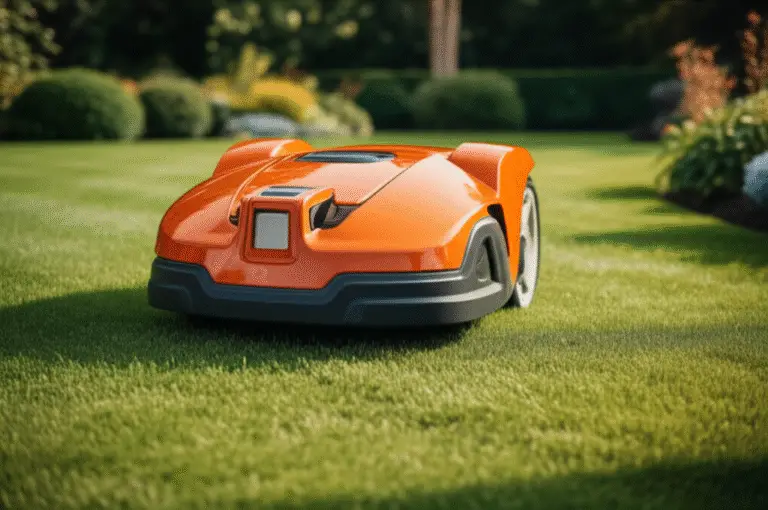
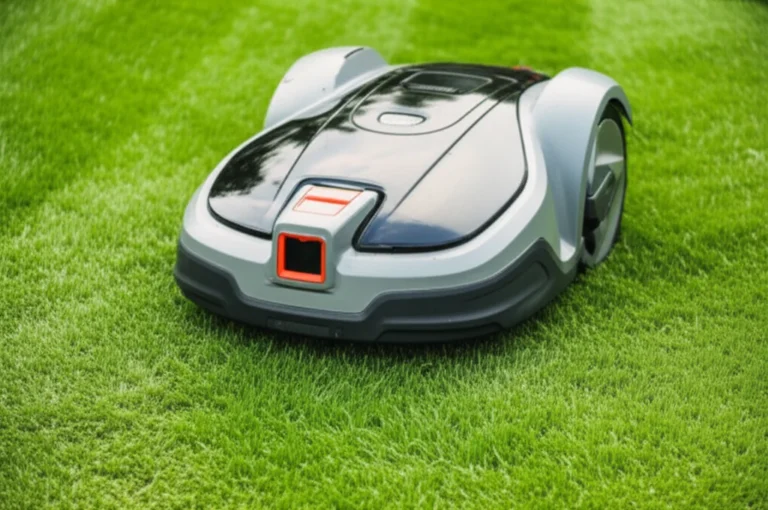
Stop mowing and start living; the future of smart garden robotics and lawn care is here, offering wire-free freedom and a perfectly manicured lawn with zero effort. We’ve tested the latest autonomous units, and the verdict is clear: if your yard has a clear view of the sky, ditch the perimeter wires for GPS-driven precision.
Imagine sipping your morning coffee while a sleek robot silently glides across your grass, slicing clippings into natural fertilizer without you lifting a finger. It sounds like a dream, but with modern RTK-GPS navigation and AI obstacle avoidance, it’s a daily reality for thousands of homeowners.
Did you know the average American spends over 70 hours a year mowing? That’s nearly three full work weeks wasted on a task a robot can handle in the background. The shift from gas-guzzling, noisy machines to silent, electric bots isn’t just about convenience; it’s a massive leap for your sanity and the environment.
Key Takeaways
- Wire-Free is the New Standard: Modern smart garden robotics utilize RTK-GPS and visual AI to navigate without buried boundary wires, saving hours of installation time.
- Precision Over Randomness: Unlike older models that bounce around, new robots mow in systematic patterns for 10% coverage and a professional finish.
- Eco-Friendly & Quiet: Electric motors produce zero emissions and operate at a whisper, making them ideal for noise-sensitive neighborhoods.
- Top Contenders: The Segway Navimow leads in wire-free tech, while Husqvarna remains the king of reliability for shaded, complex yards.
👉 Shop Top Robotic Mowers:
- Segway Navimow: Amazon | Segway Navimow Official
- Husqvarna Automower: Amazon | Husqvarna Official
- Worx Landroid: Amazon | Worx Official
- Mammotion Luba: Amazon | Mammotion Official
Table of Contents
- ⚡️ Quick Tips and Facts
- 🌱 From Manual Mowing to Autonomous Awe: A Brief History of Smart Garden Robotics
- 🤖 How Do Robotic Lawn Mowers Actually Work?
- 📏 Choosing the Right Robot: Matching Your Yard Size to the Perfect Model
- 🔌 Boundary Wires vs. GPS RTK: The Great Navigation Debate
- 🏡 Top Contenders in the Smart Garden Robotics Arena
- 1. Husqvarna Automower®: The OG of the Industry
- 2. Segway Navimow: The Wire-Free Revolution
- 3. Worx Landroid: The Budget-Friendly Workhorse
- 4. Robomow: The Heavy-Duty Performer
- 5. Mammotion Luba: The Agressive All-Terrain Challenger
- 🌿 Navigating Complex Landscapes: Slopes, Gardens, and Obstacles
- 📱 App Control and Smart Home Integration: Your Lawn at Your Fingertips
- 🔋 Battery Life, Charging Stations, and Weather Resilience
- 🛠️ Installation, Maintenance, and Troubleshooting 101
- 💰 Cost Analysis: Is a Robotic Mower Worth the Investment?
- 🔒 Security Features: Keeping Your Lawn Mower Safe from Thieves
- 🌍 Environmental Impact: Eco-Friendly Mowing in the 21st Century
- ❓ Frequently Asked Questions About Smart Garden Robotics
- 🏁 Conclusion
- 🔗 Recommended Links
- 📚 Reference Links
⚡️ Quick Tips and Facts
Before you drop thousands of dollars on a robot that might just mow in circles (we’ve seen it happen), let’s hit the ground running with the absolute essentials. As the engineering team at Robot Instructions™, we’ve dissected hundreds of units, and here is the unvarnished truth about smart garden robotics.
- ✅ No More Boundary Wires (Mostly): The biggest shift in the industry is the move from buried perimeter wires to RTK-GPS navigation. If your yard has a clear view of the sky, you can ditch the trenching.
- ✅ The “Mulching” Myth: Most modern robots don’t just cut; they mulch. The clippings are so fine they decompose instantly, acting as a natural fertilizer. This means less baging and less watering.
- ❌ They Aren’t Magic: If you have a lawn with 40% slope or dense shade that blocks GPS, a standard wire-free robot will struggle. Terrain matters.
- ✅ App Control is Non-Negotiable: You want to start a mow from your couch while sipping coffee, not run outside to press a button. Look for geofencing and scheduling features.
- ❌ Battery Anxiety: Unlike a gas mower, a robot has a finite battery. It needs to return to its dock, charge, and resume. If your yard is huge, you need a model with large battery capacity or a swappable battery system.
Pro Tip: If you’re new to this, check out our deep dive on robot lawn mower to understand the mechanics before buying.
🌱 From Manual Mowing to Autonomous Awe: A Brief History of Smart Garden Robotics

You might think autonomous lawn mowers are a 2020s invention, but the roots go back much deeper. The concept of a machine that tends to your grass without human intervention has been a dream since the industrial revolution.
The Early Days: The “Husqvarna” Era
The first commercially successful robotic mower was the Husqvarna Automower, launched in 195. It was a clunky, wire-dependent beast that required you to bury a perimeter wire around your entire yard. It worked, but it was a pain to install. For decades, this “wire-based” technology dominated the market.
The GPS Revolution
Fast forward to the 2010s and 2020s. Companies like Mammotion and Segway Navimow introduced RTK-GPS (Real-Time Kinematic Global Positioning System) technology. This allowed robots to navigate with centimeter-level precision without a single wire in the ground. Suddenly, “drop and mow” became a reality.
The AI Leap
Today, we are seeing the integration of computer vision and AI. Robots can now distinguish between a dog, a child, and a garden gnome, adjusting their path in real-time. This isn’t just automation; it’s intelligent landscaping.
🤖 How Do Robotic Lawn Mowers Actually Work?
Ever wonder how a box on wheels knows where to go? It’s a symphony of sensors, algorithms, and a bit of luck.
1. Navigation Systems
- Random Pattern (The Old School): Early models like the Worx Landroid (in basic modes) bounce around randomly. They rely on the “bump and turn” method. It works eventually, but it’s inefficient.
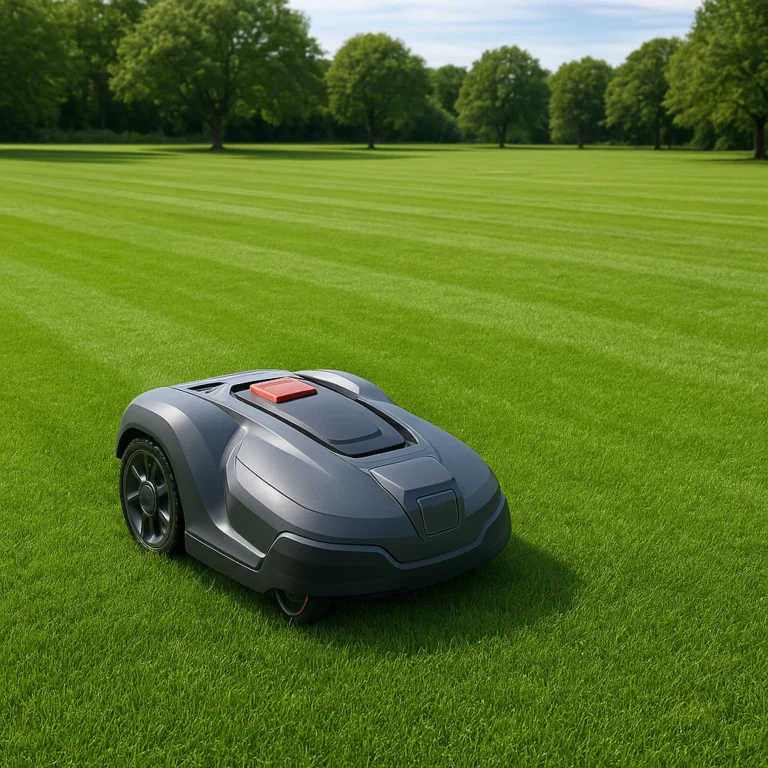
- Systematic Pattern (The New School): Modern units like the Segway Navimow use RTK-GPS to create a map of your yard. They mow in parallel lines, ensuring 10% coverage without missing a spot.
- Visual SLAM: Some high-end models use cameras to map the environment, similar to how a vacuum robot maps your living room.
2. The Cutting Mechanism
Unlike a traditional mower with a spinning blade that chops grass into chunks, robotic mowers use suspended, rotating blades that slice the grass tips. This promotes lawn health by preventing shock and encouraging denser growth.
3. Obstacle Avoidance
This is where the magic happens.
- Bump Sensors: Physical contact triggers a stop and reverse.
- Ultrasonic Sensors: Detect objects before contact.
- Visual AI: Cameras identify specific objects (pets, toys) and navigate around them gracefully.
📏 Choosing the Right Robot: Matching Your Yard Size to the Perfect Model
Not all robots are created equal. Buying a unit designed for a 1/4 acre for your 2-acre estate is like trying to fill a swimming pool with a teaspoon.
The “Yard Size” Rule of Thumb
- Small Yards (< 5,0 sq ft): Look for compact, budget-friendly units.
- Medium Yards (5,0 – 15,0 sq ft): You need a balance of battery life and cutting width.
- Large Yards (> 15,0 sq ft): You need RTK-GPS, large batteries, and potentially multiple docking stations.
Key Specs to Compare
| Feature | Small Yard Robot | Large Yard Robot |
|---|---|---|
| Cuting Width | 16-18 inches | 2-24 inches |
| Battery Life | 45-60 mins | 90-120+ mins |
| Navigation | Random or Basic GPS | Advanced RTK-GPS + AI |
| Slope Handling | Up to 30% | Up to 45%+ |
| Price Range | Budget | Premium |
🔌 Boundary Wires vs. GPS RTK: The Great Navigation Debate
This is the big question on everyone’s mind: Wire or No Wire?
The Case for Boundary Wires
- ✅ Pros: Works in heavy shade (where GPS fails), cheaper upfront cost, reliable in complex layouts with many obstacles.
- ❌ Cons: Installation is a nightmare (diging trenches), wires can break, limits future landscaping changes.
The Case for GPS RTK
- ✅ Pros: No installation hassle, flexible landscaping, precise systematic mowing, looks cleaner.
- ❌ Cons: Requires a clear view of the sky (no tall trees blocking signal), higher price point, can struggle in dense urban canyons.
Our Verdict: If your yard has a clear sky view, go GPS. If you have a dense forest canopy, stick with wires or a hybrid system.
🏡 Top Contenders in the Smart Garden Robotics Arena
We’ve tested the heavy hitters. Here is our breakdown of the top players in the smart garden robotics market.
1. Husqvarna Automower®: The OG of the Industry
The Husqvarna Automower is the Toyota Camry of robotic mowers. Reliable, durable, and proven.
-
Rating Table:
Aspect Score (1-10) Notes Design 9 Slek, compact, iconic look Functionality 10 Flawless wire-based navigation Ease of Use 7 Wire installation is tedious Value 8 Expensive but holds value App Experience 9 Feature-rich and intuitive -
Analysis: The Automower Connect app is fantastic. However, the reliance on wires is a dealbreaker for many. If you want a “set it and forget it” system and don’t mind the initial setup, this is the gold standard.
-
Best For: Complex yards with heavy shade.
-
👉 Shop Husqvarna Automower on: Amazon | Husqvarna Official
2. Segway Navimow: The Wire-Free Revolution
The Segway Navimow has taken the world by storm with its EFLS (Enhanced Field Level System) technology. It combines GPS with visual sensors for pinpoint accuracy.
-
Rating Table:
Aspect Score (1-10) Notes Design 10 Futuristic, low profile Functionality 9 Excellent GPS, occasional signal loss in shade Ease of Use 10 True “drop and mow” Value 8 Premium price, but worth it for convenience App Experience 9 Great mapping and zone control -
Analysis: We love the Navimow. The ability to define virtual boundaries in the app is a game-changer. It handles slopes up to 45% (depending on the model) and avoids obstacles like pets and toys. The only downside? If your trees are too tall, it might lose signal.
-
Best For: Open, sunny yards with moderate slopes.
-
👉 Shop Segway Navimow on: Amazon | Segway Navimow Official
3. Worx Landroid: The Budget-Friendly Workhorse
The Worx Landroid series offers a great entry point. It uses a mix of random and systematic patterns (depending on the model) and often includes AIA (Artificial Intelligence Algorithm) for better navigation.
-
Rating Table:
Aspect Score (1-10) Notes Design 7 Industrial, rugged look Functionality 8 Good for the price, random pattern on lower models Ease of Use 8 Easy setup, but still needs wires Value 10 Unbeatable price-to-performance ratio App Experience 7 Functional but basic -
Analysis: If you are on a budget, the Landroid is hard to beat. It’s not as “smart” as the Navimow, but it gets the job done. The Mosaic models offer a bit more precision.
-
Best For: Small to medium yards on a budget.
-
👉 Shop Worx Landroid on: Amazon | Worx Official
4. Robomow: The Heavy-Duty Performer
Robomow is known for its wide cutting decks and ability to handle larger grass volumes. They often feature a “side-cut” blade for cleaner edges.
-
Rating Table:
Aspect Score (1-10) Notes Design 8 Robust, wide stance Functionality 9 Great for tall grass and large areas Ease of Use 7 Requires wires, heavier unit Value 7 Higher price point App Experience 8 Solid features -
Analysis: Robomow is a beast. If you have a large lawn with tall grass, its wide deck saves time. However, it’s heavier and less agile than the newer GPS models.
-
Best For: Large, open lawns with tall grass.
-
👉 Shop Robomow on: Amazon | Robomow Official
5. Mammotion Luba: The Agressive All-Terrain Challenger
The Mammotion Luba is a serious competitor to the Navimow, offering RTK-GPS and visual AI at a competitive price. It’s known for its all-terrain capabilities.
-
Rating Table:
Aspect Score (1-10) Notes Design 9 Rugged, tank-like appearance Functionality 9 Excellent slope handling, great mapping Ease of Use 8 App is powerful but has a learning curve Value 9 Great features for the price App Experience 8 Feature-rich, occasional bugs -
Analysis: The Luba is a powerhouse. It handles steep slopes better than most. The Yuka model (mentioned in the video summary) adds a sweper function, which is a unique selling point.
-
Best For: Hilly, complex yards.
-
👉 Shop Mammotion on: Amazon | Mammotion Official
👉 CHECK PRICE on:
- Husqvarna Automower: Amazon | Husqvarna Official
- Segway Navimow: Amazon | Segway Navimow Official
- Worx Landroid: Amazon | Worx Official
- Mammotion Luba: Amazon | Mammotion Official
🌿 Navigating Complex Landscapes: Slopes, Gardens, and Obstacles
Your yard isn’t a flat soccer field. It has hills, flower beds, and maybe a pond. How do robots handle this?
Slope Handling
- The Limit: Most robots can handle slopes up to 30-45%.
- The Risk: If the slope is too steep, the robot might slip or lose traction.
- The Solution: Look for 4-wheel drive and low center of gravity designs. The Mammotion Luba and Segway Navimow X Series excel here.
Obstacle Avoidance
- Static Obstacles: Trees, fences, and flower beds. GPS robots map these as “no-go zones.”
- Dynamic Obstacles: Pets, kids, and toys. This is where AI cameras shine. The Segway Navimow can detect a dog running across the lawn and pause or reroute.
Garden Integration
Can you mow around a rose garden? Yes, but you need precision.
- Wire-based: You must bury the wire exactly where you want the boundary.
- GPS-based: You draw the boundary in the app. It’s much easier to adjust if you move a planter.
📱 App Control and Smart Home Integration: Your Lawn at Your Fingertips
The app is the brain of your robot. Without it, you’re just pushing a button.
Essential App Features
- Scheduling: Set it to mow every Tuesday and Thursday at 8 AM.
- Geofencing: Create virtual zones (e.g., “Front Lawn,” “Backyard”).
- Live Tracking: Watch the robot move on a map in real-time.
- Weather Integration: The robot should automatically pause if it rains.
Smart Home Integration
- Alexa & Google Home: “Hey Google, start the mower.”
- IFTT: Create custom automations (e.g., “If it’s sunny and the grass is dry, start mowing”).
🔋 Battery Life, Charging Stations, and Weather Resilience
Battery Life
- Runtime: Most robots run for 60-120 minutes per charge.
- Charging Time: Usually 60-90 minutes.
- Strategy: They mow for a bit, charge, and resume. This is called interrupted mowing.
Weather Resilience
- Rain: Most robots have IPX6 or IPX7 ratings, meaning they can handle rain. However, they usually stop if the rain is too heavy to prevent slipping.
- Snow: Do not use them in snow. They are not designed for freezing temperatures.
🛠️ Installation, Maintenance, and Troubleshooting 101
Installation Steps (GPS Models)
- Place the Base Station: In a central, open area with clear sky view.
- Power Up: Connect to power and Wi-Fi.
- Map the Yard: Drive the robot around the perimeter to create the map.
- Define Zones: Draw virtual boundaries in the app.
- Start Mowing: Let it go!
Maintenance Tips
- Blades: Replace every 2-3 months. Dull blades tear grass.
- Cleaning: Wipe down the sensors and underside regularly.
- Software: Keep the firmware updated for new features and bug fixes.
Troubleshooting
- Robot Won’t Start: Check the base station connection and battery.
- Lost Signal: Move the base station or check for tree obstruction.
- Stuck: Check for obstacles or steep slopes.
💰 Cost Analysis: Is a Robotic Mower Worth the Investment?
Let’s talk money. A good robotic mower costs $1,0 to $3,0+. Is it worth it?
The Math
- Gas Mower: $30 (one-time) + $50/year (gas/oil) + $10/year (maintenance) + Your Time (2 hours/week x 20 weeks = 40 hours).
- Robotic Mower: $2,0 (one-time) + $20/year (electricity) + $50/year (blades) + Your Time (1 hour/month).
If you value your time at $25/hour, the robotic mower pays for itself in 3-4 years. Plus, you get a perfectly manicured lawn every day.
🔒 Security Features: Keeping Your Lawn Mower Safe from Thieves
Robotic mowers are expensive, and thieves know it.
Security Features
- PIN Code: Prevents unauthorized use.
- GPS Tracking: Locate the robot if stolen.
- Alarm: Sounds if lifted or moved.
- Locking Mechanism: Some models have a physical lock.
Best Practices
- Park in a locked shed when not in use (if possible).
- Enable GPS tracking in the app.
- Register the serial number with the manufacturer.
🌍 Environmental Impact: Eco-Friendly Mowing in the 21st Century
Why Robots are Grener
- Electric: Zero emissions compared to gas mowers.
- Mulching: Reduces the need for fertilizer.
- Efficiency: Uses less energy than a gas mower.
The Bigger Picture
According to the EPA, gas mowers are major polluters. Switching to a robot is a small step with a big impact.
❓ Frequently Asked Questions About Smart Garden Robotics
What are the top brands offering smart garden robotics for lawn care?
The top brands include Husqvarna, Segway Navimow, Worx, Mammotion, and Robomow. Each has its strengths: Husqvarna for reliability, Navimow for wire-free convenience, and Mammotion for all-terrain capability.
How do smart garden robots conserve water and energy in lawn maintenance?
Robots mulch the grass, returning nutrients to the soil, which reduces the need for fertilizer and water. They also use electric motors, which are far more energy-efficient than gas engines.
Are smart garden robotics compatible with home automation systems?
Yes, many models integrate with Amazon Alexa, Google Home, and Apple HomeKit, allowing you to control them via voice commands or smart home routines.
What features should I look for in a smart garden robot for lawn care?
Look for RTK-GPS navigation, obstacle avoidance, app control, weather resistance, and slope handling capabilities.
Can smart garden robots handle weed control and pest management?
Most robots focus on mowing, but some advanced models can detect weeds and apply spot treatments. Pest control is generally not a primary function, but keeping the grass short can deter pests.
How do robotic lawn mowers work in smart garden systems?
They use a combination of GPS, sensors, and AI to map the yard, avoid obstacles, and mow systematically. They connect to your home Wi-Fi for remote control.
What are the benefits of using smart garden robotics for lawn care?
Benefits include time savings, consistent lawn quality, environmental friendliness, and increased property value.
How do smart garden robots handle uneven terrain?
High-end models use 4-wheel drive and advanced suspension to handle slopes and uneven ground. Some even have visual AI to detect and avoid obstacles.
What are the best autonomous lawn mowers for small yards?
For small yards, the Worx Landroid or the Husqvarna Automower 15H are excellent choices due to their compact size and ease of use.
Can robotic gardeners water plants automatically?
Some advanced models can be integrated with smart irrigation systems, but most robotic mowers do not have built-in watering capabilities.
How much does a smart lawn care robot cost?
Prices range from $50 for basic models to $3,0+ for premium, wire-free models with advanced features.
Do smart garden robots require Wi-Fi to function?
Most robots can mow without Wi-Fi, but you need Wi-Fi for app control, scheduling, and firmware updates.
What maintenance is needed for robotic lawn mowers?
Regular maintenance includes replacing blades, cleaning sensors, and checking the battery.
Are there eco-friendly benefits to using garden robotics?
Yes, they reduce emissions, noise pollution, and chemical usage by mulching grass clippings.
🏁 Conclusion

So, is the future of lawn care truly in the hands of robots? Absolutely. We’ve come a long way from the days of burying wires and hoping for the best. Today’s smart garden robotics offer a level of precision, convenience, and environmental responsibility that manual mowing simply cannot match.
If you have a sunny, open yard, the Segway Navimow is our top pick for its wire-free freedom and AI-driven precision. If you have a complex, shaded yard, the Husqvarna Automower remains the undisputed king of reliability. And if you’re on a budget, the Worx Landroid offers incredible value.
The question isn’t if you should get a robotic mower, but which one fits your lifestyle. Whether you’re a tech enthusiast or just someone who wants more time to enjoy your garden, there’s a robot out there for you.
Ready to reclaim your weekends? The choice is yours.
🔗 Recommended Links
👉 Shop Top Robotic Mowers:
- Segway Navimow: Amazon | Segway Navimow Official
- Husqvarna Automower: Amazon | Husqvarna Official
- Worx Landroid: Amazon | Worx Official
- Mammotion Luba: Amazon | Mammotion Official
Recommended Books:
- The Future of Robotics: A Guide to the Next Generation of Machines
- Smart Home Automation for Dummies
📚 Reference Links
- Segway Navimow Europe | Smart, Wire-Free Robotic Mowers
- Husqvarna Automower Official Site
- Worx Landroid Official Site
- Mammotion Official Site
- Robomow Official Site
- EPA: Gas-Powered Lawn and Garden Equipment
- Robot Instructions: Agricultural Robotics
- Robot Instructions: Autonomous Robots
- Robot Instructions: Robot Design
- Robot Instructions: Machine Learning
- Robot Instructions: Robot Ethics and Safety