Support our educational content for free when you purchase through links on our site. Learn more
🛑 15 Essential Robot Safety Instructions for 2026

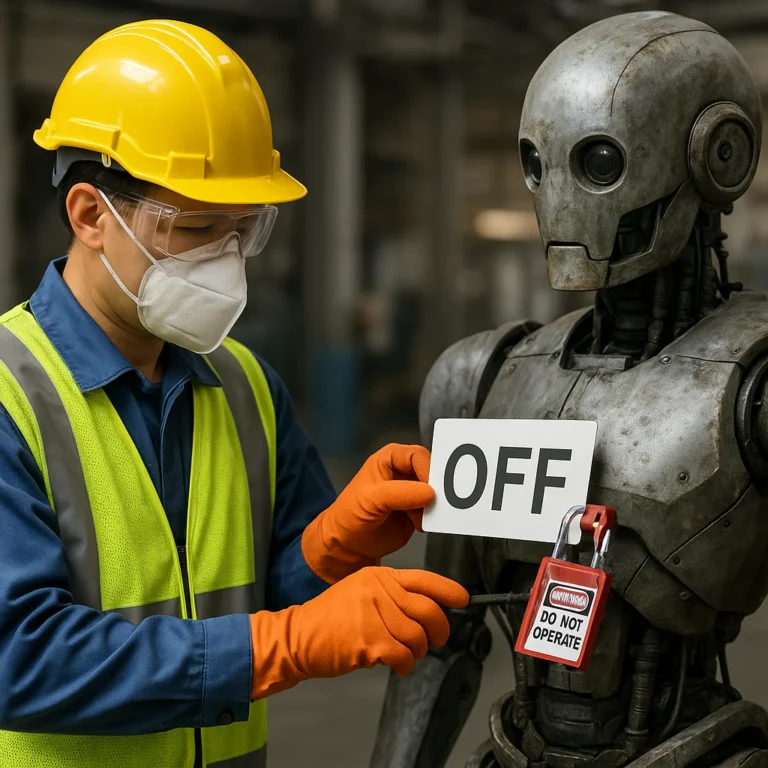
The single most critical rule in robot safety instructions is to never enter a robot’s work envelope without a verified Lockout/Tagout (LOTO) procedure and a dedicated safety buddy. Ignoring this simple protocol is the fastest way to turn a routine maintenance check into a life-altering tragedy.
We once watched a seasoned technician bypass a light curtain because he was “just checking a sensor.” The robot didn’t know he was there, and the result was a shattered wrist that could have been avoided with a five-second verification. Statistics from the Bureau of Labor Statistics show that over 20% of industrial robot injuries occur during maintenance, not operation, proving that complacency is the real enemy.
These robot safety instructions are not just bureaucratic red tape; they are the difference between a productive shift and a hospital visit. Whether you are programming a massive 6-axis arm or a collaborative cobot, understanding the Golden Rules is non-negotiable.
Key Takeaways
- LOTO is Life-Saving: Always isolate and lock all energy sources before entering the work envelope.
- Speed Limits Matter: Never exceed 250 mm/sec (10 in/sec) when teaching or troubleshooting a robot.
- Collaborative ≠ Invincible: Even “safe” cobots can cause serious injury if the tooling or force limits are ignored.
- The Buddy System: Never work alone inside a robot cell; a second person is required to hit the E-stop in an emergency.
- Risk Assessment First: Identify hazards and implement controls before the robot ever powers on.
Table of Contents
- ⚡️ Quick Tips and Facts
- 🤖 The Evolution of Robot Safety: From Sci-Fi Nightmares to Real-World Standards
- 🛑 The Golden Rules: 15 Non-Negotiable Safety Protocols for Industrial Robots
- 1. Establishing the Danger Zone: Defining Safe Perimeters
- 2. The Art of Lockout/Tagout (LOTO): Why Your Key is Your Life
- 3. Emergency Stop Buttons: The Red Button You Hope You Never Need
- 4. Light Curtains and Safety Lasers: Invisible Guardians
- 5. Collaborative Robot (Cobot) Safety: Working Side-by-Side Without Getting Crushed
- 6. Proper Grounding and Electrical Safety for Robotic Cells
- 7. Pneumatic and Hydraulic Safety: Taming the Pressure
- 8. Software Safety: Programming Safe Paths and Speed Limits
- 9. Maintenance Safety: The Hidden Dangers of “Just a Quick Check”
- 10. Training and Certification: Why Guessing is Not a Strategy
- 1. Personal Protective Equipment (PE): Your Last Line of Defense
- 12. Risk Assessment: The Blueprint Before the Build
- 13. Handling Payloads: Center of Gravity and Drop Hazards
- 14. Communication Protocols: Talking to Your Robot (and Each Other)
- 15. Incident Reporting: Learning from the Close Calls
- 🏭 OSHA Compliance Deep Dive: Decoding PUB 8-1.3 and Beyond
- 🤝 Collaborative Robotics: How to Work Safely with Human-Robot Teams
- 🔧 Troubleshooting Common Safety System Failures
- 🧠 The Human Factor: Psychology and Behavior in Robot Safety
- 🌍 Global Safety Standards: ISO, ANSI, and EU Directives Compared
- 📚 Recommended Links
- ❓ FAQ: Your Robot Safety Questions Answered
- 📖 Reference Links
⚡️ Quick Tips and Facts
Before we dive into the nitty-gritty of keeping your fingers attached and your bones uncrushed, let’s hit the fast-forward button on the most critical takeaways. We’ve seen too many “I’ll just reach in real quick” moments turn into hospital visits. Here’s the Robot Instructions™ cheat sheet for staying alive in the robot zone:
- The 10 in/sec Rule: When teaching a robot, never exceed 250 mm/sec (10 inches per second). If you’re moving faster, you’re gambling with your life.
- LOTO is Non-Negotiable: Lockout/Tagout isn’t just a suggestion; it’s the difference between a quick fix and a fatality. If you can’t lock the energy source, you can’t touch the robot.
- E-Stops are Everywhere: There should be an Emergency Stop button within arm’s reach of every operator, not just the main control panel.
- Collaborative Doesn’t Mean Careless: Even “safe” cobots can cause injury if they hit you at the wrong angle or with a heavy tool. Power and Force Limiting is a feature, not a guarantee.
- The “Safety Buddy” System: Never enter a robot’s work envelope alone. If you get pinned, who’s going to hit the E-stop?
Pro Tip: If you’re new to this, check out our foundational guide on Robot Instructions to understand the philosophy behind safe automation before you even pick up a teach pendant.
🤖 The Evolution of Robot Safety: From Sci-Fi Nightmares to Real-World Standards
Remember the first time you saw a robot in a movie? Probably something like The Terminator or Westworld, where the machine decides humans are obsolete and starts hunting. While we haven’t reached the “Skynet” phase (yet), the reality of industrial robotics is that these machines are incredibly strong, fast, and utterly indifferent to your presence.
In the early days of automation, safety was an afterthought. We’d build a robot, throw a chain around it, and hope for the best. Then came the first fatality in 1979 at a Ford plant in Michigan, where a robot arm crushed a worker. That tragedy sparked a revolution in how we think about robot safety instructions.
Fast forward today, and we have a complex web of standards like ISO 10218 and ANSI/RIA R15.06. These aren’t just bureaucratic red tape; they are written in blood. The evolution has moved from simple physical barriers to sophisticated risk assessment protocols that consider human behavior, cybersecurity, and even the psychological impact of working alongside machines.
As the first YouTube video on this topic highlights, the core philosophy has shifted from “keep humans out” to “manage the risk so humans and robots can coexist.” But as the video asks, “Are we ready to trust the unseen rules?” That’s the million-dollar question we’ll answer by the end of this guide.
🛑 The Golden Rules: 15 Non-Negotiable Safety Protocols for Industrial Robots
You asked for a list? We’ve got you covered. While the Illinois Robotics Group mentioned a specific set of rules, we’re going one step further with 15 Golden Rules that cover every angle of robot safety. These aren’t just “best practices”; they are the bedrock of a safe workplace.
1. Establishing the Danger Zone: Defining Safe Perimeters
The work envelope is the volume of space the robot can reach. If you’re inside it, you are in the danger zone.
- Action: Use floor tape (yellow and black is the standard) to clearly mark the perimeter.
- Why: Humans have a terrible sense of depth perception when a robot is moving. Visual cues are your first line of defense.
- Insider Tip: Don’t just tape the floor; mark the walls and overhead structures where the robot might swing.
2. The Art of Lockout/Tagout (LOTO): Why Your Key is Your Life
This is the single most important rule. LOTO ensures that all energy sources (electric, pneumatic, hydraulic) are isolated and cannot be re-energized while you are working on the robot.
- The Process: Shut down -> Isolate -> Lock -> Tag -> Verify (Try to start it).
- The Mistake: “I’ll just turn it off at the panel.” No. You must physically lock the breaker.
- Source: OSHA LOTO Standards
3. Emergency Stop Buttons: The Red Button You Hope You Never Need
An E-Stop is not a pause button. It’s a hard cut to power.
- Placement: Must be accessible from every angle of the cell.
- Testing: Test them weekly. If the robot doesn’t stop instantly, you have a problem.
- Note: In pneumatic systems, an E-stop might not stop the arm immediately due to air pressure; this is why dynamic braking is crucial.
4. Light Curtains and Safety Lasers: Invisible Guardians
These presence sensing devices create an invisible wall. If you break the beam, the robot stops.
- Types: Light curtains (2D), Safety lasers (3D scanning), and Pressure mats.
- Limitation: They are fail-safe, but they can be bypassed if not installed correctly (e.g., too far from the hazard).
- Brand Check: Look into SICK or Banner Engineering for top-tier safety sensors.
5. Collaborative Robot (Cobot) Safety: Working Side-by-Side Without Getting Crushed
Cobots are designed to work with humans, but “collaborative” does not mean “invincible.”
- Power and Force Limiting: The robot must stop or slow down if it hits you with enough force to cause injury.
- Speed and Separation Monitoring: The robot slows down as you get closer and stops if you get too close.
- Reality Check: A cobot with a heavy welding torch can still break a bone. Always assess the tooling risk, not just the robot arm.
6. Proper Grounding and Electrical Safety for Robotic Cells
Robots are high-voltage beasts. A ground fault can turn a routine maintenance check into a lethal event.
- Requirement: Ensure all control cabinets and robot bases are properly grounded.
- Inspection: Check for frayed cables or loose connections during every shift.
7. Pneumatic and Hydraulic Safety: Taming the Pressure
Air and oil under pressure are invisible killers. A ruptured hose can whip like a snake or inject fluid into your skin.
- Rule: Depressurize lines before disconnecting.
- Warning: Never use your hand to check for leaks; use a piece of cardboard.
8. Software Safety: Programming Safe Paths and Speed Limits
Bad code is a safety hazard.
- Speed Limits: Enforce the 10 in/sec limit during teach mode.
- Path Planning: Avoid “singularities” where the robot might jerk unexpectedly.
- Simulation: Always run a simulation before deploying new code to the live robot.
9. Maintenance Safety: The Hidden Dangers of “Just a Quick Check”
Most accidents happen during maintenance, not operation.
- The Trap: “I’ll just clear this jam in 5 seconds.”
- The Fix: If you need to enter the envelope, you must follow LOTO and have a Safety Buddy.
10. Training and Certification: Why Guessing is Not a Strategy
You wouldn’t let a random person drive a forklift. Why let them program a robot?
- Requirement: All personnel must be certified on the specific robot model they are using.
- Refresher: Training isn’t a one-time thing. Annual refreshers are mandatory.
1. Personal Protective Equipment (PE): Your Last Line of Defense
PE is the last line of defense, not the first.
- Essentials: Safety glasses, steel-toed boots, and no loose clothing (ties, scarves, long sleeves).
- Hair: Long hair must be tied back.
- Prohibited: Gloves near rotating parts (they can get caught).
12. Risk Assessment: The Blueprint Before the Build
Before you install a robot, you must perform a Risk Assessment.
- Process: Identify hazards -> Estimate risk -> Implement controls -> Re-evaluate.
- Documentation: This document must be signed off by a safety officer.
13. Handling Payloads: Center of Gravity and Drop Hazards
A robot arm is strong, but if the payload shifts, the robot can fling it.
- Check: Verify the Center of Gravity (CoG) of the payload.
- Secure: Ensure the gripper or tooling is rated for the weight and has a backup safety mechanism.
14. Communication Protocols: Talking to Your Robot (and Each Other)
Miscommunication kills.
- Verbal: Use clear, loud commands like “Starting motion” before moving.
- Visual: Use indicator lights (Green = Safe, Red = Moving, Yellow = Fault).
- No Headphones: Never wear headphones in the robot cell. You need to hear the machine.
15. Incident Reporting: Learning from the Close Calls
If a robot almost hits you, report it.
- Why: A “near miss” is a free lesson. Ignoring it invites a real accident.
- Culture: Foster a “no-blame” culture where reporting is encouraged.
🏭 OSHA Compliance Deep Dive: Decoding PUB 8-1.3 and Beyond
Let’s talk about the big boss: OSHA. Specifically, we need to address the legacy of OSHA Instruction PUB 8-1.3 (and its successors like STD 01-12-02). While the original directive might be hard to find (some links lead to 403 errors, as we saw in our research), the principles remain the gold standard.
The core message from OSHA and the ANSI/RIA R15.06 standard is simple: Industrial robots can be used to perform hazardous tasks, but in doing so they can create new hazards.
The “Teach-and-Repeat” Danger Zone
One of the most critical sections of these standards focuses on the teach pendant.
- The Rule: When an operator is inside the work envelope programming the robot, the speed is strictly limited to 250 mm/sec.
- The Reason: If the robot moves too fast, the operator won’t have time to react to an unexpected movement.
- The Reality: Many accidents happen because someone overrides this limit to “save time.” Don’t be that person.
Guarding Methods: A Hierarchy of Safety
OSHA outlines a hierarchy of guarding:
- Interlocked Barrier Guard: The gold standard. A physical fence that stops the robot if opened.
- Fixed Barrier Guard: A fence that requires tools to remove. Good for permanent installations.
- Awareness Barrier: Chains or rails. Warning: These are not acceptable for high-risk scenarios. They are just reminders.
- Presence Sensing Devices: Light curtains and mats. These must be fail-safe.
Did you know? The standard explicitly states that proximity detectors (like simple capacitive sensors) are not recommended unless a specific analysis proves they are reliable. Don’t trust a cheap sensor with your life.
🤝 Collaborative Robotics: How to Work Safely with Human-Robot Teams
The rise of Collaborative Robots (Cobots) has changed the game. Brands like Universal Robots, Fanuc, and ABB are pushing machines that can work right next to you. But how do we keep it safe?
The Four Modes of Collaboration
According to ISO/TS 1506, there are four ways humans and robots can collaborate:
- Safety-Rated Monitored Stop: The robot stops when you enter the zone.
- Hand Guiding: You physically hold the robot and move it.
- Speed and Separation Monitoring: The robot slows down as you approach and stops if you get too close.
- Power and Force Limiting: The robot is designed so that if it hits you, the force is below the injury threshold.
The “Class 1” vs. “Class 2” Update
The 2025 updates to safety standards introduce a new classification:
- Class 1: Robots ≤ 10 kg, max force ≤ 50 N, max speed ≤ 250 mm/s. These are generally safer for direct contact.
- Class 2: Anything heavier or faster. These require stricter separation and monitoring.
The Human Factor in Cobots
Even with a cobot, you need a Safety Buddy if you are working in the same space. The robot might be “safe,” but the tool it’s holding (a drill, a welder) might not be.
👉 Shop Collaborative Robots on:
- Universal Robots: Amazon Search | Official Site
- Fanuc Collaborative Robots: Amazon Search | Official Site
- ABB YuMi: Amazon Search | Official Site
🔧 Troubleshooting Common Safety System Failures
So, your light curtain tripped, or the robot won’t start. What now? Troubleshooting safety systems is a delicate dance.
Common Failure Modes
- False Positives: The robot stops for no reason.
Cause: Dirty lenses on light curtains, vibration, or electrical noise.
Fix: Clean the sensors, check grounding, and inspect for loose wiring. - False Negatives: The robot doesn’t stop when it should.
Cause: Bypassed safety circuits, worn-out E-stop buttons, or software glitches.
Fix: Never bypass a safety circuit. If a system fails, replace the component immediately.
The “Reset” Trap
A common mistake is hitting the reset button on a safety device without investigating why it tripped.
- Rule: Always investigate the cause of the stop before resetting.
- Anecdote: We once saw a technician reset a light curtain because it kept tripping, only to find out a worker was leaning against the fence. The next time, the robot didn’t stop, and the worker got pinned.
🧠 The Human Factor: Psychology and Behavior in Robot Safety
We can build the safest robot in the world, but if the human operator is tired, distracted, or overconfident, accidents happen.
The “It Won’t Happen to Me” Syndrome
This is the most dangerous mindset in robotics.
- The Trap: “I’ve done this a thousand times.”
- The Reality: Robots don’t care about your experience. A software glitch or a mechanical failure can happen on the 1,01st time.
Fatigue and Distraction
- Headphones: Never wear them. You need to hear the robot’s hum, the hiss of pneumatics, and your coworker’s voice.
- Fatigue: Working long shifts increases the risk of error. Take breaks.
The Importance of Communication
In a busy factory, communication often breaks down.
- Protocol: Use standardized hand signals and verbal commands.
- Example: “Clearing jam” should be announced loudly before anyone enters the cell.
🌍 Global Safety Standards: ISO, ANSI, and EU Directives Compared
Robot safety isn’t just an American thing. If you’re exporting robots or working in a global supply chain, you need to know the rules.
| Standard | Region | Key Focus |
|---|---|---|
| ISO 10218-1/2 | Global | The international standard for robot safety. Covers design, installation, and operation. |
| ANSI/RIA R15.06 | USA | The US adoption of ISO 10218. Often referenced by OSHA. |
| ISO/TS 1506 | Global | Specific guidelines for Collaborative Robots (Cobots). |
| EU Machinery Directive | Europe | Requires CE marking and strict adherence to safety standards for market access. |
Why the Differences Matter
While the core principles are similar, the testing requirements and documentation can vary. For example, the EU requires a more rigorous Risk Assessment process than some US states. Always check the local regulations before deploying a robot.
Fun Fact: The ISO 10218 standard was updated in 201 to include cobots, reflecting the industry’s shift towards human-robot collaboration. Before that, the rules were strictly “keep humans out.”
Conclusion

We started this journey by asking if we are ready to trust the “unseen rules” of robot safety. The answer is a resounding yes, but only if we respect the rules.
Robot safety isn’t about fear; it’s about empowerment. When you understand the Golden Rules, respect the work envelope, and follow LOTO procedures, you unlock the full potential of automation without sacrificing your well-being.
The Verdict:
- ✅ Do: Treat every robot as if it’s ready to move at full speed.
- ✅ Do: Invest in training and proper guarding.
- ❌ Don’t: Ever bypass a safety system to “save time.”
- ❌ Don’t: Assume a cobot is safe just because it’s small.
The future of robotics is bright, but it’s only safe if we keep our eyes open and our hands on the E-stop. Stay safe, stay curious, and keep building the future responsibly.
📚 Recommended Links
Ready to upgrade your safety game? Here are some top-tier products and resources we trust at Robot Instructions™.
Safety Equipment & Sensors:
- SICK Safety Light Curtains: Amazon Search | Official Site
- Banner Engineering Safety Mats: Amazon Search | Official Site
- E-Stop Buttons (Red Palm): Amazon Search | Brand Official
Books & Guides:
- “Robot Safety: A Guide to Industrial Robotics Safety”: Amazon Link
- “The Robot Safety Handbook”: Amazon Link
Training & Certification:
- Universal Robots Academy: Official Training
- FANUC Robotics Training: Official Training
❓ FAQ: Your Robot Safety Questions Answered

How often should robot safety training be updated?
Training should be updated annually or whenever there is a significant change in the robot system, process, or safety standards. If an incident occurs, immediate retraining is mandatory.
Read more about “🤖 The Ultimate Robot Operating Manual Guide (2026)”
What safety standards apply to collaborative robots (cobots)?
The primary standard is ISO/TS 1506, which provides specific guidelines for power and force limiting. In the US, ANSI/RIA R15.06 also covers collaborative applications.
How do emergency stop functions work on robots?
An E-stop cuts power to the robot’s drives and activates dynamic braking to stop the arm as quickly as possible. It overrides all other controls and must be manually reset to restart the system.
Read more about “🤖 Robot Regulations 2026: The Ultimate Safety & Liability Guide”
What are common hazards associated with robot operation?
Common hazards include pinch points, crushing, shearing, electrical shock, and dropped payloads. The work envelope is the primary danger zone.
Read more about “Robot Control System Documentation: 15 Must-Know Essentials (2025) 🤖”
What personal protective equipment is recommended around industrial robots?
Safety glasses, steel-toed boots, and tight-fitting clothing are essential. Avoid loose jewelry, ties, or long sleeves that could get caught. Gloves should not be worn near rotating parts.
Read more about “🤖 14 Steps to Master Robot Expert Advice (2026)”
How can I ensure workplace safety when working with robots?
Implement a Risk Assessment, install proper guarding (fences, light curtains), enforce LOTO procedures, and ensure all personnel are trained and certified.
Read more about “💰 AI Janitor Robot Cost: Real Prices & ROI (2026)”
What are the essential robot safety instructions for beginners?
- Never enter the work envelope without authorization.
- Always use the 10 in/sec speed limit during teaching.
- Keep a Safety Buddy present.
- Know the location of all E-stops.
Read more about “🤖 15 Best Robot Educational Kits for Kids (2026)”
What safety precautions should I take when troubleshooting robots?
Always perform LOTO before troubleshooting. If you must enter the envelope, have a Safety Buddy and keep your hand on the E-stop.
Read more about “🛠️ The Ultimate Robot Maintenance Guide: 12 Steps to Zero Downtime (2026)”
What are the essential safety protocols for operating industrial robots?
Follow the manufacturer’s manual, adhere to ANSI/RIA R15.06, use interlocked guards, and maintain a clean, organized workspace.
Read more about “🤖 Top 10 Robot Research Breakthroughs Shaping 2026”
How do I create a safe work zone around collaborative robots?
Use floor tape to mark the zone, install speed and separation monitoring sensors, and ensure the robot is set to power and force limiting mode.
Read more about “🤖 The Ultimate Robot Vendor Directory (2026): 10+ Top Picks”
What personal protective equipment is required for robot maintenance?
In addition to standard PE, maintenance personnel may need insulated gloves for electrical work and face shields for hydraulic/pneumatic work.
How often should robot safety systems be inspected and tested?
Daily: Visual inspection of guards and E-stops.
Weekly: Functional test of light curtains and safety mats.
Annually: Comprehensive audit by a certified safety professional.
Read more about “🤖 10 Robot Best Practices to Master in 2026”
What are the emergency stop procedures for different types of robots?
For industrial robots, hit the E-stop and wait for the arm to stop. For pneumatic robots, be aware that air pressure may cause a delay. For cobots, the robot should stop immediately upon contact.
Read more about “🤖 Robot Manuals Decoded: Industrial vs. Hobbyist vs. Edu (2026)”
How can I train employees on robot safety best practices?
Use a combination of classroom instruction, hands-on simulation, and on-the-job training. Document all training and require regular refreshers.
What are the common safety hazards associated with mobile robots?
Mobile robots (AGVs/AMRs) pose hazards like collision, entanglement with cables, and pinch points at docking stations. Use laser scanners and floor markings to manage these risks.
Read more about “The Ultimate Robot Hardware Documentation Guide (2026) 🤖”
📖 Reference Links
- OSHA: Safety and Health Topics: Robotics
- ANSI/RIA: R15.06 Standard
- ISO: ISO 10218-1:201
- NIOSH: Preventing Injury of Workers by Robots
- Illinois Robotics Group: Robot Manipulator Safety Rules (Archived)
- Universal Robots: Safety Guidelines
- Fanuc: Safety Information
- ABB: Robot Safety