Support our educational content for free when you purchase through links on our site. Learn more
🤖 10 Robot Future Trends Reshaping Our World (2026)

The future of robotics isn’t about replacing humans; it’s about collaborative intelligence where AI-driven machines handle the dangerous and dull tasks, freeing us to focus on creativity and connection. As we explore the latest robot future trends, it becomes clear that the next decade will be defined by robots that can see, think, and adapt in real-time.
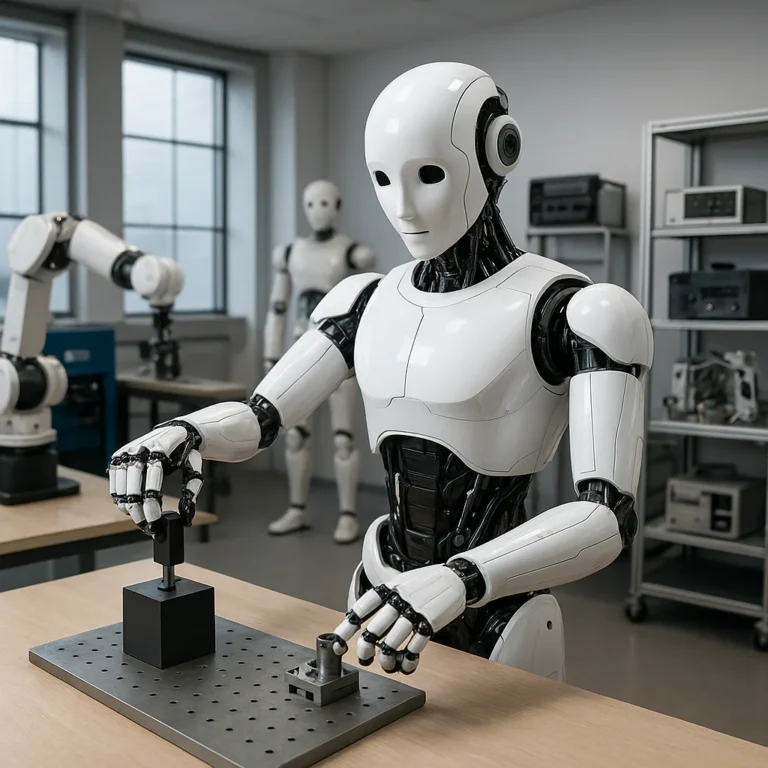
Imagine a factory floor where a human and a robot work side-by-side, the machine instantly adjusting its grip when it senses a human hand nearby. This isn’t science fiction; it’s the reality of cobot technology already transforming industries.
Did you know the International Federation of Robotics predicts that by 2026, over 1 million new industrial robots will be installed globally? We are standing on the brink of a physical AI revolution that will redefine everything from healthcare to space exploration.
Key Takeaways
- Collaboration Over Replacement: The dominant trend is human-robot collaboration, where machines act as allies to augment human capabilities rather than eliminate jobs.
- AI-Driven Autonomy: Future robots will rely on Generative AI and Physical AI to learn new tasks on the fly, moving beyond rigid pre-programed instructions.
- Humanoid Breakthroughs: 2026 will see the first wave of energy-efficient humanoids entering real-world industrial and domestic settings.
- Sustainability Focus: Robotics is becoming a key driver for green tech, with robots optimizing energy use and aiding in recycling and renewable energy installation.
- Ethical & Safety First: New standards are emerging to address cybersecurity, data privacy, and liability in an age of autonomous decision-making.
Table of Contents
- ⚡️ Quick Tips and Facts
- 🕰️ From Sci-Fi Dreams to Silicon Reality: A Brief History of Robotics Evolution
- 🤖 The Rise of Collaborative Robots: How Cobots Are Reshaping the Factory Floor
- 🧠 AI and Machine Learning: The Brains Behind the Brawn in Future Robotics
- 🏥 Healthcare Robotics Revolution: From Surgical Precision to Elderly Care Companions
- 🚚 Autonomous Logistics and Warehousing: The Future of Supply Chain Automation
- 🌱 Sustainable Robotics: Green Tech Solutions for Environmental Challenges
- 🏠 Smart Home Robots: Beyond Vacuum Cleaners to True Domestic Assistants
- 🚀 Space Exploration and Deep Sea Diving: Robots Tackling the Final Frontiers
- 🎓 Education and Workforce Transformation: Preparing Humans for a Robotic Future
- ⚖️ Ethical Dilemmas and Safety Protocols: Navigating the Human-Robot Relationship
- 🔮 Top 10 Global Robotics Trends to Watch in 2026 and Beyond
- 🛠️ How to Future-Proof Your Career in the Age of Automation
- 💡 Quick Tips and Facts: The Gist of Tomorrow’s Tech Today
- 🏁 Conclusion
- 🔗 Recommended Links
- ❓ FAQ
- 📚 Reference Links
⚡️ Quick Tips and Facts
Before we strap on our hard hats and dive into the silicon jungle, let’s hit the rewind button on a few myths. You might think the future of robotics is just about shiny metal men doing backflips, but the reality is far more nuanced—and frankly, more exciting.
- The “Black Box” Problem: Did you know that many modern AI-driven robots make decisions that even their creators can’t fully explain? This is a massive hurdle for safety certification.
- Humanoids aren’t just for show: While they look cool in demos, the real race is on to make them energy-efficient and cost-effective enough to replace a forklift driver, not just a movie prop.
- Safety First, Always: The days of hard-plastic industrial arms swinging wildly are over. Future robots are getting soft, spongy, and surprisingly empathetic in their design to prevent injury.
- Data is the New Oil: For robots to learn, they need data. This means your future robot vacuum might be sharing your living room layout with a cloud server to learn how to navigate better. Privacy? That’s a conversation we’ll have later.
For a deeper dive into how we at Robot Instructions™ approach the complex world of automation, check out our mission statement.
🕰️ From Sci-Fi Dreams to Silicon Reality: A Brief History of Robotics Evolution

We’ve all seen Metropolis or Westworld, but how did we get from a 1920s play about a “robot” to the AI-powered bots of today? It wasn’t an overnight jump; it was a slow, clunky, and occasionally explosive crawl.
The Early Days: Gears and Gimmicks
The word “robot” was coined by Karel Čapek in 1920, but the first programmable machine, Unimate, didn’t roll off the line until 1961. It was a beast of a machine, designed by George Devol and Joseph Engelberger, and it spent its days lifting hot die-cast parts in a General Motors plant. It was loud, dangerous, and absolutely brilliant at one thing: doing the dirty, dull, and dangerous work humans hated.
“The general manufacturing industry still has a lot of potential for robotic automation.” — International Federation of Robotics (IFR)
The Cobot Revolution
Fast forward to the 190s, and the narrative shifted. We didn’t just want robots to work instead of us; we wanted them to work with us. Enter the collaborative robot or cobot. Pionered by companies like Universal Robots, these machines were designed with force-limiting sensors to stop immediately if they bumped into a human. Suddenly, the factory floor wasn’t a “no-go zone” for people.
The AI Inflection Point
Today, we are standing on the precipice of the Physical AI revolution. We are moving from robots that follow strict, pre-programed paths to machines that can “see,” “think,” and “adapt” in real-time. This isn’t just a software update; it’s a fundamental shift in how machines interact with the physical world.
🤖 The Rise of Collaborative Robots: How Cobots Are Reshaping the Factory Floor
Remember when you had to build a cage around a robot to keep humans safe? Yeah, we do too. But those days are fading. Cobots are the new kings of the factory floor, and they are changing the game for Small and Medium-sized Enterprises (SMEs) that couldn’t afford million-dollar automation lines.
Why Cobots are Winning
- Ease of Deployment: You don’t need a PhD in robotics to program a Universal Robots UR20. You can literally grab its arm and show it the path (lead-through programming).
- Flexibility: Need to switch from assembling car parts to packing boxes? A cobot can be re-tasked in hours, not weeks.
- Safety: With built-in force sensing and rounded edges, they can work side-by-side with humans without a safety fence.
The Trade-Offs
However, it’s not all smooth sailing. Cobots generally have lower payload capacities and slower cycle times compared to their industrial cousins. If you need to move 50kg of steel every second, a cobot might not be your best friend.
| Feature | Traditional Industrial Robot | Collaborative Robot (Cobot) |
|---|---|---|
| Safety | Requires fencing/cages | Safe for human interaction |
| Payload | High (up to 20kg+) | Low to Medium (up to 35kg typical) |
| Speed | Very Fast | Moderate (slower for safety) |
| Programming | Complex, requires experts | Intuitive, lead-through |
| Cost | High (robot + safety system) | Lower (all-in-one) |
| Best Use | High-volume, repetitive tasks | Low-volume, high-mix, flexible tasks |
Real-World Application
Take ABB’s YuMi robot. It’s a dual-armed cobot designed for delicate assembly tasks. We’ve seen it used in Karolinska Hospital in Sweden to handle medical samples, proving that these machines aren’t just for car factories. They are delicate enough for surgery prep and robust enough for electronics assembly.
👉 Shop ABB YuMi on:
🧠 AI and Machine Learning: The Brains Behind the Brawn in Future Robotics
If the robot body is the muscle, Artificial Intelligence is the brain. And right now, that brain is going through a massive puberty. We are seeing three distinct types of AI reshaping robotics:
- Analytical AI: This is the data cruncher. It looks at sensor feeds, spots patterns, and predicts when a machine will break before it happens. It’s the reason your warehouse robot knows to take a different route because the floor is slippery.
- Physical AI: This is the simulator. It allows robots to “train” in virtual environments (Digital Twins) millions of times before ever touching a real object. It’s like a flight simulator for robots.
- Generative AI: The creative spark. This allows robots to generate new solutions to problems they’ve never seen before. Imagine a robot looking at a cluttered shelf and figuring out how to pick up a weirdly shaped object without being explicitly programmed for it.
The “ChatGPT Moment” for Robots
We are approaching a point where you can just talk to a robot. “Hey, stack those boxes,” and it figures out the best way to do it. This is the Generative AI revolution. It’s moving us from “programming” to “teaching.”
“Robots that use artificial intelligence to work independently are becoming more common.” — IFR Report 2026
But here’s the catch: Trust. If a robot makes a decision based on a “black box” algorithm, who is liable if it drops a crate? This is the ethical quagmire we’ll tackle later.
🏥 Healthcare Robotics Revolution: From Surgical Precision to Elderly Care Companions
The hospital is no longer just a place of white coats and beping monitors; it’s becoming a hub of robotic innovation. From the operating room to the nursing home, robots are stepping up to fill critical gaps.
Surgical Precision: The Da Vinci System
You’ve probably heard of the da Vinci Surgical System. It’s the gold standard for minimally invasive surgery. But the future isn’t just about the surgeon controlling the robot; it’s about the robot assisting the surgeon. AI can now analyze tissue in real-time, highlighting blood vessels or tumors that the human eye might miss.
The Rise of Care Robots
With aging populations in Japan, Germany, and the US, there’s a massive shortage of caregivers. Enter care robots.
- Paro: A therapeutic robotic seal used to reduce stress in dementia patients.
- Moxi: A robot from Diligent Robotics that fetches supplies and delivers meds, freeing up nurses to do what they do best: care for patients.
The Human Element
But can a robot truly comfort a grieving family? Probably not. The consensus among experts is that robots should handle the logistical and physical burdens, leaving the emotional and empathetic work to humans.
👉 Shop Care Robots on:
🚚 Autonomous Logistics and Warehousing: The Future of Supply Chain Automation
If you’ve ever ordered something online and wondered how it got to your door in two days, blame (or thank) the robots. The warehouse of the future is a symphony of autonomous movement.
From AGVs to AMRs
- AGVs (Automated Guided Vehicles): The old school. They follow magnetic tape or wires on the floor. If the tape is broken, the robot stops.
- AMRs (Autonomous Mobile Robots): The new kids. They use LiDAR and cameras to map the environment and navigate dynamically. If a human walks in front of them, they stop or reroute.
The Swarm Intelligence
Imagine hundreds of Amazon Kiva robots (now Amazon Robotics) moving in perfect harmony, lifting entire shelves and bringing them to human pickers. This “goods-to-person” model has revolutionized fulfillment centers.
The Challenge of Unstructured Environments
While warehouses are controlled, the “last mile” is a nightmare. Delivery robots like Starship Technologies or Nuro are trying to navigate sidewalks, crosswalks, and unpredictable weather. It’s a tough gig, but the payoff is huge: 24/7 delivery without human fatigue.
🌱 Sustainable Robotics: Green Tech Solutions for Environmental Challenges
We often think of robots as energy hogs, but the future is green. In fact, robots are essential for achieving global sustainability goals.
Energy Efficiency
- Lightweight Construction: Using carbon fiber and advanced alloys reduces the energy needed to move arms.
- Sleep Modes: Modern robots can enter low-power states when idle, saving massive amounts of electricity.
- Bionic Grippers: Some grippers use air pressure or mechanical locking to hold objects with zero energy consumption once the grip is set.
Robots Building a Grener World
- Solar Panel Installation: Robots are being used to install solar farms at speeds humans can’t match, reducing the cost of renewable energy.
- Recycling: AI-powered sorting robots can identify and separate different types of plastics and metals with incredible accuracy, boosting recycling rates.
“Automation allows manufacturers to nearshore production without sacrificing cost efficiency.” — IFR Report
🏠 Smart Home Robots: Beyond Vacuum Cleaners to True Domestic Assistants
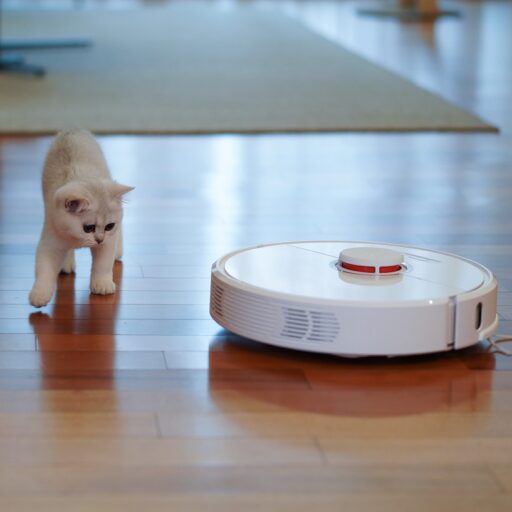
Let’s be honest: your Romba is great, but it’s not exactly a butler. The next generation of home robots aims to do more than just vacuum.
The Humanoid Home Helper
Companies like 1X Technologies (with their Neo robot) and Figure AI (with Figure 03) are developing humanoids designed for the home.
- Soft Bodies: Unlike the hard metal of industrial bots, these are covered in soft fabric and padding to prevent injury if they bump into you.
- Teleoperation: Initially, many of these robots will be “tele-operated” by humans remotely. This raises privacy concerns—imagine a stranger watching your living room to fold your laundry.
- Trust Signals: To build trust, robots are using light rings (blue for remote control, green for autonomous) and expressive eyes to communicate their intent.
The Privacy Paradox
If a robot is in your home, it’s collecting data. Cameras, microphones, and sensors are constantly scanning. How do we ensure this data isn’t sold or hacked? This is the elephant in the room that manufacturers are struggling to address.
👉 Shop Home Robots on:
🚀 Space Exploration and Deep Sea Diving: Robots Tackling the Final Frontiers
While we worry about robots in our kitchens, they are already conquering the most hostile environments on Earth and beyond.
Space: The Final Frontier
- Perseverance Rover: NASA’s Mars rover is a masterpiece of autonomous navigation, driving itself across the Red Planet.
- Robotic Arms: The Canadarm2 on the ISS is crucial for moving cargo and astronauts.
- Future Missions: We are looking at robots that can build habitats on the Moon and Mars before humans even arrive.
Deep Sea: The Unknown Depths
The ocean is more alien than space. Robots like Boeing’s Orca and various AUVs (Autonomous Underwater Vehicles) are mapping the ocean floor, inspecting underwater cables, and searching for lost ships. They can withstand pressures that would crush a submarine.
🎓 Education and Workforce Transformation: Preparing Humans for a Robotic Future
Will robots take our jobs? The short answer: Some, yes. Most, no. But they will change how we work.
The Skills Gap
The biggest challenge isn’t the robots; it’s the skills gap. We need workers who can program, maintain, and collaborate with robots.
- Upskilling: Companies are investing heavily in training programs to teach workers how to work alongside cobots.
- STEM Education: Schools are integrating robotics and coding into the curriculum to prepare the next generation.
New Career Opportunities
Robots are creating new jobs: Robot Technicians, AI Trainers, Ethics Compliance Officers, and Human-Robot Interaction Designers. The future workforce will be a hybrid of human creativity and robotic efficiency.
⚖️ Ethical Dilemmas and Safety Protocols: Navigating the Human-Robot Relationship
As robots become more autonomous, the ethical questions become more complex.
The “Black Box” Liability
If an AI-driven robot makes a mistake and hurts someone, who is responsible? The manufacturer? The programmer? The user? Current laws are struggling to catch up with Agentic AI.
Privacy and Surveillance
Home robots with cameras and microphones are essentially mobile surveillance devices. We need clear regulations on data ownership and opt-out mechanisms.
The Uncanny Valley
Some robots, like those from Realbotix, aim for extreme human likeness. But when they aren’t quite perfect, it creates a feeling of unease known as the Uncanny Valley. Designers must balance realism with comfort.
Safety Standards
New ISO safety standards are being developed specifically for AI-driven robots. These standards will require rigorous testing and validation to ensure that robots can handle unexpected situations safely.
🔮 Top 10 Global Robotics Trends to Watch in 2026 and Beyond
Based on the latest reports from the International Federation of Robotics (IFR) and industry analysis, here are the top 10 trends that will define the next few years.
- AI & Autonomy: The shift from rule-based to self-evolving systems. Robots will learn from experience, not just code.
- IT Mets OT: The convergence of Information Technology and Operational Technology. Real-time data exchange will make factories smarter and more responsive.
- Humanoid Reliability: Humanoids will move from prototypes to real-world deployment, focusing on cycle times and energy efficiency.
- Safety & Security: As robots get smarter, they get more vulnerable to hacking. Cybersecurity will be a top priority.
- Labor Gap Solutions: Robots will be positioned as “allies” to fill labor shortages, not just replacements.
- Robot-as-a-Service (RaaS): Lowering the barrier to entry for SMEs by offering robots on a subscription basis.
- Sustainability: Energy-efficient designs and robots that help build green infrastructure.
- Soft Robotics: The rise of flexible, safe, and adaptable robots for human interaction.
- Generative AI in Robotics: Using AI to generate training data and solve novel problems.
- Human-Robot Trust: Designing robots that communicate clearly and transparently to build user confidence.
🛠️ How to Future-Proof Your Career in the Age of Automation
So, how do you stay relevant?
- Embrace the Tech: Don’t fear the robot; learn to work with it. Take courses in robotics, AI, and data analysis.
- Focus on Soft Skills: Creativity, empathy, and complex problem-solving areas where humans still reign supreme.
- Stay Adaptable: The tech landscape changes fast. Continuous learning is the only way to stay ahead.
“The benefits that robots deliver, such as tackling labor shortages, taking away routine tasks or opening up new career opportunities, mean that they will be accepted as allies in the workplace.” — IFR Report 2026
💡 Quick Tips and Facts: The Gist of Tomorrow’s Tech Today
Let’s recap the most critical takeaways from our deep dive:
- AI is the game-changer: It’s moving robots from “dumb” machines to “smart” partners.
- Humanoids are coming: But they need to prove they are safe, efficient, and affordable.
- Privacy is paramount: As robots enter our homes, data protection must be a top priority.
- Collaboration is key: The future isn’t humans vs. robots; it’s humans with robots.
🏁 Conclusion

We started this journey by asking: What does the future of robotics really look like? Is it a dystopian nightmare of jobless humans, or a utopia of effortless living? The answer, as we’ve seen, lies somewhere in the middle.
The future of robotics is collaborative, intelligent, and essential. From the factory floor to the operating room, and even into our living rooms, robots are becoming indispensable allies. They are tackling the dirty, dull, and dangerous tasks, freeing us to focus on creativity, strategy, and human connection.
However, this future isn’t guaranteed. It requires us to address the ethical dilemmas, ensure cybersecurity, and build trust through transparent design. The humanoid robots of 2026 will only succeed if they can match the reliability of traditional automation while offering the flexibility of a human worker.
As we move forward, the question isn’t “Will robots replace us?” but rather “How can we best work with them?” The robots are coming, and they’re not here to take our jobs; they’re here to help us build a better world. So, let’s roll up our sleeves, learn the new skills, and welcome our new robotic partners with open arms.
Final Recommendation: Whether you are a business owner looking to automate or an individual curious about the tech, now is the time to engage. Explore the RaaS models, look into cobot training, and keep an eye on the humanoid developments. The future is being built right now, and you have a seat at the table.
🔗 Recommended Links
Ready to get your hands on the future? Here are some top picks for products and resources to explore.
👉 Shop Top Robotics Brands on:
- Universal Robots: Amazon | Official Website
- ABB Robotics: Amazon | Official Website
- Figure AI: Official Website
- 1X Technologies: Official Website
- Diligent Robotics: Official Website
Must-Read Books:
- Life 3.0: Being Human in the Age of Artificial Intelligence by Max Tegmark – Amazon
- Robots Will Steal Your Job, But That’s OK: How to Survive the Economic Collapse and Be Happy by Federico Pistono – Amazon
❓ FAQ

What are the top robot trends for 2025?
The top trends for 2025 include the integration of Physical AI, the rise of humanoid robots industrial settings, a focus on sustainability and energy efficiency, the expansion of Robot-as-a-Service (RaaS) models, and the use of robotics to address labor shortages.
Read more about “🤖 150 Best Sci-Fi Robot Movies Ranked: The Ultimate Guide (2026)”
How will AI change the future of robotics?
AI will transform robots from pre-programed machines into autonomous, adaptive systems. Generative AI will allow robots to learn new tasks on the fly, while Analytical AI will enable predictive maintenance and real-time decision-making. This shift will make robots more versatile and capable of working in unstructured environments.
Read more about “🤖 15 Robot Lessons Learned That Save Your Fleet (2026)”
Will robots replace human jobs in the next decade?
Robots will likely replace routine, repetitive, and dangerous tasks, but they will also create new jobs in robot maintenance, programming, and oversight. The consensus is that robots will act as allies, augmenting human capabilities rather than fully replacing the workforce.
What are the latest advancements in humanoid robots?
Recent advancements include the development of soft-bodied robots (like Neo from 1X) to improve safety, the use of teleoperation for initial training, and the focus on energy efficiency and dexterity. Companies like Figure AI and Tesla are pushing the boundaries of what humanoids can do in real-world scenarios.
Read more about “🤖 The Ultimate Robot News Roundup: 10 Breakthroughs Shaping 2026”
How are robots being used in healthcare today?
Robots are used for surgical assistance (e.g., da Vinci), logistics (e.g., fetching supplies), and patient care (e.g., therapeutic robots like Paro). They help reduce the burden on healthcare workers and improve patient outcomes through precision and consistency.
Read more about “7 Mind-Blowing Artificial Intelligence Dogs Changing 2026 🐕 🦺”
What is the future of collaborative robots in manufacturing?
The future of cobots involves greater flexibility, ease of use, and integration with AI. They will become more affordable and accessible to SMEs, allowing for high-mix, low-volume production and enabling humans and robots to work side-by-side more safely and efficiently.
Read more about “12 Advanced Robot Programming Techniques You Need to Know in 2026 🤖”
Are there ethical concerns regarding the future of robots?
Yes, major concerns include data privacy (especially for home robots), liability for AI-driven decisions, cybersecurity risks, and the Uncanny Valley effect. There is also a need for clear regulations and transparency in how robots operate and make decisions.
Read more about “🤖 7 Intelligent Toilet Cleaning Robots: The Future of Hands-Free Hygiene (2026)”
📚 Reference Links
- International Federation of Robotics (IFR): Top 5 Global Robotics Trends 2026
- International Federation of Robotics (IFR): Top 5 Global Robotics Trends 2025
- Universal Robots: Cobot Solutions
- ABB: Robotics & Discrete Automation
- Figure AI: Humanoid Robotics
- 1X Technologies: Neo Robot
- Diligent Robotics: Moxi Robot
- NASA: Mars Perseverance Rover
- ISO Standards: Safety of Robots