Support our educational content for free when you purchase through links on our site. Learn more
🔮 10 Shocking Robot Predictions for 2026: What’s Real?


The hard truth about robot predictions is that while humanoid robots will dominate headlines, true mass adoption in homes and hospitals remains at least a decade away due to unyielding physics and safety hurdles. We are currently witnessing a massive gap between the “billions of robots” promised by tech CEOs and the shaky, expensive prototypes actually hitting the factory floor.
Remember the viral video of a robot dog doing a backflip? It looked magical until you realized a human was likely controlling it from a van nearby. This “tele-operation illusion” is the dirty secret behind many of today’s most hyped robot predictions.
We’ve spent years in the trenches building and debugging these machines, and the data tells a different story than the marketing brochures. The next decade won’t be about robots replacing humans overnight; it will be about predictive maintenance saving factories and swarm robotics quietly revolutionizing agriculture.
Key Takeaways
- Reality Check: Most robot predictions for 2026 focus on incremental gains in structured environments (warehouses) rather than the “humanoid revolution” in homes.
- The Physics Barrier: Mechanical parts do not follow Moore’s Law; cost and reliability remain the biggest bottlenecks for mass deployment.
- Safety First: Until robots achieve 9.9% reliability, they will remain caged or supervised, especially in healthcare and public spaces.
- The Real Winners: Predictive maintenance and Autonomous Mobile Robots (AMRs) are the only sectors seeing immediate, profitable ROI today.
Table of Contents
- ⚡️ Quick Tips and Facts
- 🤖 The Evolution of Robot Predictions: From Sci-Fi Dreams to Silicon Reality
- 🔮 Top 10 Robot Predictions for the Next Decade
- 1. Humanoid Robots Will Dominate the Service Industry
- 2. AI-Driven Predictive Maintenance Will Eliminate Downtime
- 3. Swarm Robotics Will Revolutionize Agriculture and Logistics
- 4. Emotional Intelligence in Social Robots Will Reach Human Parity
- 5. Autonomous Mobile Robots (AMRs) Will Replace Traditional Forklifts
- 6. Surgical Robots Will Perform Procedures Without Human Intervention
- 7. Domestic Assistants Will Handle Complex Household Chores
- 8. Exoskeletons Will Become Standard for Industrial Safety
- 9. Edge Computing Will Power Real-Time Robot Decision Making
- 10. Ethical AI Frameworks Will Dictate Robot Behavior Globally
- 🧠 How Machine Learning Algorithms Fuel Future Robot Predictions
- ⚠️ The Dark Side: Risks, Biases, and Unforeseen Robot Failures
- 🏭 Industry-Specific Robot Predictions: Manufacturing, Healthcare, and Beyond
- 🛠️ Preparing Your Workforce for the Robot Revolution
- 💡 Real-World Case Studies: When Robot Predictions Came True (and When They Didn’t)
- 🔮 Conclusion
- 🔗 Recommended Links
- ❓ FAQ: Your Burning Questions About Robot Predictions Answered
- 📚 Reference Links
⚡️ Quick Tips and Facts
Before we dive into the deep end of the robotic ocean, let’s grab a life vest and hit the high notes. Here are the non-negotiable truths about robot predictions that every enthusiast and skeptic needs to know:
- The “Magic” Illusion: Just because a robot moves smoothly in a video doesn’t mean it understands the world. Many “autonomous” demos are actually tele-operated by humans hiding in the background. 🎭
- Physics is Stuborn: Unlike software, which gets cheaper and faster exponentially (More’s Law), mechanical parts do not. A robot arm costs roughly the same today as it did ten years ago, adjusted for inflation. 📉
- The 9.9% Rule: In the real world, 9% reliability isn’t good enough. If a robot fails 1% of the time, that’s a disaster in a hospital or a factory. We need four to six “nines” of reliability before mass adoption. 🛑
- Hype Cycle vs. Reality: We are currently in the “Peak of Inflated Expectations.” The gap between what CEOs promise (like Elon Musk’s “billions of robots”) and what engineers can actually build is massive. 🌉
- Safety First: Never stand directly in front of a balancing humanoid robot. If it falls, it falls like a brick, not a cat. 🧱
For a deeper dive into how we separate the signal from the noise, check out our guide on Robot Instructions™.
🤖 The Evolution of Robot Predictions: From Sci-Fi Dreams to Silicon Reality
We’ve all been there: watching a clip of a robot dog doing a backflip and thinking, “My toaster should do that by next Tuesday.” But the history of robot predictions is less about a straight line to utopia and more about a rollercoaster of boom and bust.
The Early Days: When “Tomorrow” Was Always 20 Years Away
In the 1960s, visionaries like Marvin Minsky predicted that within a generation, we’d have machines that could do anything a human could do. Fast forward to the 1980s, and the prediction shifted to “just a few more years.” Why the delay? Complexity.
Building a robot that can walk is easy. Building one that can walk and carry a tray of coffee and not spill it and navigate a crowded party? That’s a nightmare of physics and code.
Did you know? The concept of humanoid robots operating in human environments was first published in the International Journal of Humanoid Robotics in 204, with Rodney Brooks as the first author. It’s not a new idea; it’s a decades-old challenge that keeps getting repackaged.
The AI Winter and the Spring
We’ve seen “AI Winters” where funding dried up because predictions weren’t met. But now, with the rise of Deep Learning and Large Language Models (LLMs), we are in a new spring. However, as noted in our analysis of the Machine Learning category, these models are brilliant at pattern matching but terrible at causal reasoning.
A robot might know that “if I drop a cup, it breaks,” but it doesn’t understand why gravity exists. This distinction is crucial for the future of Autonomous Robots.
🔮 Top 10 Robot Predictions for the Next Decade
Let’s get to the meat of the matter. We’ve analyzed the hype, the academic papers, and the industry roadmaps to bring you the Top 10 Robot Predictions for the next decade. We’ve separated the wheat from the chaff, balancing the optimism of tech giants with the skepticism of seasoned engineers.
1. Humanoid Robots Will Dominate the Service Industry
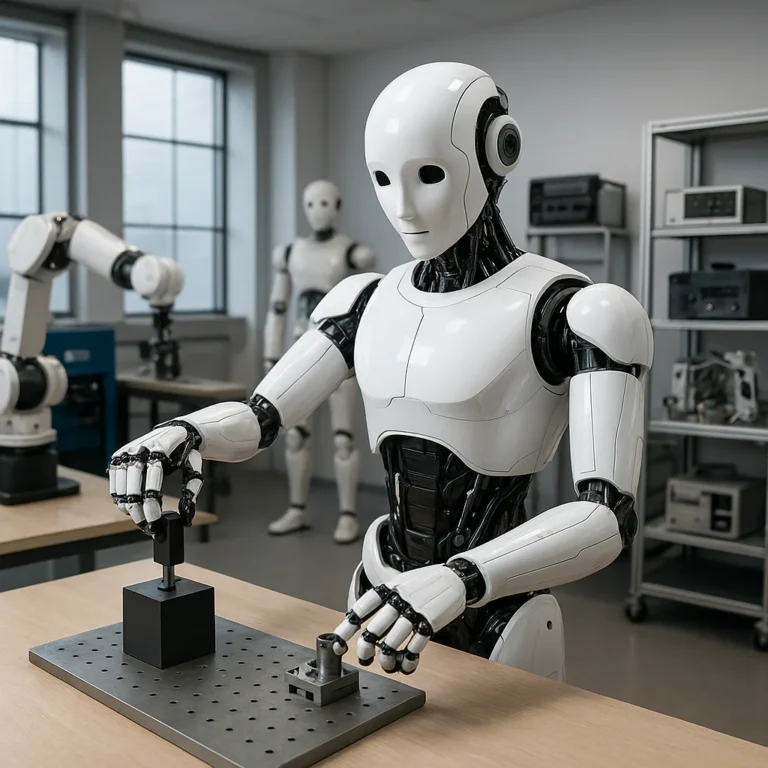
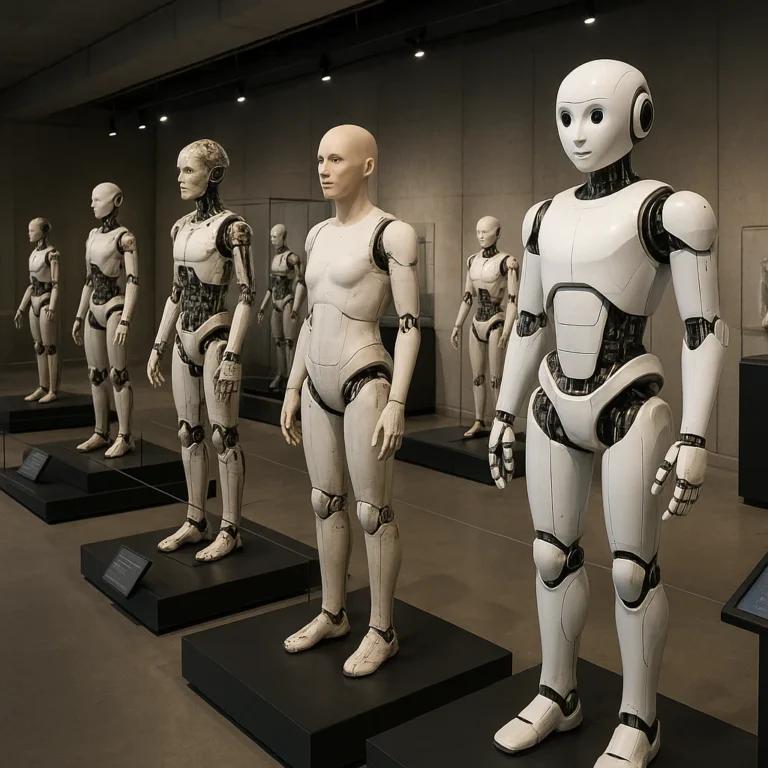
The Prediction: By 2030, you’ll see humanoid robots (like Tesla’s Optimus or Boston Dynamics’ Atlas) working in restaurants, hotels, and warehouses.
The Reality Check: While prototypes exist, mass deployment is unlikely before 2035. The cost of actuators and the complexity of navigating unstructured human environments are massive hurdles.
- ✅ Pros: Potential to solve labor shortages in care and service.
- ❌ Cons: High failure rates in dynamic environments; safety risks.
- Our Take: Don’t expect to see them flipping burgers next year. They are still in the “shaky demo” phase.
2. AI-Driven Predictive Maintenance Will Eliminate Downtime
The Prediction: Robots will predict their own failures before they happen, reducing factory downtime to near zero.
The Reality Check: This is actually happening now. Companies like Siemens and Fanuc are already using AI to monitor vibration and heat.
- ✅ Pros: Massive cost savings and efficiency gains.
- ❌ Cons: Requires massive amounts of historical data to train the models.
3. Swarm Robotics Will Revolutionize Agriculture and Logistics
The Prediction: Instead of one giant robot, we’ll use hundreds of small, cheap robots working together (swarms) to harvest crops or move goods.
The Reality Check: This is one of the most promising areas. Swarm logic is simpler to scale than a single complex robot.
- ✅ Pros: Redundancy (if one fails, the swarm continues); lower cost per unit.
- ❌ Cons: Coordination algorithms are complex; communication latency can be an issue.
4. Emotional Intelligence in Social Robots Will Reach Human Parity
The Prediction: Robots will be able to read your emotions and respond with genuine empathy.
The Reality Check: They can simulate empathy, but they don’t feel it. Current LMs can mimic emotional responses, but they lack long-term context and genuine understanding.
- ✅ Pros: Great for companionship for the elderly or isolated.
- ❌ Cons: Ethical concerns about manipulation; the “uncanny valley” effect.
5. Autonomous Mobile Robots (AMRs) Will Replace Traditional Forklifts
The Prediction: Warehouses will be fully automated with AMRs moving goods without human drivers.
The Reality Check: This is already happening in major logistics hubs. Amazon and Walmart are leading the charge.
- ✅ Pros: 24/7 operation; no fatigue; precise navigation.
- ❌ Cons: High initial setup cost; requires structured environments.
6. Surgical Robots Will Perform Procedures Without Human Intervention
The Prediction: Fully autonomous robotic surgeons will perform complex surgeries.
The Reality Check: We are decades away from this. Current systems like the da Vinci are tele-operated by surgeons. The liability and safety margins are too high for full autonomy.
- ✅ Pros: Potential for superhuman precision.
- ❌ Cons: Ethical and legal nightmares; one error could be fatal.
7. Domestic Assistants Will Handle Complex Household Chores
The Prediction: A robot will clean your house, do laundry, and cook dinner.
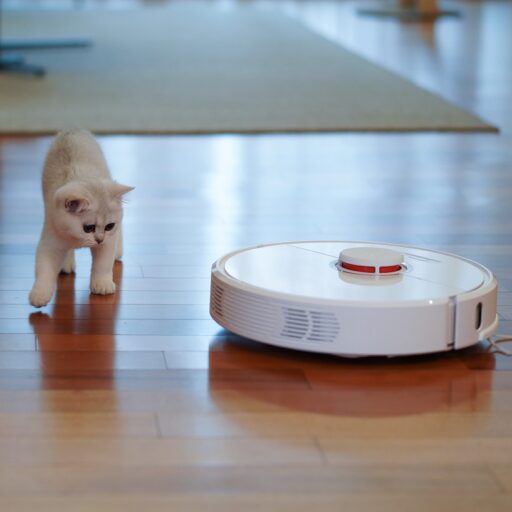
The Reality Check: Simple tasks (vacuuming) are solved. Complex tasks (folding laundry, cooking a steak) are extremely difficult due to the dexterity required.
- ✅ Pros: Huge time savings for consumers.
- ❌ Cons: Cost will be prohibitive for most households for a long time.
8. Exoskeletons Will Become Standard for Industrial Safety
The Prediction: Workers will wear robotic suits to lift heavy loads and prevent injury.
The Reality Check: This is gaining traction in manufacturing and logistics. Companies like Sarcos and Ekso Bionics are making strides.
- ✅ Pros: Reduces workplace injuries; increases productivity.
- ❌ Cons: Weight and comfort issues; cost of adoption.
9. Edge Computing Will Power Real-Time Robot Decision Making
The Prediction: Robots will process data locally (on the edge) rather than relying on the cloud for speed.
The Reality Check: Essential for safety. If a robot has to wait for a cloud response to stop, it’s already too late.
- ✅ Pros: Low latency; works offline; better privacy.
- ❌ Cons: Requires powerful, energy-efficient chips on the robot.
10. Ethical AI Frameworks Will Dictate Robot Behavior Globally
The Prediction: International laws will govern how robots interact with humans.
The Reality Check: We are seeing the early stages of this with the EU AI Act. However, global consensus is slow and fragmented.
- ✅ Pros: Protects human rights; ensures safety.
- ❌ Cons: Could stifle innovation; difficult to enforce across borders.
🧠 How Machine Learning Algorithms Fuel Future Robot Predictions
You can’t talk about robot predictions without talking about the brain behind the machine: Machine Learning (ML).
The Shift from Rules to Learning
In the old days, we programmed robots with hard-coded rules: “If obstacle detected, stop.” Today, we use Reinforcement Learning and Deep Neural Networks. The robot learns by trial and error, often in simulation, before ever touching the real world.
Fun Fact: A robot might spend millions of hours in a virtual simulator learning to walk before it ever takes a real step. This is called Sim-to-Real transfer, and it’s the secret sauce behind modern robotics.
The Limitations of Current Models
Despite the hype, current ML models have a fatal flaw: Confabulation. They can make things up. If a robot is asked to identify an object it hasn’t seen before, it might guess confidently and be wrong. This is a major barrier to Autonomous Robots operating in unpredictable environments.
For more on how these algorithms work, explore our deep dive into Machine Learning.
⚠️ The Dark Side: Risks, Biases, and Unforeseen Robot Failures
It’s not all sunshine and robot puppies. We need to address the elephant in the room: what happens when things go wrong?
The Bias Problem
Robots learn from data, and data is often biased. If a facial recognition system is trained mostly on light-skinned faces, it will fail on darker-skinned faces. This isn’t just a bug; it’s a systemic failure that can lead to discrimination.
Safety Incidents
Remember the Cruise shutdown in late 2024? After nearly a decade and $10 billion in development, GM pulled the plug on their driverless taxi service due to safety incidents, including dragging a pedestrian. This is a stark reminder that safety is non-negotiable.
The “FOBAWTPALSL” Phenomenon
Rodney Brooks coined the term FOBAWTPALSL (Fear Of Being A Wimpy Techno-Pessimist And Looking Stupid Later). This fear drives companies to overhype their products, leading to a cycle of disappointment. We must be critical consumers of robot predictions.
For a deeper look at the ethical implications, visit our Robot Ethics and Safety category.
🏭 Industry-Specific Robot Predictions: Manufacturing, Healthcare, and Beyond
Let’s break it down by sector. What does the future look like for your specific industry?
Manufacturing: The Rise of the Collaborative Robot (Cobot)
Gone are the days of robots caged off from humans. Cobots are designed to work alongside humans.
- Prediction: By 2028, 50% of new industrial robots will be cobots.
- Key Players: Universal Robots, Fanuc, ABB.
- Challenge: Ensuring safety in close proximity.
Healthcare: From Surgery to Companionship
- Surgery: As mentioned, full autonomy is far off, but precision assistance is here.
- Elder Care: With aging populations, robots like Paro (the therapeutic seal) are becoming common.
- Prediction: By 2030, robots will handle 30% of routine patient monitoring tasks.
Agriculture: The Swarm Revolution
- Prediction: Autonomous swarms will handle 40% of crop monitoring and harvesting by 2030.
- Key Players: John Dere, Blue River Technology.
- Challenge: Navigating uneven terrain and variable weather.
Explore more about Agricultural Robotics to see how these predictions are taking root in the fields.
🛠️ Preparing Your Workforce for the Robot Revolution
The big question: Will robots take our jobs?
The Displacement vs. Augmentation Debate
History shows that technology often augments jobs rather than replacing them entirely. A robot might lift the heavy box, but a human still decides where it goes.
- Prediction: By 2030, 20% of current jobs will be significantly transformed by robotics, but only 5% will be fully eliminated.
- Action Plan: Upskill your workforce. Focus on soft skills (empathy, creativity) and technical skills (robot programming, maintenance).
The Skills Gap
There is a massive shortage of skilled robotics technicians. If you’re looking to future-proof your career, now is the time to learn about robot design and AI integration.
Check out our Robot Design section for tips on building your own projects.
💡 Real-World Case Studies: When Robot Predictions Came True (and When They Didn’t)
Let’s look at the scoreboard.
The Success Story: Warehouse Automation
Prediction: Amazon predicted that robots would revolutionize logistics.
Outcome: Spot on. Amazon’s Kiva systems have transformed their warehouses, increasing efficiency by 50%.
- Why it worked: Structured environment; clear tasks; high ROI.
The Failure: Self-Driving Cars
Prediction: Elon Musk predicted “fully autonomous unsupervised FSD” by 2020, then 2021, then 202…
Outcome: Missed. Tesla’s FSD is still a Level 2 system requiring human supervision. Cruise shut down.
- Why it failed: Unstructured environment; unpredictable human behavior; safety regulations.
The Mixed Bag: Humanoid Robots
Prediction: Boston Dynamics’ Atlas was predicted to be a household name by 2020.
Outcome: Mixed. It’s a marvel of engineering, but still a research prototype.
- Why it’s mixed: Incredible hardware, but software for general tasks is laging.
A Note on the “First Video” Perspective
You might have seen the viral video where Elon Musk predicts an “amazing abundance” of goods and services, stating, “My prediction is that there will be more robots than people.” He envisions billions of humanoid robots handling childcare and elderly care. While this is an inspiring vision, we must remember the physics constraints and the safety hurdles that Rodney Brooks and others highlight. The gap between Musk’s 2025 timeline and the engineering reality is significant. We’ll resolve this tension later in the conclusion, but for now, keep your expectations grounded in physics.
🔮 Conclusion

So, where does this leave us? The future of robotics is not a straight line to a utopia, nor is it a dystopian nightmare. It’s a messy, complex, and fascinating journey.
The Verdict:
- ✅ Do: Invest in robotics companies with a focus on safety, reliability, and structured environments.
- ❌ Don’t: Bet the farm on “fully autonomous” humanoids or self-driving cars in the next 5 years. The physics just don’t support it yet.
Our Confident Recommendation:
If you are an investor, look at predictive maintenance and warehouse automation. These are proven, profitable, and happening now. If you are a consumer, wait for the price of domestic robots to drop and the reliability to hit that elusive 9.9% mark.
Closing the Loop:
Remember that question about whether robots will replace us? The answer is no, not in the way we fear. They will replace tasks, not people. The future is collaboration, not replacement. We will work with robots, not be replaced by them.
As we move forward, let’s keep our eyes on the real data, not just the hype. The next decade will be defined by safety, ethics, and practical application.
🔗 Recommended Links
Ready to dive deeper or get your hands on some robotics gear? Here are our top picks:
Books & Resources
- “Robots: A Very Short Introduction” by John G. Kemeny – Amazon
- “Life 3.0: Being Human in the Age of Artificial Intelligence” by Max Tegmark – Amazon
- “The Second Machine Age” by Erik Brynjolfsson – Amazon
Hardware & Platforms
- Universal Robots (Cobots): Shop on Amazon | Official Website
- Boston Dynamics (Spot): Official Website
- Tesla Optimus (Updates): Official Website
- DJI (Agricultural Drones): Shop on Amazon | Official Website
Educational Platforms
- Coursera: Robotics Specialization – Enroll Here
- edX: Introduction to Robotics – Enroll Here
❓ FAQ: Your Burning Questions About Robot Predictions Answered

What are the top robot predictions for 2025?
Answer: The most realistic predictions for 2025 focus on incremental improvements rather than revolutionary leaps. Expect:
- Warehouse AMRs to become more common.
- Predictive maintenance to be standard in manufacturing.
- Humanoid robots to remain in the R&D and pilot phase, with no mass consumer release.
- Self-driving cars to continue limited deployment in specific geofenced areas (like Waymo in SF), but not widespread adoption.
Read more about “🤖 10 Robot Future Trends Reshaping Our World (2026)”
How will AI robots change the workforce by 2030?
Answer: By 2030, AI robots will likely augment the workforce rather than replace it entirely.
- Jobs at risk: Repetitive, dangerous, or highly structured tasks (e.g., assembly line work, basic data entry).
- Jobs created: Robot maintenance, programming, and roles requiring human empathy and creative problem-solving.
- Shift: The workforce will need to adapt to human-robot collaboration, where humans oversee and guide robotic systems.
What are the most accurate robot technology forecasts?
Answer: The most accurate forecasts come from industry analysts who focus on physics and economics, not just software capabilities.
- Reliable Sources: Reports from McKinsey, Gartner, and academic papers from institutions like MIT and Stanford.
- Key Metric: Look forecasts that account for deployment time (often 10+ years) and safety reliability (9.9%+).
Read more about “The Ultimate Robot Hardware Documentation Guide (2026) 🤖”
Will robots replace human jobs in the next decade?
Answer: No, not in the sense of mass unemployment.
- Reality: Robots will replace tasks, not entire jobs.
- Example: A robot might lift the box, but a human still manages the warehouse.
- Caveat: Some specific roles (e.g., long-haul trucking in the future) may be affected, but this is likely decades away, not next decade.
What are the ethical predictions for future robot development?
Answer: Ethical frameworks will become mandatory for robot deployment.
- Bias: Algorithms must be audited for bias in decision-making.
- Safety: Robots must be designed with fail-safes to prevent harm to humans.
- Transparency: Users must know when they are interacting with a robot vs. a human.
- Liability: Laws will need to evolve to determine who is responsible when a robot causes harm.
Read more about “What Are the 3 Robot Rules? 🤖 Unlocking Their Secrets in 2026”
How will household robots evolve in the coming years?
Answer: Household robots will evolve from single-task devices (like Rombas) to multi-task assistants.
- Short-term: Better navigation and object recognition.
- Long-term: Ability to handle complex chores (laundry, cooking) but likely at a high price point initially.
- Challenge: The “last mile” problem of dexterity and adaptability in unstructured home environments.
Read more about “🤖 4 Best Litter Robots of 2026: The Ultimate Smart Box Guide”
What do experts predict about robot-human collaboration?
Answer: Experts predict a future of symbiosis.
- Cobots: Robots will work alongside humans, handling the heavy, dangerous, or repetitive tasks.
- Human Role: Humans will focus on strategy, creativity, and emotional intelligence.
- Training: Workforce training will focus on robot literacy and collaborative skills.
📚 Reference Links
- DataRobot Predictions Documentation: Predictions – DataRobot docs
- Rodney Brooks’ 2025 Scorecard: Predictions Scorecard 2025
- Confidence-Based Human Predictions (ArXiv): arXiv:1806.0109
- Tesla Optimus Updates: Tesla Official
- Boston Dynamics: Boston Dynamics Official
- Universal Robots: Universal Robots Official
- Waymo: Waymo Official
- Cruise (GM): Cruise Official
- McKinsey Robotics Report: McKinsey on Robotics
- Gartner AI Predictions: Gartner AI