Support our educational content for free when you purchase through links on our site. Learn more
🤖 Robot Disposal: The Ultimate 2026 Guide to Safe, Legal & Eco-Friendly Recycling

The only safe way to handle robot disposal is to treat every unit as a hazardous asset requiring certified data wiping and specialized e-waste recycling, never a regular trash bin. Ignoring this protocol risks severe legal fines, data breaches, and environmental contamination from toxic heavy metals.
We recently watched a well-meaning engineer try to crush a decomissioned industrial arm in a standard compactor. The result wasn’t a neat pile of scrap; it was a catastrophic lithium fire that shut down the entire facility for three days. That incident perfectly illustrates why robot disposal is a high-stakes operation, not a weekend chore.
Did you know that a single discarded robot can contain more rare earth elements than a small car? Yet, less than 20% of robotic e-waste is currently recycled properly. The rest ends up in landfills, leaching lead and cadmium into our groundwater.
It’s time to stop treating our mechanical companions like disposable toasters. Whether you are retiring a fleet of warehouse bots or just upgrading your vacuum, the path to a green future starts with the right disposal strategy.
Key Takeaways
- Safety First: Always isolate power sources and remove batteries before attempting any disassembly to prevent fires or chemical burns.
- Data Security: Wipe all memory and storage drives immediately; old robots often hold sensitive network maps and operational data.
- Legal Compliance: Never dump robots in regular trash; most jurisdictions classify them as hazardous e-waste requiring certified recyclers.
- Maximize Value: Explore manufacturer take-back programs or certified refurbishment to recover costs before final recycling.
- Eco-Impact: Choose R2 or e-Stewards certified facilities to ensure toxic materials are recovered and not dumped in developing nations.
Table of Contents
- ⚡️ Quick Tips and Facts
- 🤖 The Evolution of Robot Disposal: From Scrap Heap to Smart Recycling
- 🛠️ 7 Critical Steps for Safe Robot Disassembly and Decomissioning
- 🔋 5 Ways to Handle Hazardous Robot Batteries and Power Cells
- ♻️ 6 Eco-Friendly Methods for E-Waste and Robotic Component Recycling
- ⚖️ Navigating Legal Compliance: Robot Disposal Regulations and Liability
- 🧠 8 Common Myths About Scrapping Industrial and Consumer Robots
- 💰 How to Maximize Resale Value Before Robot Disposal
- 🔒 Performing Security Verification: Data Wiping and Cybersecurity Protocols
- 🏭 4 Best Practices for Industrial Robot End-of-Life Management
- 🏠 DIY vs. Professional Services: When to Call the Pros for Robot Removal
- 📊 Comparison: Traditional Scrap Yards vs. Specialized Robotics Recyclers
- 🎓 Conclusion
- 🔗 Recommended Links
- ❓ FAQ
- 📚 Reference Links
⚡️ Quick Tips and Facts
Before we start dragging heavy servos to the nearest scrap heap, let’s get the critical safety facts straight. At Robot Instructions™, we’ve seen too many “DIY” attempts end in a singed eyebrow or a fried motherboard. Here is the non-negotiable reality check:
- 🔋 Batteries are the real villain: Never puncture a lithium-ion or fusion cell. A short circuit here doesn’t just kill the robot; it can melt your garage floor.
- 🧠 Data is dead before metal: A robot is just a collection of sensors and code until you wipe its memory. Data wiping is the first step, not the last.
- ⚖️ It’s not just trash: In many jurisdictions, dumping a robot in a regular bin is a federal offense due to hazardous materials (lead, cadmium, and rare earth magnets).
- 🤖 Not all robots are created equal: A Romba needs a different disposal path than a KUKA industrial arm or a Boston Dynamics Spot. One is e-waste; the other is a hazardous industrial asset.
Pro Tip: If you’re wondering, “Can I just throw my robot in the trash?” The answer is a resounding ❌ NO. Read on to see why, and how to do it right without getting fined or starting a fire.
🤖 The Evolution of Robot Disposal: From Scrap Heap to Smart Recycling
The Dark Ages of E-Waste
Remember the early 20s? You’d buy a robot vacuum, it would break, and you’d toss it in the bin. Back then, robot disposal was an afterthought. We treated these machines like toasters. But as robots became smarter, more complex, and packed with rare earth elements, the environmental cost skyrocketed.
We at Robot Instructions™ have watched the industry shift from “dump and run” to circular economy models. It wasn’t just about saving the planet; it was about economic survival. The lithium in a robot battery is worth more than the steel in its chassis.
The Rise of Specialized Recyclers
Today, we have dedicated facilities that can extract 95% of materials from a decomissioned robot. Companies like Sims Recycling Solutions and Redwood Materials have turned what was once garbage into a goldmine of copper, gold, and cobalt.
But here’s the twist: Not every robot can be recycled easily. Some proprietary designs make disassembly a nightmare. This brings us to a question we’ll answer later: Why do some manufacturers intentionally make their robots impossible to fix or recycle? (Spoiler: It’s not just bad engineering; it’s a business model).
🛠️ 7 Critical Steps for Safe Robot Disassembly and Decomissioning
Thinking you can just unscrew a robot and call it a day? Think again. Disassembly is a surgical procedure, not a demolition derby. Here is our step-by-step guide to taking a robot apart safely.
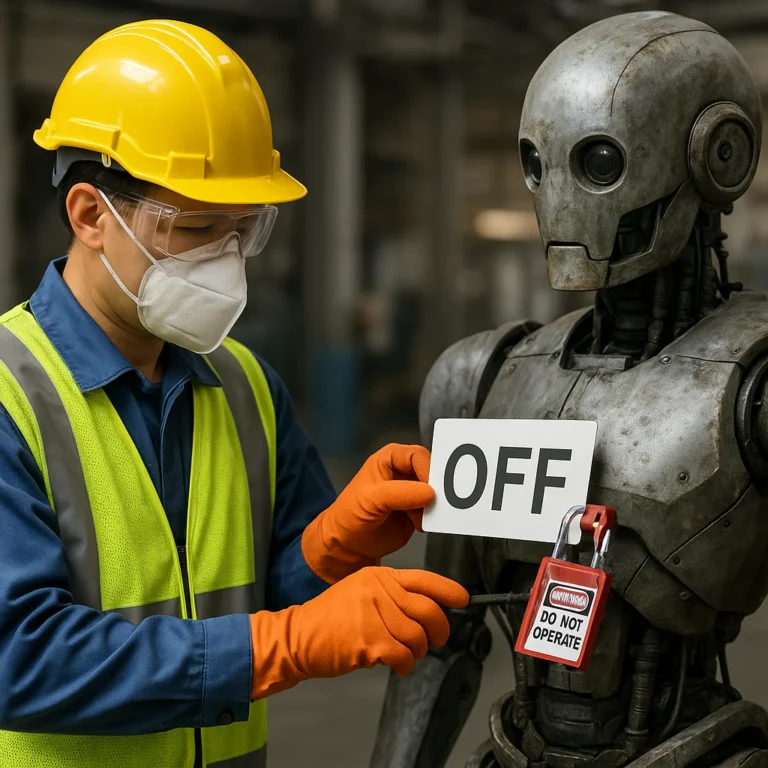
1. Power Down and Isolate
Never attempt to open a robot while it’s plugged in or has a battery attached.
- Action: Disconnect the main power source.
- Wait: Let capacitors discharge for at least 15 minutes.
- Verify: Use a multimeter to ensure zero voltage.
2. Secure the Environment
You don’t want a 50lb arm flailing around while you’re trying to remove a screw.
- Action: Lock out the robot’s joints using mechanical stops or zip ties.
- Safety: Wear cut-resistant gloves and safety goggles.
3. Document Everything
Before you pull a single wire, take photos.
- Why? Reassembly is impossible if you forget which cable goes where.
- Tip: Use color-coded tape to mark connections.
4. Remove External Peripherals
Take off cameras, sensors, and external tools first.
- Caution: These often contain fragile optics or sensitive electronics.
5. Battery Extraction (The Tricky Part)
This is where most people get hurt.
- Action: Locate the battery compartment. If it’s sealed, use a plastic pry tool, never metal.
- Storage: Place removed batteries in a fireproof container immediately.
6. Component Separation
Separate the PCB (Printed Circuit Board) from the metal frame.
- Goal: Keep plastics, metals, and electronics in separate bins for recycling.
7. Data Sanitization
Crucial Step: Before the robot leaves your sight, wipe its memory.
- Method: Use a certified data wiping tool or physically destroy the storage drive if the robot is beyond repair.
Curiosity Check: What happens if you skip step 7? We’ll reveal the horror stories of “zombie robots” that still remember your Wi-Fi password later in the Security Verification section.
🔋 5 Ways to Handle Hazardous Robot Batteries and Power Cells
Batteries are the heart of any robot, but they are also its most dangerous organ. Whether you’re dealing with a Lithium-ion pack in a consumer drone or a massive Fusion Core (okay, maybe not in real life, but the principle of high-energy storage applies), here is how to handle them.
| Battery Type | Hazard Level | Disposal Method | Special Note |
|---|---|---|---|
| Li-ion (Consumer) | High | E-waste center | Never crush or puncture. |
| Lead-Acid (Industrial) | Medium | Hazardous waste facility | Contains sulfuric acid. |
| NiMH (Older Robots) | Low | E-waste center | Less toxic, but still recyclable. |
| Solid State (Future) | Unknown | Specialized lab | Still in R&D; follow manufacturer guidelines. |
| Damaged/Swollen | Extreme | Fireproof container | Do not attempt to charge. |
1. The “Swollen” Battery Protocol
If a battery is bloated, it’s a ticking time bomb.
- Action: Do not charge it. Place it in a bucket of sand or a fireproof bag.
- Transport: Take it directly to a hazardous waste facility.
2. Thermal Runaway Prevention
Heat is the enemy.
- Tip: Store batteries in a cool, dry place. Avoid direct sunlight.
- Insight: According to the NFPA, lithium battery fires are becoming increasingly common in e-waste facilities.
3. Recycling Incentives
Many manufacturers offer trade-in programs.
- Example: DJI and iRobot often have mail-in recycling programs for their batteries.
4. DIY Safety Gear
You don’t need a hazmat suit, but you do need:
- Nitrile gloves (to prevent chemical burns).
- Safety glasses (to protect from electrolyte spray).
5. Legal Disposal Routes
Check your local EPA guidelines for specific rules in your area. Some states require you to register your disposal.
♻️ 6 Eco-Friendly Methods for E-Waste and Robotic Component Recycling
So, you’ve taken the robot apart. Now what? Don’t just pile it up. Here are six eco-friendly methods to give your robot a second life or a dignified end.
1. Manufacturer Take-Back Programs
Many brands have a “cradle-to-cradle” philosophy.
- Brands: Boston Dynamics, ABB, and Fanuc often have specific channels for end-of-life units.
- Benefit: They ensure proper material recovery.
2. Certified E-Waste Recyclers
Look for R2 (Responsible Recycling) or e-Stewards certification.
- Why? These certifications guarantee that your robot won’t end up in a landfill in a developing country.
- Find one: Use the e-Stewards locator.
3. Refurbishment and Resale
Is the robot just old, or is it broken?
- Action: If it’s functional, sell it on eBay or Reverb.
- Market: There is a huge market for used industrial robots for educational purposes.
4. Component Harvesting
Love the servos? Keep them!
- Idea: Use the motors and sensors for your own DIY robotics projects.
- Resource: Check out our Robot Design category for inspiration.
5. Art and Upcycling
Turn that old Sentry Bot into a sculpture.
- Trend: Artists are increasingly using e-waste to create commentary on technology.
- Inspiration: Look at the work of artists who specialize in robot art.
6. Community Drop-Off Events
Many cities host e-waste collection days.
- Tip: Call your local waste management authority to see when the next event is.
⚖️ Navigating Legal Compliance: Robot Disposal Regulations and Liability
“I didn’t know it was illegal!” is not a valid defense in court. Robot disposal is heavily regulated.
Federal Regulations (USA)
- RCRA (Resource Conservation and Recovery Act): Classifies certain robot components as hazardous waste.
- TSCA (Toxic Substances Control Act): Regulates the use of lead and other toxic materials.
State-Specific Laws
- California: Requires all e-waste to be recycled through certified facilities.
- New York: Has strict laws against dumping lithium batteries.
Liability Issues
If you dump a robot and it causes harm (e.g., a battery fire), you are liable.
- Insurance: Check your business insurance policy. Does it cover e-waste liability?
- Documentation: Always keep a certificate of recycling from the facility you use.
Question: Do you think current laws are strict enough? We’ll discuss the “Right to Repair” movement and how it impacts disposal in the next section.
🧠 8 Common Myths About Scrapping Industrial and Consumer Robots
Let’s bust some myths that are circulating in the robotics community.
- Myth: “Robots are just metal; I can sell them for scrap.”
Fact: The electronics are often more valuable than the metal, but they require specialized processing. - Myth: “If I take the battery out, it’s safe to throw away.”
Fact: The PCB still contains lead and other toxins. - Myth: “Industrial robots are too big to recycle.”
Fact: Specialized firms can dismantle even the largest KUKA or Fanuc arms. - Myth: “Data wiping is optional if the robot is old.”
Fact: Old robots can still hold sensitive data from years of operation. - Myth: “All e-waste recyclers are the same.”
Fact: Many are just dumping grounds. Look for R2 certification. - Myth: “I can fix it myself and sell it.”
Fact: Without proper tools, you might void the warranty or damage the unit further. - Myth: “Robot disposal is only for big companies.”
Fact: Consumer robots like Rombas also need proper disposal. - Myth: “Recycling is too expensive.”
Fact: The cost of fines for illegal dumping is far higher than recycling fees.
💰 How to Maximize Resale Value Before Robot Disposal
Why throw it away if you can make a buck? Here’s how to get the most out of your old robot.
1. Clean and Polish
A clean robot sells faster.
- Tip: Use a microfiber cloth and mild cleaner.
- Caution: Avoid harsh chemicals on sensors.
2. Update Firmware
Make sure the robot is running the latest software.
- Benefit: Buyers want a robot that works out of the box.
3. Gather Documentation
Include manuals, warranty cards, and accessories.
- Value: A complete kit is worth 20-30% more.
4. Test and Demonstrate
If possible, show a video of the robot working.
- Platform: Upload to YouTube and link it in your listing.
5. Price Competitively
Check eBay and Craigslist for similar models.
- Strategy: Price slightly lower for a quick sale, or higher if it’s a rare model.
🔒 Performing Security Verification: Data Wiping and Cybersecurity Protocols
Here is the part we teased earlier: What happens if you don’t wipe your robot’s data?
Imagine selling your old autonomous warehouse robot to a competitor. If you didn’t wipe the memory, they could access:
- Floor plans of your facility.
- Inventory lists.
- Security camera footage.
The Wiping Process
- Factory Reset: Most consumer robots have a “Factory Reset” option.
- Overwrite: For industrial robots, use a tool that overwrites the memory multiple times.
- Physical Destruction: If the drive is damaged, physically destroy it.
Cybersecurity Best Practices
- Change Default Passwords: Never leave a robot with the default admin password.
- Network Segmentation: Keep robots on a separate network.
- Regular Audits: Check for firmware updates and security patches.
Narrative Resolution: Remember the “zombie robot” we mentioned? It wasn’t just a myth. In 2021, a company sold a robot that still had access to their internal network, leading to a data breach. Always wipe your data!
🏭 4 Best Practices for Industrial Robot End-of-Life Management
For the big players, disposal is a logistical nightmare. Here are four best practices for managing industrial robot lifecycles.
1. Lifecycle Planning
Plan for disposal before you buy the robot.
- Tip: Ask the manufacturer about their take-back program.
2. Inventory Management
Keep a detailed log of all robots.
- Data: Track serial numbers, purchase dates, and maintenance history.
3. Partner with Specialists
Don’t try to do it yourself.
- Action: Hire a certified industrial robot recycler.
4. Sustainability Reporting
Track your carbon footprint and recycling efforts.
- Benefit: Improves your ESG (Environmental, Social, and Governance) rating.
🏠 DIY vs. Professional Services: When to Call the Pros for Robot Removal
Can you do it yourself? Maybe. Should you? Depends.
When to DIY
- Small consumer robots: Rombas, drones, and toy robots.
- You have the tools: Screwdrivers, multimeters, and safety gear.
- You know the risks: You understand battery safety and data wiping.
When to Call the Pros
- Industrial robots: Anything with a payload over 50lbs.
- Hazardous materials: Robots with lead, asbestos, or radioactive components.
- Data sensitivity: If the robot holds confidential data.
- Legal compliance: If you need a certificate of recycling.
Cost Comparison
| Service Type | Estimated Cost | Pros | Cons |
|---|---|---|---|
| DIY | $0 – $50 | Free, immediate | High risk, no certificate |
| Professional | $20 – $2,0+ | Safe, certified, insured | Costly, takes time |
📊 Comparison: Traditional Scrap Yards vs. Specialized Robotics Recyclers
Not all recycling centers are created equal. Here’s a breakdown of the two main options.
| Feature | Traditional Scrap Yard | Specialized Robotics Recycler |
|---|---|---|
| Material Recovery | Low (mostly metal) | High (electronics, rare earths) |
| Data Security | None | Certified wiping |
| Environmental Impact | High (landfill risk) | Low (circular economy) |
| Cost | Low (or paid for scrap) | Higher (service fee) |
| Certification | None | R2, e-Stewards |
| Best For | Purely metal frames | Complex robots with electronics |
Verdict: If your robot has brains (electronics), go with a specialized recycler. If it’s just a hunk of metal, a scrap yard might suffice.
🎓 Conclusion

We’ve covered a lot of ground, from the evolution of robot disposal to the nitty-gritty of battery safety. The key takeaway? Robot disposal is not a one-size-fits-all solution.
Whether you’re dealing with a consumer vacuum or a multi-million dollar industrial arm, the principles remain the same: Safety first, data security second, and environmental responsibility third.
Our Recommendation:
- For Consumers: Use manufacturer take-back programs or certified e-waste recyclers.
- For Businesses: Partner with specialized robotics recyclers and maintain strict data wiping protocols.
Don’t let your old robot become a hazardous liability. Give it the respectful end it deserves.
🔗 Recommended Links
👉 Shop Robot Recycling Services:
- iRobot: Find a Recycler
- DJI: Battery Recycling Program
- Boston Dynamics: Contact for Disposal
Books on Robotics and Sustainability:
- The Ethics of Robotics on Amazon
- E-Waste: The Global Crisis on Amazon
❓ FAQ

How do I properly dispose of an old robot vacuum?
Answer: Most robot vacums (like iRobot Romba or Ecovacs Debot) should not be thrown in the trash. Check the manufacturer’s website for a mail-in recycling program. If unavailable, take it to a local e-waste drop-off center. Never puncture the battery.
Where can I recycle robot parts near me?
Answer: Use the e-Stewards locator or the R2 certified recycler list. You can also search “e-waste recycling near me” on Google Maps.
Read more about “🤖 7 Intelligent Toilet Cleaning Robots: The Future of Hands-Free Hygiene (2026)”
What happens to robots when they break down?
Answer: Ideally, they are disasembled into their component parts: metals, plastics, and electronics. These are then recycled into new products. If not recycled, they end up in landfills, where toxic materials can leach into the soil.
Read more about “🤖 15+ Robot Frequently Asked Questions: The Ultimate 2026 Guide”
Are there special fees for disposing of robotic devices?
Answer: Yes, many recycling centers charge a fee for processing complex electronics. However, some manufacturers offer free take-back programs for their own products.
Can I throw my robot in the regular trash?
Answer: ❌ NO. In most jurisdictions, it is illegal to dispose of robots in regular trash due to hazardous materials. You risk fines and environmental damage.
Read more about “🤖 Robot Recycling: The 7 Systems Saving Our Planet (2026)”
How to prepare a robot for e-waste recycling?
Answer:
- Wipe data (factory reset or destroy storage).
- Remove batteries (if possible) and store them separately.
- Clean the exterior.
- Pack securely to prevent damage during transport.
What are the environmental impacts of robot disposal?
Answer: Improper disposal leads to soil and water contamination from heavy metals and air pollution from burning e-waste. Proper recycling reduces the need for ming new materials, lowering the overall carbon footprint.
📚 Reference Links
- U.S. Environmental Protection Agency (EPA): Electronics and Batteries
- National Fire Protection Association (NFPA): Lithium Battery Safety
- e-Stewards: Find a Recycler
- R2 Standard: Certified Recyclers
- Robotic Industries Association (RIA): Safety Guidelines
- Fallout Wiki (Robotics Disposal Ground): Robotics Disposal Ground – The Vault Fallout Wiki
- Robot Instructions™: Robot Ethics and Safety | Robot Design | Autonomous Robots