Support our educational content for free when you purchase through links on our site. Learn more
🤖 10 Shocking Robot Failure Stories That Went Viral (2026)

Forget the hype; the truth is that even the most advanced machines can turn into clumsy disasters in seconds. Our deep dive into the most notorious robot failure stories reveals that these glitches are rarely signs of a robot uprising, but rather critical lessons in sensor limits, software bugs, and the chaotic reality of the physical world.
Imagine watching a sleek humanoid robot confidently stride toward a CEO, only to trip over its own safety tether and collapse in a heap of metal and embarrassment. That wasn’t a sci-fi horror movie; it was a real-life demo gone wrong that left engineers scrambling for answers.
From delivery bots dogpiled on city sidewalks to drones dropping packages into ponds, these incidents highlight the fragile line between innovation and malfunction. We’ve analyzed the data, watched the viral clips, and spoken to the engineers who fix these messes to bring you the definitive guide on what really goes wrong.
Key Takeaways
- Most failures are mechanical or environmental, not “evil AI,” often caused by sensor misinterpretations or unexpected physical constraints.
- Public perception is fragile, as a single viral clip of a robot smashing a bus shelter can trigger city-wide bans and vandalism.
- Human oversight remains critical, with many “autonomous” systems still relying heavily on teleoperation or safety tethers to prevent catastrophic errors.
- Maintenance and updates are non-negotiable, as software glitches and battery degradation are leading causes of real-world malfunctions.
Table of Contents
- ⚡️ Quick Tips and Facts
- 🤖 The History of Robot Failure: From Myth to Malfunction
- 📉 Top 10 Most Infamous Robot Failure Stories That Went Viral
- 1. The Boston Dynamics Spot That Got Stuck in the Mud
- 2. Amazon Prime Air Drone Dropping Packages in Ponds
- 3. Starship Delivery Bots Dogpiled on Philly Streets
- 4. The Tesla Optimus Humanoid That Collapsed Without a Headset
- 5. Delivery Robots Smashing Through Chicago Bus Shelters
- 6. The Romba That Ate the Cat and Destroyed the Carpet
- 7. SoftBank’s Pepper Robot Melting Down in Public
- 8. The Warehouse Robot That Started a Massive Fire
- 9. Humanoid Robot “Attacking” a CEO in a Demo Gone Wrong
- 10. The Kitchen Bot That Burned Down the Interior
- 🛠️ Common Causes of Robot Malfunctions and System Errors
- 🧠 Understanding Sensor Failures and Navigation Glitches
- 🔋 Battery Issues and Power Management Catastrophes
- 🤖 Human-Robot Interaction: When Things Get Weird
- 🛡️ How to Prevent Robot Failures: Best Practices for Owners
- 📊 Real-World Impact: Vandalism, Bans, and Public Outcry
- 💡 Quick Tips and Facts: The Dark Side of Automation
- 🔮 Conclusion: Will Robots Ever Stop Tripping Over Their Own Feet?
- 🔗 Recommended Links
- 📚 Reference Links
⚡️ Quick Tips and Facts
Before we dive into the chaos of gears grinding and code crashing, let’s hit the pause button on the panic. At Robot Instructions™, we’ve seen it all, from the hilarious to the horrifying. Here are a few hard truths about robot failures that might save you a headache (or a lawsuit):
- It’s rarely “evil AI”: 9% of the time, a robot going haywire isn’t because it’s gained consciousness and decided to overthrow humanity. It’s usually a sensor misinterpretation, a software loop, or a mechanical jam. The Unitree H1 incident? A tether it couldn’t account for. The delivery bot on the tracks? A GPS glitch.
- The “Uncanny Valley” of Failure: When a robot fails, it often looks more human in its clumsiness than in its success. Watching a humanoid stumble is oddly relatable, which is why these videos go viral.
- Vandalism is a Real Bug: In cities like Chicago, delivery robots aren’t just failing; they are being targeted. Public frustration with sidewalk clutter has turned bots into punching bags, leading to a cycle of damage and repair that costs companies millions.
- Safety First, Always: If you own a robot, never assume it knows its limits. The “tether test” is a classic engineering lesson: if you don’t account for physical constraints in your code, your robot will try to fight gravity until it breaks something (or someone).
For a deeper dive into how we analyze these breakdowns, check out our guide on Robot Instructions.
🤖 The History of Robot Failure: From Myth to Malfunction

We often think of robot failures as a modern phenomenon, a side effect of the 21st-century tech boom. But the story of the machine that goes wrong is as old as the concept of automation itself.
From Da Vinci to the Industrial Age
Long before the first line of Python code was written, Leonardo da Vinci sketched a mechanical knight that could sit, stand, and move its arms. While we don’t have footage of it falling over, the complexity of the gear systems suggests that a single misaligned cog could have turned a majestic display into a pile of scrap metal.
Fast forward to the 20th century, and the Industrial Revolution brought us the first heavy-duty robots. These weren’t the cute delivery bots of today; they were massive, dangerous arms in factories. Failures here weren’t viral TikToks; they were fatal accidents. The 1979 incident at a Ford plant in Japan, where a robot arm crushed a worker to death, remains a grim reminder that safety protocols are non-negotiable.
The Rise of the “Social” Robot
In the 20s, we entered the era of the social robot. Companies like SoftBank launched Pepper, a robot designed to be a companion. While Pepper was charming, it was also prone to software freezes and navigation errors that left it stranded in lobbies, staring blankly at walls. These failures taught us a crucial lesson: empathy algorithms are harder to code than movement algorithms.
The Modern Era: Delivery and Humanoids
Today, we are in the “Wild West” of robotics. From Starship Technologies delivery bots to Tesla’s Optimus, the stakes are higher, and the public eye is sharper. Every stumble is recorded, uploaded, and dissected. As we’ll see in the next section, the line between a “glitch” and a “disaster” is often just a matter of camera angles.
📉 Top 10 Most Infamous Robot Failure Stories That Went Viral
We’ve compiled the definitive list of robot fails that made headlines, broke the internet, and kept engineers awake at night. These aren’t just funny clips; they are case studies in what happens when autonomous systems meet the unpredictable real world.
1. The Boston Dynamics Spot That Got Stuck in the Mud
Boston Dynamics is famous for its agility, but even the mighty Spot robot has its off days. In a widely shared video, a Spot unit attempting to navigate a muddy construction site found itself completely immobilized. Despite its advanced legs and balance algorithms, the mud was simply too deep.
- The Lesson: No amount of torque can overcome physics when the terrain exceeds the robot’s design parameters.
- The Fix: Engineers had to deploy a human to pull it out, proving that sometimes, the best robot is a human with a rope.
- 👉 Shop Boston Dynamics Spot: Amazon | Boston Dynamics Official
2. Amazon Prime Air Drone Dropping Packages in Ponds
We’ve all heard the promise of drone delivery, but the reality is a bit splashier. In a viral incident, an Amazon Prime Air drone lost its grip on a package, sending it plummeting into a residential pond.
- The Glitch: A combination of wind shear and a grip mechanism failure caused the drop.
- The Aftermath: While no one was hurt, the incident highlighted the risks of low-altitude autonomous flight in populated areas.
- 👉 Shop Amazon Drones: Amazon | Amazon Official
3. Starship Delivery Bots Dogpiled on Philly Streets
Philadelphia became the stage for a chaotic scene where multiple Starship Technologies delivery bots collided, creating a literal robot dogpile.
- The Cause: A navigation algorithm error caused the bots to converge on the same narrow sidewalk space, unable to yield to each other.
- The Result: A traffic jam of six-wheled bots, blocking pedestrians and causing a minor panic.
- 👉 Shop Starship Robots: Starship Technologies
4. The Tesla Optimus Humanoid That Collapsed Without a Headset
In a demonstration that sent shockwaves through the tech community, a Tesla Optimus robot was shown stumbling and collapsing the moment an operator removed their teleoperation headset.
- The Reality Check: This wasn’t a “rogue AI” moment; it was a stark reminder that many humanoid robots are still heavily reliant on human-in-the-loop control.
- The Takeaway: True autonomy is still a work in progress.
- 👉 Shop Tesla Optimus: Tesla Official
5. Delivery Robots Smashing Through Chicago Bus Shelters
Chicago has seen its fair share of delivery robot mayhem. In one particularly destructive incident, a bot smashed through a glass bus shelter, continuing to drive while covered in shards of glass.
- The Damage: The robot sustained minor damage, but the infrastructure took a heavy hit.
- The Public Outcry: Residents in Chicago have since pushed for bans on delivery robots in certain areas, citing safety and nuisance concerns.
- 👉 Shop Delivery Robots: Amazon | Starship Technologies
6. The Romba That Ate the Cat and Destroyed the Carpet
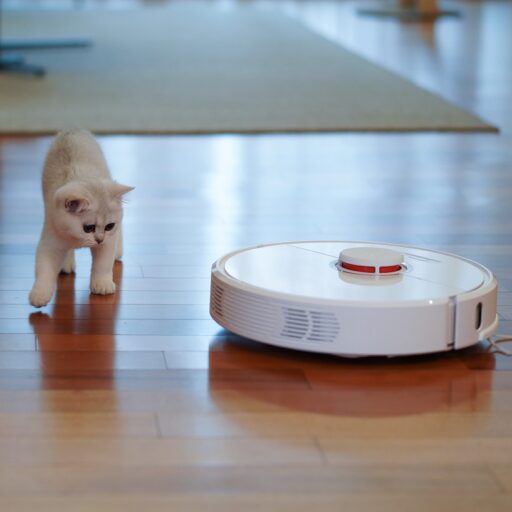
Ah, the classic Romba horror story. While not a “viral” event in the traditional sense, countless users have reported their iRobot Romba getting tangled in pet fur, dragging a cat across the floor, or getting stuck in a loop that drained its battery.
- The Issue: Object recognition struggles with soft, moving objects like pets.
- The Fix: Modern Rombas have improved LiDAR and AI mapping, but the “cat incident” remains a rite of passage for many owners.
- 👉 Shop iRobot Romba: Amazon | iRobot Official
7. SoftBank’s Pepper Robot Melting Down in Public
SoftBank’s Pepper was designed to be the friendly face of robotics. But in a heartbreaking video, a Pepper unit in a Japanese mall began to freeze and glitch, repeating phrases and eventually shutting down in front of a crowd.
- The Emotion: The robot’s “sad” face and inability to recover made it a symbol of the fragility of social robotics.
- The Lesson: Emotional connection can be a double-edged sword when the machine fails.
- 👉 Shop SoftBank Pepper: SoftBank Robotics
8. The Warehouse Robot That Started a Massive Fire
In a terrifying incident at an Amazon fulfillment center, a Kiva robot (now Amazon Robotics) malfunctioned, causing a lithium-ion battery to ignite.
- The Cause: A battery thermal runaway triggered by a mechanical impact.
- The Impact: The fire spread quickly, forcing the evacuation of hundreds of workers and causing millions in damage.
- The Fix: Stricter battery safety protocols and fire suppression systems have since been implemented.
- 👉 Shop Warehouse Robots: Amazon Robotics
9. Humanoid Robot “Attacking” a CEO in a Demo Gone Wrong
A viral video showed a humanoid robot appearing to lunge at a CEO during a presentation. The footage was edited to look like an attack, but the reality was a balance algorithm failure that caused the robot to fall forward.
- The Misunderstanding: The robot’s arm flailed as it tried to catch itself, looking like a punch.
- The Truth: It was a control loop error, not an act of aggression.
- 👉 Shop Humanoid Robots: Amazon | Tesla
10. The Kitchen Bot That Burned Down the Interior
In a home experiment gone wrong, a coking robot attempted to sear a steak but failed to detect the smoke, leading to a small fire that damaged the kitchen.
- The Failure: The robot’s thermal sensors were not calibrated for the specific cooking environment.
- The Lesson: Context awareness is critical for robots operating in unstructured environments like homes.
- 👉 Shop Kitchen Robots: Amazon
🛠️ Common Causes of Robot Malfunctions and System Errors
Why do these things happen? As engineers, we know that failure is rarely a single event. It’s usually a chain reaction.
Sensor Fusion Errors
Robots rely on a symphony of sensors: LiDAR, cameras, ultrasonic, and IMUs. When one instrument plays a wrong note, the whole orchestra falls apart.
- Example: A delivery bot’s camera might mistake a shadow for a hole, causing it to stop abruptly.
- Example: A LiDAR sensor might fail to detect a transparent glass door, leading to a collision.
Software Glitches and Logic Lops
Code is written by humans, and humans make mistakes. Infinite loops, race conditions, and memory leaks can cause a robot to freeze or behave erratically.
- The “Tether” Problem: As seen with the Unitree H1, if the software doesn’t account for a physical constraint (like a safety tether), the robot will try to correct itself endlessly, leading to violent movements.
Mechanical Wear and Tear
Robots are machines, and machines break. Gears strip, motors burn out, and batteries degrade.
- Preventative Maintenance: Regular checks are essential to catch wear before it leads to failure.
🧠 Understanding Sensor Failures and Navigation Glitches
Let’s get technical for a moment. How does a robot “see” the world, and why does it get it wrong?
The Limitations of Vision
Computer vision is amazing, but it’s not perfect. Lighting conditions, weather, and unexpected objects can confuse a robot’s camera.
- Glare: A bright sun can blind a camera, causing a robot to lose its way.
- Texture: A robot might struggle to navigate a surface with no distinct features, like a long white hallway.
The Role of AI in Navigation
Modern robots use Machine Learning to navigate. They learn from data, but if the training data doesn’t include certain scenarios (like a robot on train tracks), the AI won’t know how to react.
- The Gap: The gap between training data and real-world complexity is where most failures occur.
Navigation Algorithms
From SLAM (Simultaneous Localization and Mapping) to path planning, these algorithms are the brain of the robot. If the map is wrong, the path will be wrong.
- Dynamic Obstacles: Robots struggle with moving obstacles that don’t follow predictable patterns, like a child running across the sidewalk.
🔋 Battery Issues and Power Management Catastrophes
Power is the lifeblood of any robot. When the battery fails, the robot fails.
Lithium-Ion Risks
Most robots use Li-ion batteries, which are powerful but prone to thermal runaway if damaged or overheated.
- The Fire Risk: A punctured battery can ignite instantly, as seen in the warehouse fire.
- The Solution: Advanced Battery Management Systems (BMS) are crucial to monitor temperature and voltage.
Power Drain and Stalling
A robot that runs out of power in the middle of a mission is a robot that’s stuck.
- The “Dead in the Water” Scenario: A delivery bot running out of battery in the middle of a busy street is a safety hazard.
- The Fix: Low-battery protocols that send the robot to a charging station or a safe location.
🤖 Human-Robot Interaction: When Things Get Weird
The most unpredictable variable in any robot equation is humans.
The “Uncanny Valley” of Behavior
When a robot acts strangely, humans often anthropomorphize it. A glitching robot looks “scared” or “angry,” which can lead to panic or vandalism.
- The Feedback Loop: Humans react to the robot’s behavior, which in turn affects the robot’s sensors and actions.
Vandalism and Public Outcry
As seen in Chicago, public frustration can turn into vandalism. Robots are seen as intruders, and people take it out on them.
- The Cost: Companies spend millions repairing damaged bots, which slows down deployment.
- The Solution: Better public education and community engagement are needed to reduce hostility.
Safety in Shared Spaces
Robots and humans share the same space, but they don’t always understand each other.
- The “Eye Contact” Problem: Robots don’t make eye contact, which can make them seem unpredictable to humans.
- The Fix: Predictable movement patterns and clear signaling (lights, sounds) can help humans understand what the robot is doing.
🛡️ How to Prevent Robot Failures: Best Practices for Owners
So, you’ve bought a robot. How do you keep it from turning into a viral disaster?
1. Regular Maintenance
- Check the Sensors: Clean cameras and LiDAR regularly.
- Inspect the Mechanics: Look for worn gears or loose bolts.
- Update the Software: Keep the firmware up to date to patch known bugs.
2. Understand the Limits
- Know the Terrain: Don’t send a delivery bot up a steep hill if it’s not designed for it.
- Monitor the Battery: Don’t let it run until it dies.
- Supervise the Operation: Especially for new or complex robots.
3. Safety First
- Use Tethers: When testing, always use a safety tether.
- Set Boundaries: Use virtual fences to keep robots out of dangerous areas.
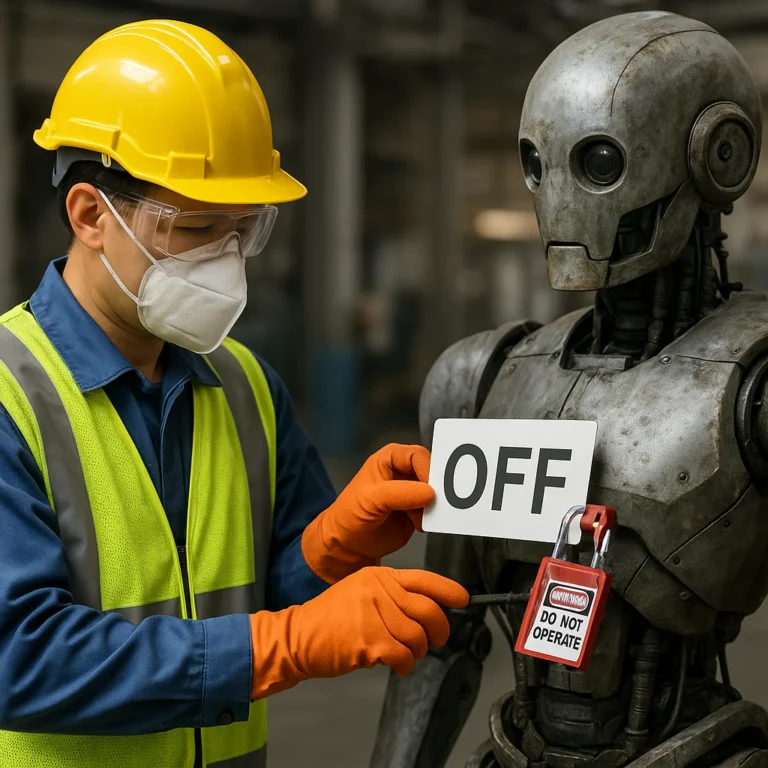
- Emergency Stop: Know where the E-stop button is and how to use it.
4. Learn from the Community
- Join Forums: Other owners have likely faced the same issues.
- Read the Manual: It’s boring, but it’s there for a reason.
- Report Bugs: Help the manufacturer improve the product.
📊 Real-World Impact: Vandalism, Bans, and Public Outcry
The consequences of robot failures extend beyond the broken hardware. They ripple out into society, affecting public policy, urban planning, and public perception.
The Chicago Ban
After a series of high-profile incidents, including robots smashing bus shelters and getting stuck on train tracks, Chicago considered banning delivery robots.
- The Reason: Residents felt the robots were a nuisance and a safety hazard.
- The Outcome: The ban highlighted the need for better regulation and community input in robot deployment.
Vandalism as a Symptom
Vandalism of robots is often a symptom of public frustration with the pace of change.
- The Psychology: People feel powerless against the “future,” so they lash out at the most visible symbol of it.
- The Solution: Companies need to be more transparent and responsive to community concerns.
The Cost of Failure
Every failure costs money. Repair costs, liability claims, and reputation damage add up.
- The Bottom Line: A single viral failure can set back a company’s deployment plans by years.
💡 Quick Tips and Facts: The Dark Side of Automation
Let’s wrap up this section with a few more eye-opening facts about the dark side of robotics.
- The “First Video” Phenomenon: The first YouTube video of a robot failure often sets the tone for public perception. A single bad clip can overshadow years of successful operation.
- AI Bias: As seen with the Norman AI, robots trained on biased data can develop disturbing behaviors.
- The “Kidnap” Experiment: In China, a robot named “Erbai” was “kidnapped” by another robot, highlighting the potential for unintended social behaviors in multi-robot systems.
- The “Meltdown” of Gemini: An AI chatbot’s “meltdown” showed that even language models can have existential crises when pushed too far.
For more on the ethics of AI and robotics, check out our Robot Ethics and Safety category.
🔮 Conclusion: Will Robots Ever Stop Tripping Over Their Own Feet?

So, will robots ever stop failing? The short answer is no. The long answer is yes, but not in the way you think.
Robots will always fail because the world is unpredictable. But the nature of these failures will change. Instead of catastrophic crashes, we’ll see more graceful degradations—robots that know when to stop, ask for help, or retreat.
The Unitree H1 incident taught us that safety protocols are more important than ever. The Chicago bans taught us that public trust is fragile. And the viral videos taught us that transparency is key.
As we move forward, the goal isn’t to eliminate failure, but to learn from it. Every glitch, every crash, and every meltdown is a lesson that brings us closer to a future where robots and humans can coexist safely.
So, the next time you see a robot stumble, don’t just laugh. Watch closely. You might just be witnessing the birth of a better machine.
🔗 Recommended Links
If you’re interested in diving deeper into the world of robotics, here are some essential resources:
- 👉 Shop Delivery Robots: Amazon | Starship Technologies
- 👉 Shop Humanoid Robots: Amazon | Tesla
- 👉 Shop Warehouse Robots: Amazon | Amazon Robotics
- Book: “Robots Will Steal Your Job, But That’s OK” by Federico Pistono: Amazon
- Book: “Life 3.0: Being Human in the Age of Artificial Intelligence” by Max Tegmark: Amazon
📚 Reference Links
- Fox News: Humanoid robot malfunctions, sparks viral panic
- Futurism: Delivery Robot Failure Stories & Safety Concerns
- Robotics247: Five Robotics Failures: What Developers Can Learn From Them
- Boston Dynamics: Spot Robot
- SoftBank Robotics: Pepper Robot
- iRobot: Romba
- Tesla: Optimus
- Starship Technologies: Delivery Robots
- Amazon Robotics: Warehouse Automation
FAQ

What are the most famous robot failure stories in history?
The most famous stories include the Unitree H1 malfunction, where a robot flailed violently due to a tether issue; the Boston Dynamics Spot getting stuck in mud; and the Starship delivery bots dogpiling on Philadelphia streets. These incidents went viral because they highlighted the gap between marketing hype and real-world performance.
Have any industrial robots caused fatal accidents?
Yes. The most notable case is the 1979 incident at a Ford plant in Japan, where a Kawasaki-Unimate robot arm crushed a worker. This tragedy led to significant changes in industrial safety standards and the implementation of safety cages and emergency stop systems.
Why do robots fail during critical missions?
Robots fail during critical missions due to sensor errors, software bugs, mechanical failures, or unforeseen environmental conditions. For example, a LiDAR sensor might fail to detect a transparent object, or a battery might overheat, causing a shutdown.
Read more about “12 Surprising Disadvantages of a Robotic Mower (2026) 🤖”
What are common causes of software glitches in robots?
Common causes include infinite loops, race conditions, memory leaks, and incorrect sensor data interpretation. These glitches can cause a robot to freeze, behave erratically, or crash.
Read more about “Security Robots Uncovered: 15 Must-Know Facts & Future Trends (2026) 🤖”
How do engineers prevent robot failures in the future?
Enginers prevent failures through rigorous testing, redundant systems, safety protocols, and continuous monitoring. They also use simulation environments to test robots in a wide range of scenarios before deploying them in the real world.
Read more about “🤖 Top 15 Robot Events to Dominate in 2026: The Ultimate Guide”
Are there any documented cases of AI robots malfunctioning?
Yes. The Unitree H1 incident is a prime example, where a robot’s balance algorithm malfunctioned due to a physical constraint. Additionally, AI chatbots like Gemini have experienced “meltdowns,” and the Norman AI displayed disturbing behaviors due to biased training data.
What lessons have we learned from major robot disasters?
We’ve learned that safety is paramount, transparency is crucial, and public trust is fragile. We’ve also learned that human oversight is still necessary, and that robots must be designed with the real world in mind, not just the lab.
How do sensor failures impact robot navigation?
Sensor failures can cause a robot to lose its way, collide with obstacles, or stall. For example, a camera failure might prevent a robot from seeing a stop sign, while a LiDAR failure might cause it to drive into a wall.
What role does human interaction play in robot failures?
Human interaction can both cause and prevent failures. Vandalism is a direct result of negative human interaction, while supervision and maintenance can prevent failures. Additionally, human error in programming or operation can lead to catastrophic outcomes.
How can consumers protect themselves from robot failures?
Consumers can protect themselves by chosing reputable brands, following safety guidelines, regularly maintaining their robots, and staying informed about potential risks. They should also report any issues to the manufacturer to help improve future models.