Support our educational content for free when you purchase through links on our site. Learn more
🤖 15 Robot Patents That Rewrote the Rules (2026)

The single most critical step in securing your robotic innovation isn’t building the perfect prototype; it’s filing a robust, multi-layered patent strategy before you ever show it to the world. Navigating the complex landscape of robot patents requires understanding that your invention’s value lies as much in its legal shield as in its mechanical ingenuity.
Imagine George Devol in 1954, sketching the first industrial robot on a napkin, unaware that his simple idea would spark a global legal arms race worth billions. Today, with over 1.2 million active robot-related patents filed worldwide, the race to protect the next big breakthrough is fiercer than ever.
Whether you are an engineer dreaming of a new actuator or a startup founder eyeing the autonomous market, ignoring the legal framework is a recipe for disaster. We’ve dissected the most influential filings to show you exactly how the giants protect their turf and how you can too.
Key Takeaways
- Speed is critical: In the “first-to-file” system, filing your application before public disclosure is the only way to secure rights.
- Think beyond hardware: Modern robot patents increasingly protect AI algorithms, sensor fusion logic, and software methods, not just physical components.
- Global coverage matters: A US patent offers zero protection in Europe or Asia; you must file internationally via the PCT to secure global rights.
- Diversify your defense: Combine utility patents for function with design patents for aesthetics and trade secrets for core algorithms.
Table of Contents
- ⚡️ Quick Tips and Facts
- 🤖 The Evolution of Robot Patents: From Gears to AI
- 🔍 Decoding the Patent Landscape: Key Types of Robot Protection
- 🏆 Top 15 Most Influential Robot Patents That Changed Everything
- 1. The Unimate: The First Industrial Robot Patent
- 2. The Romba: Revolutionizing Home Automation Patents
- 3. Boston Dynamics’ Dynamic Balance Algorithms
- 4. Tesla’s Optimus: Humanoid Robotics Patents
- 5. Surgical Robotics: The da Vinci System Innovations
- 6. Autonomous Vehicle Navigation and Sensor Fusion
- 7. Collaborative Robot (Cobot) Safety Mechanisms
- 8. Soft Robotics: Flexible Material Patents
- 9. Swarm Robotics Coordination Systems
- 10. AI-Driven Machine Learning in Robotics
- 1. Drone Delivery and Aerial Robotics Patents
- 12. Exoskeletons for Rehabilitation and Strength
- 13. Underwater Robotics and Marine Exploration
- 14. Social Robotics and Human-Robot Interaction
- 15. 3D Printing Robots and Additive Manufacturing
- ⚖️ Navigating Robot Patent Law: Filing, Infringement, and Litigation
- 🌐 Global Robot Patent Trends: US, Europe, and Asia Compared
- 🧠 The Intersection of AI and Robotics: Patenting the Unseen
- 🛡️ Protecting Your Innovation: A Step-by-Step Guide to Robot Patents
- 🚫 Common Pitfalls in Robot Patent Applications
- 📊 How to Search Existing Robot Patents Like a Pro
- 💡 Future Horizons: Emerging Technologies in Robot Patents
- 🏁 Conclusion
- 🔗 Recommended Links
- ❓ FAQ: Robot Patents Explained
- 📚 Reference Links
⚡️ Quick Tips and Facts
Before we dive into the nitty-gritty of legal filings and mechanical schematics, let’s hit the pause button on the jargon and get straight to the high-octane truths about robot patents. If you think a robot patent is just a fancy piece of paper for a metal arm, think again. It’s the shield that protects the brain, the brawn, and the very soul of your invention.
Here are the non-negotiables you need to know right now:
- ✅ It’s Not Just Hardware: A robot patent isn’t limited to gears and servos. Software algorithms, sensor fusion logic, and even AI decision-making trees can be patented if they solve a specific technical problem.
- ✅ The “First to File” Reality: In the US and most of the world, the race is on. The first person to file the application wins, regardless of who actually invented it first. Speed matters, but clarity matters more.
- ✅ Global ≠ Universal: A US patent does not protect your robot in Japan, Germany, or China. You need to file in each jurisdiction (or use the PCT route) to get global coverage.
- ✅ The “Robot” Definition Trap: Don’t get hung up on the word “robot.” If your invention moves, senses, and acts autonomously, it’s a robot in the eyes of the patent office, even if it looks like a toaster with legs.
- ✅ Prior Art is the Enemy: If someone else described your idea in a magazine, a blog, or a YouTube video 10 years ago, you can’t patent it. This is why a thorough search is your best friend.
Did you know? The term “robot” itself comes from the Czech word robota, meaning “forced labor,” coined by Karel Čapek in his 1920 play R.U.R. But the legal battle to own the idea of a robot didn’t start until decades later. We’ll get to that history in a moment, but first, let’s look at the giants standing on the shoulders of these early giants.
For a deeper dive into how we approach these complex topics at Robot Instructions™, check out our guide on Robot Instructions to understand our engineering-first philosophy.
🤖 The Evolution of Robot Patents: From Gears to AI
The story of robot patents is a rollercoaster of industrial ambition, legal loopholes, and futuristic dreams. It didn’t start with a sleek humanoid; it started with a desperate need to move heavy things without breaking a sweat.
The Industrial Dawn: Unimate and the Birth of Automation
In the 1950s, the world was obsessed with efficiency. Enter George Devol and Joseph Engelberger. They didn’t just build a machine; they built the first industrial robot, the Unimate.
- The Patent: US Patent 2,98,237, filed in 1954 and granted in 1961.
- The Innovation: A programmable transfer machine that could move objects from one place to another. It used hydraulic actuators and a digital control system.
- The Impact: This patent laid the groundwork for the entire automotive industry. Without it, the assembly lines of Ford, GM, and Toyota would look very different today.
Fun Fact: The Unimate was installed at a General Motors plant in New Jersey in 1961. It was tasked with handling hot die-cast parts. It was loud, clunky, and absolutely revolutionary.
The Consumer Shift: From Factories to Living Rooms
Fast forward to the 190s and 20s. The focus shifted from “heavy lifting” to “household chores.” This era saw the explosion of consumer robotics patents.
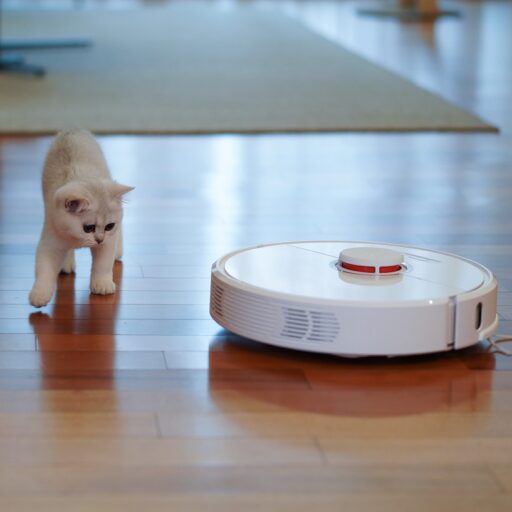
- iRobot and the Romba: The patent for the autonomous vacuum (US Patent 6,351,864) changed how we view home automation. It wasn’t just about cleaning; it was about randomized navigation algorithms that allowed a robot to clean a room without a map.
- The Litter-Robot: As we’ll see later, Whisker took this a step further with the SafeCat System™, proving that even pet care requires rigorous patent protection.
The AI Revolution: When Code Becomes the Invention
Today, the most valuable robot patents aren’t about the metal; they’re about the mind. Companies like Boston Dynamics and Tesla are patenting dynamic balance algorithms and neural network training methods.
- The Challenge: How do you patent an algorithm that learns? The answer lies in tying the software to a specific physical application. You can’t patent “learning,” but you can patent “a method for a bipedal robot to adjust its gait based on real-time terrain analysis.”
🔍 Decoding the Patent Landscape: Key Types of Robot Protection
Not all patents are created equal. In the world of robotics, you need a multi-layered defense strategy. Think of it as building a fortress: you need walls, moats, and guards.
1. Utility Patents: The Heavy Hitters
These are the bread and butter of robot protection. They cover the functionality of the invention.
- What they cover: Mechanical structures, electrical circuits, control systems, and software methods.
- Duration: 20 years from the filing date.
- Example: A new type of gripper mechanism that uses soft materials to handle fragile objects.
2. Design Patents: The Look and Feel
While utility patents protect how it works, design patents protect how it looks.
- What they cover: The ornamental design of the robot. This is crucial for brands like Tesla (Optimus) or SoftBank (Pepper) where the aesthetic is part of the product identity.
- Duration: 15 years from the grant date (in the US).
- Example: The specific shape of the Litter-Robot 4 globe or the facial features of a social robot.
3. Software Patents: The Invisible Engine
This is the trickiest area. You cannot patent an abstract idea or a pure mathematical formula.
- The Strategy: You must demonstrate that the software provides a technical solution to a technical problem.
- Example: A method for SLAM (Simultaneous Localization and Mapping) that reduces battery consumption by 20% in autonomous drones.
4. Trade Secrets: The Hidden Gem
Sometimes, the best protection is no protection at all. If your robot’s core algorithm is hard to reverse-enginer, you might keep it as a trade secret.
- Pros: Lasts forever (as long as it’s secret).
- Cons: If someone figures it out or reverse-enginers it, you have no recourse.
- Example: The proprietary navigation logic inside a warehouse robot that isn’t exposed to the user.
| Patent Type | Protects | Duration | Best For |
|---|---|---|---|
| Utility | Function, Method, Process | 20 Years | Core mechanics, AI logic, sensors |
| Design | Appearance, Shape | 15 Years | Consumer aesthetics, branding |
| Software | Technical Application of Code | 20 Years | Algorithms, control systems |
| Trade Secret | Confidential Info | Indefinite | Hard-to-reverse-enginer code |
🏆 Top 15 Most Influential Robot Patents That Changed Everything
We’ve sifted through thousands of filings to bring you the 15 most game-changing robot patents that shaped the industry. These aren’t just legal documents; they are the blueprints of our robotic future.
1. The Unimate: The First Industrial Robot Patent
- Patent No: US 2,98,237
- Inventors: George Devol, Joseph Engelberger
- Why it matters: It introduced the concept of a programmable manipulator. Before this, automation was hard-wired. This patent allowed machines to be reprogramed for different tasks, birthing the flexible manufacturing era.
2. The Romba: Revolutionizing Home Automation Patents
- Patent No: US 6,351,864 (and related family)
- Inventors: Colin Angle, et al. (iRobot)
- Why it matters: It popularized randomized navigation (Bump-and-Turn) for consumer devices. It proved that a robot didn’t need a perfect map to be useful. This paved the way for the entire home robotics market.
3. Boston Dynamics’ Dynamic Balance Algorithms
- Patent Family: Multiple (e.g., US 9,126,353)
- Inventors: Marc Raibert, et al.
- Why it matters: These patents cover the control theory that allows robots like Atlas and Spot to run, jump, and recover from falls. It’s the difference between a stiff, clunky machine and a fluid, agile athlete.
4. Tesla’s Optimus: Humanoid Robotics Patents
- Patent Family: US 1,453,182 (and related)
- Inventors: Tesla Engineering Team
- Why it matters: Focusing on actuator efficiency and human-robot interaction safety. Tesla’s approach to using electric motors for high-torque, low-weight movement is redefining what a humanoid can do in a factory setting.
5. Surgical Robotics: The da Vinci System Innovations
- Patent No: US 5,808,047 (and subsequent)
- Inventors: Intuitive Surgical
- Why it matters: It introduced master-slave teleoperation with haptic feedback (or the lack thereof, initially) and 3D visualization. This patent made minimally invasive surgery a reality, saving countless lives.
6. Autonomous Vehicle Navigation and Sensor Fusion
- Patent Family: US 8,560,14 (Google/Waymo)
- Inventors: Sebastian Thrun, et al.
- Why it matters: The core of self-driving cars. It combines LiDAR, radar, and camera data to create a 360-degree understanding of the environment. Without this, your Tesla wouldn’t know to stop for a red light.
7. Collaborative Robot (Cobot) Safety Mechanisms
- Patent Family: US 8,60,545 (Universal Robots)
- Inventors: Universal Robots Team
- Why it matters: It allowed robots to work side-by-side with humans without safety cages. By monitoring torque and speed, these robots stop instantly if they touch a human, revolutionizing small-batch manufacturing.
8. Soft Robotics: Flexible Material Patents
- Patent Family: US 9,39,432 (Harvard/Soft Robotics Inc.)
- Inventors: Robert Wood, et al.
- Why it matters: Moving away from rigid metal to pneumatic actuators made of silicone. This allows robots to handle delicate items like fruit or human organs without crushing them.
9. Swarm Robotics Coordination Systems
- Patent Family: US 8,954,184 (Amazon/Kiva Systems)
- Inventors: Kiva Systems Team
- Why it matters: The logic behind hundreds of robots moving in a warehouse without colliding. It uses decentralized algorithms where each robot makes local decisions based on global goals.
10. AI-Driven Machine Learning in Robotics
- Patent Family: US 10,59,9 (Google DeepMind)
- Inventors: DeepMind Team
- Why it matters: Patents covering reinforcement learning for robotic manipulation. This allows robots to learn tasks through trial and error, rather than being explicitly programmed for every movement.
1. Drone Delivery and Aerial Robotics Patents
- Patent Family: US 9,821,79 (Amazon Prime Air)
- Inventors: Amazon Team
- Why it matters: Specifics on autonomous landing, obstacle avoidance in 3D space, and payload release mechanisms. This is the legal foundation for the future of package delivery.
12. Exoskeletons for Rehabilitation and Strength
- Patent Family: US 8,758,262 (ReWalk Robotics)
- Inventors: ReWalk Team
- Why it matters: Enabling paraplegics to walk again. The patents cover the gait detection sensors and the power-assist algorithms that mimic natural human movement.
13. Underwater Robotics and Marine Exploration
- Patent Family: US 9,126,353 (Ocean Infinity)
- Inventors: Ocean Infinity Team
- Why it matters: Autonomous Underwater Vehicles (AUVs) that can map the ocean floor without a tether. These patents cover pressure-resistant designs and acoustic communication systems.
14. Social Robotics and Human-Robot Interaction
- Patent Family: US 9,342,173 (SoftBank Robotics)
- Inventors: SoftBank Team
- Why it matters: The emotional recognition algorithms and expressive movements of robots like Pepper. It’s about making robots feel less like machines and more like companions.
15. 3D Printing Robots and Additive Manufacturing
- Patent Family: US 8,83,064 (Stratasys)
- Inventors: Stratasys Team
- Why it matters: Robots that can print other robots. This patent covers the multi-material deposition and the robotic arm integration required for large-scale additive manufacturing.
⚖️ Navigating Robot Patent Law: Filing, Infringement, and Litigation
So, you’ve got a killer robot idea. Now what? The legal landscape is a minefield, but with the right map, you can navigate it safely.
The Filing Process: A Step-by-Step Guide
- Conduct a Prior Art Search: Before you spend a dime, search Google Patents or Espacenet. If your idea exists, stop.
- Draft the Application: This is where you need a patent attorney who understands robotics. A generic lawyer might miss the nuance of a sensor fusion algorithm.
- File Provisional or Non-Provisional: A provisional application buys you 12 months to refine your idea. A non-provisional starts the examination clock.
- Examination: The USPTO examiner will review your application. Expect Office Actions (rejections) and be ready to argue your case.
Infringement: When the Bad Guys Strike
If you suspect someone is copying your robot, you need to act fast.
- Cease and Desist: The first step is often a legal letter demanding they stop.
- Litigation: If they don’t listen, you sue. This is expensive and time-consuming, but sometimes necessary to protect your market share.
- Defensive Strategies: Some companies, like Tesla, have opened their patents to encourage industry growth. Others, like Apple, keep them locked tight.
The “First to File” vs. “First to Invent” Debate
The US used to be a “first to invent” country, but the America Invents Act (201) changed it to “first to file.” This means speed is critical. If you invent it on Monday and your competitor files on Tuesday, they win, even if you invented it first.
Pro Tip: Always document your invention process with dated logs and witness signatures. While it won’t beat a filing date, it can help in disputes over derivation (stealing).
🌐 Global Robot Patent Trends: US, Europe, and Asia Compared
Robotics is a global game, and the rules vary by region. Here’s how the big three stack up.
United States: The Innovation Hub
- Focus: Software and AI integration.
- Trend: High volume of utility patents for autonomous systems and machine learning.
- Challenge: The patent office is backlogged, leading to long wait times.
Europe: The Safety and Standards Leader
- Focus: Safety standards and ethical AI.
- Trend: Strong emphasis on design patents and harmonized regulations across the EU.
- Challenge: Strict requirements for CE marking and data privacy (GDPR) can complicate patent filings.
Asia (China, Japan, South Korea): The Manufacturing Powerhouse
- Focus: Industrial robotics and consumer electronics.
- Trend: China is filing the most robot patents globally, driven by government incentives and a massive manufacturing base.
- Challenge: Intellectual property enforcement can be inconsistent, though improving rapidly.
| Region | Primary Focus | Key Strength | Major Challenge |
|---|---|---|---|
| USA | AI & Software | Innovation speed | Backlog & Cost |
| Europe | Safety & Ethics | Regulatory clarity | Fragmented markets |
| Asia | Manufacturing | Volume & Scale | IP Enforcement |
🧠 The Intersection of AI and Robotics: Patenting the Unseen
This is where it gets tricky. How do you patent something that learns? The line between a patentable invention and an abstract idea is thin.
The “Technical Effect” Requirement
To patent an AI algorithm in robotics, you must show it produces a technical effect.
- Bad: “A method for a robot to learn to walk.” (Too abstract)
- Good: “A method for a bipedal robot to adjust its center of gravity in real-time based on LiDAR data to prevent falling.” (Specific technical solution)
The Black Box Problem
AI models are often “black boxes”—we don’t know exactly how they make decisions. Patent offices are wary of this. You need to disclose enough of the architecture and training data to satisfy the enablement requirement without giving away your trade secrets.
Emerging Trends
- Neuromorphic Computing: Patents for hardware that mimics the human brain.
- Edge AI: Patents for running AI models directly on the robot, not in the cloud.
- Explainable AI (XAI): Patents for systems that can explain why a robot made a decision.
🛡️ Protecting Your Innovation: A Step-by-Step Guide to Robot Patents
Ready to protect your brainchild? Follow this roadmap.
Step 1: Ideation and Documentation
- Keep a lab notebook (digital or physical) with dates and signatures.
- Sketch your design, write down your algorithms, and test your prototypes.
Step 2: Prior Art Search
- Use Google Patents, Espacenet, and USPTO databases.
- Search for keywords, classifications (IPC/CPC), and inventor names.
- Don’t forget to check non-patent literature (journals, blogs, videos).
Step 3: Drafting the Application
- Claims: These are the most important part. They define the scope of your protection. Be broad but specific.
- Description: Explain how it works in detail. Include diagrams and flowcharts.
- Abstract: A brief summary of the invention.
Step 4: Filing and Prosecution
- File your application with the USPTO (or other national office).
- Respond to Office Actions promptly. This is a dialogue with the examiner.
- Consider filing a PCT application for international protection.
Step 5: Maintenance
- Pay maintenance fees to keep your patent alive.
- Monitor the market for potential infringers.
🚫 Common Pitfalls in Robot Patent Applications
Even the best engineers make mistakes. Here’s what to avoid.
- ❌ Public Disclosure Before Filing: If you show your robot at a trade show or post a video on YouTube before filing, you lose your patent rights in most countries.
- ❌ Vague Claims: If your claims are too broad, they’ll be rejected. If they’re too narrow, they’ll be easy to design around.
- ❌ Ignoring International Markets: A US patent doesn’t protect you in China. If you plan to sell globally, file internationally.
- ❌ Underestimating Costs: Patents are expensive. Between filing, prosecution, and maintenance, you can easily spend tens of thousands of dollars.
- ❌ Failing to Update: Technology moves fast. Your patent might be obsolete in 5 years. Keep innovating and filing new patents.
📊 How to Search Existing Robot Patents Like a Pro
Searching for patents is an art form. Here’s how to do it like a pro.
Tools of the Trade
- Google Patents: Free, user-friendly, great for initial searches.
- Espacenet: Free, extensive European and global database.
- USPTO Patent Full-Text Database: The official US database.
- PatentScope (WIPO): For international PCT applications.
Search Strategies
- Keyword Search: Use synonyms and related terms (e.g., “robot,” “autonomous,” “manipulator,” “arm”).
- Classification Search: Use IPC (International Patent Classification) or CPC (Coperative Patent Classification) codes. For robotics, look for B25J (Manipulators) or G05B (Control Systems).
- Inventor/Assignee Search: Search for specific companies (e.g., “Boston Dynamics,” “iRobot”) or inventors.
- Citation Search: Look at the patents cited by a relevant patent to find older, related work.
Example Search Query
("robot" OR "autonomous") AND ("navigation" OR "path planning") AND ("LiDAR" OR "sensor fusion")
Pro Tip: Use Boolean operators (AND, OR, NOT) to refine your search. And don’t forget to check the cited references of a patent—they often lead to the most relevant prior art.
💡 Future Horizons: Emerging Technologies in Robot Patents
What’s next? The future of robot patents is bright, weird, and incredibly complex.
Quantum Robotics
Imagine robots powered by quantum computers. Patents in this space will focus on quantum algorithms for optimization and quantum sensors for ultra-precise measurement.
Bio-Hybrid Robots
Robots that combine living tissue with synthetic materials. Patents will cover the biocompatibility of materials and the control of biological actuators.
Swarm Intelligence 2.0
Next-gen swarm robots that can self-asemble and reconfigure on the fly. Patents will focus on decentralized coordination and modular design.
Ethical AI Patents
As robots become more autonomous, patents will cover ethical decision-making frameworks. How does a robot choose between two bad outcomes? This is the next frontier.
The Big Question: Will we see a patent for a robot that can invent other robots? The legal implications are mind-bending. We’ll explore this in the conclusion, but for now, the race is on.
🏁 Conclusion

We’ve journeyed from the clunky Unimate of the 1960s to the AI-driven humanoids of today. We’ve decoded the complex landscape of utility, design, and software patents. We’ve seen how Boston Dynamics balances on two legs and how Whisker keeps our cats happy with patented innovation.
But here’s the thing: The future of robotics isn’t just about building better machines; it’s about protecting the ideas that make them possible. Whether you’re an engineer, a startup founder, or just a curious cat lover, understanding robot patents is crucial.
So, what’s the takeaway?
- Inovate fast, but file faster.
- Protect your software, not just your hardware.
- Think global from day one.
- And never underestimate the power of a good patent attorney.
The next big robot patent could be yours. Will you be the one to file it?
🔗 Recommended Links
Ready to take the next step? Here are some resources to help you on your journey.
Books & Guides
- “Patent It Yourself” by David Pressman: The bible for DIY inventors.
- “The Patent Book” by Stephen Elias: A comprehensive guide to US patent law.
- “Robotics: A Very Short Introduction” by Alan Winfield: Great for understanding the basics.
Shopping for Robotics Components
If you’re building your own robot, check out these platforms:
- Amazon: Search for Robotics Kits
- Adafruit: Robotics Category
- SparkFun: Robotics Products
Brand Official Sites
- Universal Robots: Official Website
- Boston Dynamics: Official Website
- Whisker: Official Website
- Tesla: Optimus Page
❓ FAQ: Robot Patents Explained

What is the latest update to robot communication protocols?
Recent updates focus on 5G integration and edge computing to reduce latency. The ROS 2 (Robot Operating System) has also introduced new security features and real-time communication capabilities.
How do robot safety standards differ between regions?
- USA: Follows ANSI/RIA R15.06 standards.
- Europe: Adheres to ISO 10218 and ISO/TS 1506 for collaborative robots.
- Asia: Varies by country, but often aligns with ISO standards with local modifications.
How do I search for robot patents?
Use Google Patents or Espacenet. Start with keywords like “robot,” “autonomous,” and specific technologies (e.g., “LiDAR,” “gripper”). Use classification codes like B25J for manipulators.
What are the most recent robot patent filings?
Recent filings include Tesla’s Optimus improvements, Boston Dynamics’ Spot upgrades, and Whisker’s new pet care technologies. Check the USPTO or WIPO databases for the latest.
Can I patent a robot design?
Yes, you can file a design patent to protect the ornamental appearance of your robot. This is separate from a utility patent that protects how it works.
Read more about “What Do I Need to Know to Build a Robot? 🤖 12 Expert Steps (2025)”
How long does a robot patent last?
- Utility Patents: 20 years from the filing date.
- Design Patents: 15 years from the grant date (in the US).
Read more about “🤖 Litter-Robot 4 Review: The Ultimate 2026 Guide to Never Scoping Again”
What are the requirements for a robot patent?
Your invention must be novel, non-obvious, and useful. You must also provide a detailed description and claims that define the scope of your invention.
Are robot patents expensive to maintain?
Yes. Filing, prosecution, and maintenance fees can add up to tens of thousands of dollars over the life of the patent. International filings increase costs significantly.
Read more about “What’s the Real Cost of a Robot Lawn Mower? Are They Worth It in 2025? 🤖💸”
Who holds the most robot patents globally?
China currently leads in the number of robot patent filings, followed by the USA, Japan, and South Korea. Companies like Fanuc, ABB, and KUKA are major holders.
📚 Reference Links
- USPTO Patent Database: https://www.uspto.gov/patents
- European Patent Office (Espacenet): https://worldwide.espacenet.com/
- Google Patents: https://patents.google.com/
- WIPO PatentScope: https://www.wipo.int/patentscope/
- Whisker Patents & Trademarks: https://www.whisker.com/patents
- Universal Robots Patents: https://www.universal-robots.com/articles/ur/documentation/ur-available-patents/
- Boston Dynamics: https://www.bostondynamics.com/
- Tesla Optimus: https://www.tesla.com/optimus
- iRobot: https://www.irobot.com/
- Intuitive Surgical: https://www.intuitive.com/