Support our educational content for free when you purchase through links on our site. Learn more
🤖 The Ultimate Guide to Robot Industrial: Master Automation in 2026

The best robot industrial solution for your factory isn’t the most expensive one; it’s the one that perfectly matches your specific payload, speed, and safety requirements. Whether you are looking to automate a single welding station or overhaul an entire assembly line, choosing the right robot industrial arm can slash costs by 30% while boosting output to 24/7 levels.
Imagine a factory floor where a 6-axis FANUC arm silently welds car frames with micron-level precision, while a Universal Robots cobot safely packs boxes right next to a human worker. This isn’t a sci-fi dream; it’s the reality of modern manufacturing, where industrial robots now account for over 40% of all automation tasks globally.
Did you know that the first Unimate robot, installed in 1961, was so loud and dangerous it required a full safety cage? Today’s machines are quieter, smarter, and capable of working alongside humans without a fence.
Key Takeaways
- Match the Tool to the Task: Articulated robots excel at complex welding, while SCARA and Delta robots dominate high-speed pick-and-place.
- Safety is Non-Negotiable: Even collaborative robots (cobots) require rigorous risk assessments and force monitoring to prevent injury.
- ROI is Fast: Most industrial robot systems pay for themselves within 1 to 3 years through labor savings and increased throughput.
- Future-Proof Your Investment: Look for systems with AI integration and offline programming capabilities to stay ahead of the curve.
👉 Shop Top Robot Brands:
- Articulated Robots: FANUC | ABB | KUKA
- Collaborative Robots: Universal Robots | FANUC CRX Series
- SCARA & Delta: Yaskawa Motoman | FANUC Delta
Table of Contents
- ⚡️ Quick Tips and Facts
- 🏭 The Rise of the Metal Giants: A Brief History of Industrial Robotics
- 🤖 Decoding the Machine: Types of Industrial Robots You Need to Know
- 1. Articulated Robots: The Flexible All-Stars
- 2. SCARA Robots: Speed Demons of Assembly
- 3. Delta Robots: The Spider-Like Pick-and-Place Kings
- 4. Cartesian Gantry Robots: Precision on a Grid
- 5. Collaborative Robots (Cobots): The Safe Sidekicks
- 6. Mobile Manipulators: The Roaming Workhorses
- ⚙️ Under the Hood: Key Components and Technologies Driving Automation
- 🛠️ Real-World Applications: From Welding to Warehousing
- 💰 The ROI Reality Check: Cost, Maintenance, and Implementation
- 🧠 Programming the Beast: Languages, Interfaces, and Ease of Use
- 🛡️ Safety First: Navigating Standards and Risk Assessments
- 🚀 Future Trends: AI, 5G, and the Next Generation of Factory Automation
- 🏆 Top Brands Showdown: FANUC, ABB, KUKA, Yaskawa, and Universal Robots
- ✅ Quick Tips and Facts
- 🏁 Conclusion
- 🔗 Recommended Links
- ❓ FAQ
- 📚 Reference Links
⚡️ Quick Tips and Facts
Before we dive into the grease, gears, and glory of the factory floor, let’s hit the pause button and drop some hard truths that every aspiring automation engineer needs to know. We’ve seen too many startups burn cash on shiny new arms that couldn’t handle the job, so consider this your survival guide.
- Repeatability is King: Don’t get hung up on accuracy. A robot might be off by a millimeter every time (accuracy), but if it hits that same millimeter-off spot 10,0 times in a row, it’s repeatable. In manufacturing, consistency beats perfection every time.
- The “Cobot” Myth: Just because a robot is labeled “collaborative” doesn’t mean you can hug it while it’s welding a car frame. Safety sensors are great, but you still need risk assessments. Never assume a cobot is safe without verifying the force limits.
- Payload vs. Reach: It’s physics, not magic. If you extend a robot’s arm to its maximum reach, its payload capacity often drops significantly. Always check the load chart, not just the brochure headline.
- The “Black Box” Problem: Many proprietary software suites are closed ecosystems. If you buy a FANUC robot, you’re often stuck with FANUC software. Plan your integration strategy early to avoid vendor lock-in.
- Downtime Costs: A single hour of downtime in an automotive plant can cost hundreds of thousands of dollars. This is why features like Zero Down Time (ZDT) monitoring are becoming standard, not optional.
Pro Tip: If you’re new to this, check out our guide on Robot Instructions to understand the foundational logic before you start programming.
🏭 The Rise of the Metal Giants: A Brief History of Industrial Robotics

How did we get from a guy named “Bill” playing with Meccano sets in 1937 to robots that can sort trash with AI? It’s a story of vision, war, and a lot of hydraulic fluid.
The journey began in earnest in 1954 when George Devol filed the first patent for a “Programed Article Transfer.” He envisioned a machine that could move objects without human intervention. A few years later, in 1956, Devol partnered with Joseph F. Engelberger to found Unimation, the world’s first robotics company. Their creation, the Unimate, was a hydraulic beast that debuted in a General Motors plant in 1961, die-casting hot metal parts. It was loud, dangerous, and revolutionary.
Fast forward to the 1970s, and the electric revolution hit. ABB (then ASEA) introduced the IRB 6, the first all-electric microprocessor-controlled robot. Around the same time, KUKA built the FAMULUS, one of the first 6-axis electromechanical robots. These machines were smaller, faster, and far more precise than their hydraulic ancestors.
By the 1980s, FANUC had entered the fray, leveraging their expertise in CNC machines to dominate the market. Today, the landscape is a global powerhouse, with China accounting for nearly 43% of global industrial robot production, according to the International Federation of Robotics (IFR).
Curiosity Gap: You might wonder, “If robots have been around since the 60s, why are we only hearing about them now?” The answer lies in cost and intelligence. Early robots were expensive, hard to program, and dumb. The next section reveals how modern tech finally made them accessible to everyone.
🤖 Decoding the Machine: Types of Industrial Robots You Need to Know
Not all robots are created equal. Picking the wrong type is like trying to use a sledgehammer to crack a nut—inefficient and potentially disastrous. Let’s break down the six primary types of industrial robots, each with its own superpower.
1. Articulated Robots: The Flexible All-Stars
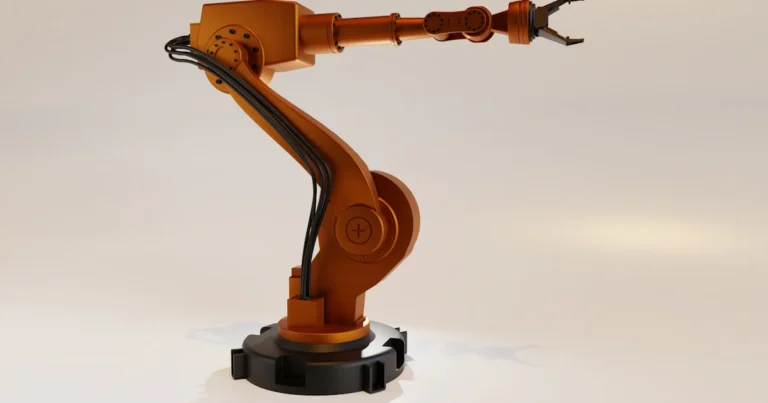
These are the ones you see in car commercials, welding and painting with a human-like arm. They typically have 6 axes (degrees of freedom), allowing them to reach almost anywhere in their workspace.
- Best For: Welding, assembly, material handling, and complex path following.
- Pros: Maximum flexibility, large work envelope.
- Cons: Can be expensive, complex programming, potential for singularities (where the arm gets “stuck” in a weird angle).
- Top Pick: FANUC M-20iA/230 (The heavy lifter).
2. SCARA Robots: Speed Demons of Assembly
Selective Compliance Assembly Robot Arm (SCARA) robots are the sprinters of the factory. They have two parallel joints that move in the X-Y plane and a vertical Z-axis. They are incredibly fast and rigid in the vertical direction but compliant in the horizontal.
- Best For: Pick-and-place, assembly of small parts, screw driving.
- Pros: High speed, high precision, compact footprint.
- Cons: Limited vertical reach, not great for complex 3D paths.
- Top Pick: FANUC SR-12_i_A (The assembly ace).
3. Delta Robots: The Spider-Like Pick-and-Place Kings
If you’ve ever seen a robot moving candy bars or pills at lightning speed, it’s probably a Delta. These robots use three arms connected to a common base, forming a parallelogram linkage. The end effector moves in a small, fast, and precise area.
- Best For: High-speed packaging, food handling, pharmaceuticals.
- Pros: Blazing fast (up to 20 operations per minute), lightweight.
- Cons: Very limited payload and reach.
- Top Pick: FANUC TP 80 (The speedster).
4. Cartesian Gantry Robots: Precision on a Grid
Also known as rectilinear or X-Y-Z robots, these move along three linear axes. They are essentially a 3D printer on steroids. They are often custom-built for specific tasks.
- Best For: 3D printing, CNC machining, large-scale material handling, testing.
- Pros: Extremely rigid, easy to program, scalable size.
- Cons: Large footprint, slower than articulated robots.
- Top Pick: Custom Gantry Systems (Search for specific vendors).
5. Collaborative Robots (Cobots): The Safe Sidekicks
Cobots are designed to work side-by-side with humans. They have force-limiting sensors that stop the robot if it bumps into a person. They are often easier to program, sometimes by just “leading” the arm through the motion.
- Best For: Small batch production, tasks requiring human dexterity, machine tending.
- Pros: Safe, flexible, easy to redeploy.
- Cons: Slower than traditional robots, lower payload.
- Top Pick: Universal Robots UR10e (The industry standard).
6. Mobile Manipulators: The Roaming Workhorses
This is the new frontier: a robot arm mounted on a mobile base (AGV or AMR). They can move around the factory, pick up parts, and take them to the next station.
- Best For: Logistics, warehouse automation, flexible manufacturing cells.
- Pros: Unmatched flexibility, no fixed installation needed.
- Cons: Complex navigation, battery management, higher cost.
- Top Pick: Boston Dynamics Handle (The autonomous palletizer).
⚙️ Under the Hood: Key Components and Technologies Driving Automation
What makes these metal giants tick? It’s not just magic; it’s a symphony of actuators, sensors, and controllers.
The Brain: Controllers
The controller is the computer that tells the robot what to do. It processes the program, manages the motors, and monitors safety.
- FANUC R-30_i_B Plus: Known for its robustness and ZDT (Zero Down Time) predictive maintenance features.
- ABB IRC5: Famous for its user-friendly interface and RobotStudio simulation capabilities.
- KUKA KRC4: Offers high performance and is widely used in the automotive sector.
The Muscles: Actuators and Drives
- Electric Motors: The dominant force today. They offer high speed, precision, and are spark-free (crucial for painting).
- Hydraulic Actuators: Once the kings of heavy lifting, now rare due to maintenance issues and the rise of high-torque electric motors.
- Harmonic Drives: These specialized gears are used in small arms to minimize backlash (the “slop” or free movement in a joint), ensuring pinpoint accuracy.
The Eyes: Vision Systems
Modern robots aren’t blind. 2D and 3D vision systems allow them to identify parts, guide themselves, and inspect quality.
- FANUC iRVision: A fully integrated system that handles bin picking, line tracking, and quality inspection without needing external cameras.
- Cognex: A leading provider of industrial vision systems that integrates with almost any robot brand.
Did you know? The concept of Singularity in robotics isn’t just sci-fi. It’s a mathematical condition where the robot’s axes align, causing it to lose a degree of freedom or move unpredictably. Good programming avoids these “dead zones.”
🛠️ Real-World Applications: From Welding to Warehousing
Robots aren’t just for building cars anymore. They’ve infiltrated almost every corner of industry.
Automotive: The Original Home
The automotive industry still accounts for 30% of all industrial robot installations. From spot welding car frames to painting the final coat, robots ensure consistency and safety.
- Example: The FANUC M-90iA is a staple in vehicle production lines, handling heavy composite materials and distribution.
Electronics: The Precision Masters
With the rise of smartphones and PCBs, SCARA and Delta robots dominate here. They handle delicate components with micron-level precision.
- Example: FANUC SR-3_i_A is often used for assembling tiny electronic components.
Food and Beverage: Hygiene is Non-Negotiable
Robots in food processing must be IP65 rated (waterproof and dustproof) and often feature special white coatings to prevent contamination.
- Example: The FANUC CRX-10_i_A/L Food Grade is designed for wet environments, handling packaging and palletizing with zero maintenance.
Logistics and Warehousing: The Amazon Effect
With the explosion of e-commerce, mobile manipulators and AGVs are moving boxes at record speeds.
- Example: Auto Store Blackline robots navigate grid structures, stacking and retrieving containers at a rate of 650 per hour.
- Example: Pegasus Amazon robots transport boxes within logistics centers, accelerating order preparation.
Aerospace: The Composite Creators
Building airplanes requires laying down carbon fiber with extreme precision. AFP (Automated Fiber Placement) robots do this, creating lightweight, strong structures.
- Example: The AFP robot places carbon fiber coils layer by layer, enabling the creation of highly customized aircraft parts.
Demolition and Safety: The Brave New World
Some robots are built for the dangerous stuff. The Lazer Snake is a laser cutting robot with a flexible arm, designed to dismantle facilities by reaching hard-to-reach places through small holes, cutting thick steel safely.
💰 The ROI Reality Check: Cost, Maintenance, and Implementation
So, you want to buy a robot. How much will it hurt your wallet? And will it pay for itself?
The Cost Breakdown
While we can’t list specific prices (they vary wildly based on configuration), a typical industrial robot cell can cost anywhere from $50,0 to over $250,0. This includes:
- The robot arm itself.
- The controller and teach pendant.
- End Effectors (grippers, welders, etc.).
- Safety fencing and sensors.
- Integration and programming labor.
The ROI Timeline
Most companies see a return on investment (ROI) within 1 to 3 years.
- Labor Savings: Robots don’t take breaks, don’t get sick, and don’t unionize.
- Quality Improvement: Reduced scrap rates and consistent output.
- Throughput: Robots can work 24/7, significantly increasing production capacity.
Maintenance: The Hidden Cost
Robots aren’t “install and forget.” They require regular maintenance:
- Greasing: Joints need lubrication every few thousand hours.
- Battery Replacement: The backup battery for the encoder memory needs changing every 1-2 years.
- Calibration: Periodic checks to ensure accuracy.
Warning: Ignoring maintenance can lead to catastrophic failures. Always follow the manufacturer’s schedule.
🧠 Programming the Beast: Languages, Interfaces, and Ease of Use
Programming a robot used to be a dark art reserved for PhDs. Today, it’s becoming more accessible, but the learning curve still exists.
Teaching Methods
- Teach Pendant: The classic handheld unit. You jog the robot to a position, press “Record,” and repeat. It’s intuitive but slow for complex paths.
- Lead-by-the-Nose: You physically grab the robot arm and move it through the desired path. The robot records the points. Great for spray painting.
- Offline Programming (OLP): You simulate the entire cell on a computer (using software like FANUC ROBOGUIDE or ABB RobotStudio) and upload the program. This minimizes downtime.
Programming Languages
- Proprietary Languages: Most robots use their own language (e.g., KRL for KUKA, KAREL for FANUC). These are powerful but lock you into the brand.
- Open Source: ROS (Robot Operating System) is gaining traction, allowing for more flexible, AI-driven programming, especially in research and mobile manipulators.
The “Singularity” Trap
Remember those singularities we mentioned? A good programmer knows how to avoid them. If a robot hits a singularity, it might spin its base 360 degrees instantly to reach a point, which can be dangerous. Modern software often warns you of these zones.
🛡️ Safety First: Navigating Standards and Risk Assessments
Robots are strong. They can crush a human hand in a millisecond. Safety isn’t optional; it’s the law.
Key Standards
- ANSI/RIA R15.06: The US standard for industrial robot safety.
- ISO 10218: The international standard for robot safety.
- ISO/TS 1506: Specifically for collaborative robots, defining force and pressure limits for human-robot contact.
Risk Assessment
Before you turn a robot on, you must perform a risk assessment. This involves:
- Identifying hazards (crushing, shearing, electrical).
- Estimating the risk level.
- Implementing safeguards (fences, light curtains, speed monitoring).
The Cobot Safety Myth
Just because a robot is a “cobot” doesn’t mean it’s safe. You still need to assess the force and pressure of the contact. A 50kg cobot moving at full speed can still cause serious injury. Always use force-limiting and speed monitoring features.
Real Story: We once saw a factory try to skip the safety assessment to save money. The robot, programmed to move fast, bumped into a worker’s arm. The force was enough to break a bone. The cost of the lawsuit and downtime was 10x the cost of the safety fence. Don’t be that factory.
🚀 Future Trends: AI, 5G, and the Next Generation of Factory Automation
The future of robotics is bright, fast, and intelligent.
AI and Machine Learning
Robots are learning to see and think. Instead of being programmed for every single variation, they use computer vision and deep learning to adapt to new objects on the fly.
- Example: The LR-Mate 20iD uses AI to scan, recognize, and classify waste, sorting it into different containers automatically.
5G Connectivity
5G allows for real-time communication between robots and the cloud. This enables:
- Remote Operation: Controlling robots from anywhere in the world with low latency.
- Fleet Management: Coordinating hundreds of robots simultaneously.
Digital Twins
A digital twin is a virtual replica of your physical robot cell. You can test changes, predict failures, and optimize performance in the virtual world before touching the real hardware.
Sustainability
Robots are becoming more energy-efficient. New motors and drives are designed to minimize power consumption, helping factories meet their green energy goals.
🏆 Top Brands Showdown: FANUC, ABB, KUKA, Yaskawa, and Universal Robots
Who makes the best robot? It depends on your needs. Here’s our take from the trenches.
FANUC
- Strengths: Reliability, speed, extensive range (from tiny to massive), ZDT predictive maintenance.
- Weaknesses: Proprietary ecosystem, can be pricey.
- Best For: High-volume manufacturing, automotive, heavy lifting.
- Verdict: The “Toyota” of robots. You know what you’re getting.
ABB
- Strengths: Excellent software (RobotStudio), strong in process automation (welding, painting), user-friendly.
- Weaknesses: Can be complex for beginners.
- Best For: Process industries, complex paths, simulation-heavy projects.
- Verdict: The “BMW” of robots. High performance, great engineering.
KUKA
- Strengths: Strong in automotive, open architecture (easier to integrate with other systems), robust.
- Weaknesses: Software interface can feel dated compared to ABB.
- Best For: Automotive, heavy industrial applications.
- Verdict: The “Mercedes” of robots. Solid, reliable, German engineering.
Yaskawa (Motoman)
- Strengths: Great value, strong in welding and material handling, reliable.
- Weaknesses: Less market share in some regions, software not as polished as ABB.
- Best For: Welding, general manufacturing, cost-sensitive projects.
- Verdict: The “Honda” of robots. Reliable, affordable, gets the job done.
Universal Robots (UR)
- Strengths: The king of cobots, easy to program, flexible, safe.
- Weaknesses: Slower, lower payload compared to traditional robots.
- Best For: Small batch production, SMEs, tasks requiring human interaction.
- Verdict: The “Tesla” of robots. Innovative, user-friendly, changing the game.
✅ Quick Tips and Facts
Let’s recap the golden rules we learned along the way:
- Repeatability > Accuracy: Consistency is what matters in production.
- Safety First: Always perform a risk assessment, even for cobots.
- Know Your Payload: Don’t overload your robot; check the load chart.
- Plan for Maintenance: Downtime costs more than the robot itself.
- Choose the Right Type: Don’t use a Delta for heavy lifting or an Articulated for high-speed pick-and-place.
- Embrace AI: The future is adaptive, not just programmed.
Final Thought: The robot isn’t here to replace you; it’s here to make you more productive. The question is, are you ready to work with the machine?
🏁 Conclusion

We’ve journeyed from the Meccano roots of the 1930s to the AI-driven, 5G-connected factories of today. The world of industrial robotics is vast, complex, and incredibly rewarding. Whether you’re looking to automate a single task or overhaul an entire production line, understanding the types, capabilities, and limitations of these machines is crucial.
Our Recommendation:
If you are a large-scale manufacturer needing speed and heavy lifting, FANUC or KUKA are your best bets. If you need flexibility and human collaboration, Universal Robots is the clear winner. For high-precision assembly, look no further than SCARA robots from FANUC or Yaskawa.
Remember, the “best” robot is the one that solves your specific problem. Don’t get seduced by the latest tech if it doesn’t fit your workflow. Start small, assess the ROI, and scale up.
The Future is Now:
The question we posed at the beginning—”Why are we only hearing about robots now?”—is finally answered. It’s because the technology has finally caught up with the vision. Robots are no longer just expensive, dangerous machines; they are intelligent, safe, and accessible partners in production. The metal giants are here to stay, and they’re ready to work.
🔗 Recommended Links
Ready to take the next step? Here are some resources to help you find the right robot for your needs.
👉 Shop Industrial Robots on Amazon:
- Articulated Robots: Search for Articulated Industrial Robots
- Collaborative Robots (Cobots): Search for Collaborative Robots
- SCARA Robots: Search for SCARA Robot Arms
Brand Official Websites:
Books for Further Reading:
❓ FAQ

What are the most common types of industrial robots used in manufacturing?
The most common types are Articulated Robots (6-axis arms), SCARA (for assembly), Delta (for high-speed pick-and-place), Cartesian (for linear tasks), and Collaborative Robots (Cobots). Each serves a specific purpose, from heavy welding to delicate electronics assembly.
Read more about “🤖 10 Robot Future Trends Reshaping Our World (2026)”
How much does it cost to implement an industrial robot system?
Costs vary widely, but a typical system ranges from $50,0 to $250,0+. This includes the robot, controller, end effector, safety fencing, and integration labor. The ROI is usually achieved within 1-3 years due to labor savings and increased throughput.
Read more about “🤖 The Ultimate Robot Modification Guide: Unlock Hidden Potential (2026)”
What safety standards must industrial robots comply with?
In the US, robots must comply with ANSI/RIA R15.06. Internationally, ISO 10218 is the standard. For cobots, ISO/TS 1506 defines the force and pressure limits for safe human-robot interaction. Always conduct a risk assessment before deployment.
Read more about “🤖 Robot Regulations 2026: The Ultimate Safety & Liability Guide”
Which industries benefit most from using industrial robots?
The automotive industry is the largest user (30% of the market), followed by electronics (25%), metal and machinery (10%), and food and beverage (5%). However, robots are increasingly used in logistics, pharmaceuticals, and aerospace.
Read more about “🤖 Robot Technical Specifications: The Ultimate 2026 Guide to Decoding Specs”
How do you program a new industrial robot for a specific task?
Programming can be done via a teach pendant (manual jogging), lead-by-the-nose (physically guiding the arm), or offline programming (simulating on a computer). Modern systems also use AI and vision systems to adapt to new tasks automatically.
Read more about “What Do I Need to Know to Build a Robot? 🤖 12 Expert Steps (2025)”
What is the average lifespan of an industrial robot?
With proper maintenance, an industrial robot can last 15 to 20 years or more. Regular greasing, battery replacement, and calibration are essential to extend its life.
Read more about “🤖 14 Steps to Master Robot Expert Advice (2026)”
How are AI and machine learning changing the future of industrial robotics?
AI allows robots to adapt to new objects, learn from mistakes, and optimize their paths in real-time. This reduces the need for complex programming and enables robots to handle unstructured environments, like sorting mixed waste or assembling varied parts.
Read more about “🤖 The Ultimate Guide to Robot Open Source: Build, Code, & Conquer (2026)”
📚 Reference Links
- International Federation of Robotics (IFR): World Robotics Report
- FANUC America: Industrial Robots & Cobots
- ABB Robotics: Products & Solutions
- KUKA Robotics: Robots & Automation
- Universal Robots: Cobots
- Wikipedia: Industrial Robot
- Robotic Industries Association (RIA): Safety Standards
- OSHA: Robot Safety
- NIOSH: Robot-Related Injuries