Support our educational content for free when you purchase through links on our site. Learn more
🤖 Robot Machine Learning: The 2026 Guide to Teaching Robots to Think

Robot machine learning is no longer a futuristic dream; it is the critical shift from rigid, pre-programed automation to adaptive, self-improving systems that can handle the chaos of the real world. By leveraging reinforcement learning and massive datasets, modern robots are finally learning to generalize, adapt to new environments, and perform complex tasks without human hand-holding.
We once watched a high-end industrial arm fail spectacularly because a single box was placed two inches off its expected coordinate. It just stopped, frozen by a rule it couldn’t break. Contrast that with a modern learning robot that bumps into a chair, recalculates its path in milliseconds, and keeps moving. That is the power of embodied AI.
The numbers are staggering: recent studies suggest that robots trained with sim-to-real transfer can reduce training time by 90% compared to pure real-world trial and error. We are standing on the brink of a “self-improvement flywheel” where robots get smarter every time they make a mistake.
But how do you actually build a system that learns instead of just follows? And what happens when the robot decides its own path is better than yours? We’ve broken down the algorithms, the hardware, and the ethical minefields to give you the complete roadmap.
Key Takeaways
- Shift from Rules to Data: Robot machine learning replaces hard-coded instructions with data-driven models, allowing robots to adapt to unpredictable environments.
- Simulation is Essential: Using sim-to-real transfer in physics engines like NVIDIA Isaac Sim is the most efficient way to train complex policies before deploying them on physical hardware.
- Algorithms Matter: Proximal Policy Optimization (PO) and Soft Actor-Critic (SAC) are currently the top choices for stable, continuous control in robotics.
- Data Quality Wins: High-quality human demonstrations via Behavioral Cloning can bootstrap learning faster than millions of random trials.
- Safety First: Implementing safe RL and human-in-the-loop monitoring is non-negotiable when deploying autonomous systems in shared spaces.
Table of Contents
- ⚡️ Quick Tips and Facts
- 🤖 Background: The Evolution of Robot Machine Learning
- 🧠 Core Concepts: How Robots Actually Learn
- 🏭 Top 7 Robot Machine Learning Algorithms You Need to Know
- 🛠️ Essential Hardware and Software for Training Robots
- 🚀 Top 5 Real-World Applications of Robot Machine Learning
- 🧪 Step-by-Step Guide: Building Your First Learning Robot
- 🛡️ Overcoming Common Challenges in Robot Reinforcement Learning
- 🔒 Security Verification and Ethical Considerations in Autonomous Systems
- 💡 Quick Tips and Facts
- 🏆 Conclusion
- 🔗 Recommended Links
- ❓ FAQ
- 📚 Reference Links
⚡️ Quick Tips and Facts
Before we dive into the neural networks and reinforcement loops, let’s cut through the hype with some hard truths from the lab. We’ve spent years debugging code until our coffee went cold, and we’ve seen robots that could fold a fitted sheet but couldn’t navigate a hallway. Here is what you need to know right now:
- Data is the new oil, but it’s messy. Unlike traditional programming where you write every rule, machine learning (ML) requires massive datasets. A robot learning to grasp a cup might need thousands of failed attempts before it succeeds once.
- Simulation is your best friend. Training a real robot to walk is expensive and dangerous (imagine a $50,0 unit smashing into a wall). Most pros use sim-to-real transfer, training in a physics engine like NVIDIA Isaac Sim first.
- It’s not magic; it’s math. When a robot “learns,” it’s usually optimizing a loss function to minimize error. If the math is off, the robot doesn’t just get confused; it might decide that knocking over a vase is the optimal path to the goal.
- Generalization is the holy grail. A robot trained in a sterile lab often fails in a messy living room. The biggest challenge isn’t teaching a robot to do one thing; it’s teaching it to adapt when the lighting changes or the object is slightly different.
Pro Tip: If you’re just starting, don’t try to build a general-purpose humanoid. Start with a specific task, like a robotic arm sorting objects by color. You can read more about our approach to Robot Design here.
🤖 Background: The Evolution of Robot Machine Learning

Remember the days when robots were just glorified industrial arms repeating the same motion for 20 years? That was the era of hard-coded programming. If you wanted a robot to pick up a red block, you had to tell it exactly where the red block would be, down to the millimeter. One millimeter off, and the robot missed.
Then came the shift. We moved from model-based control (where humans define the physics) to data-driven learning (where the robot figures out the physics).
The Early Days: From Rules to Heuristics
In the 80s and 90s, we relied on heuristic algorithms. These were “if-then” rules written by humans.
- If obstacle detected, then stop.
- If object within reach, then close gripper.
This worked in factories but failed miserably in the real world. Why? Because the real world is chaotic. A shadow looks like an obstacle; a crumpled piece of paper looks like a rock.
The Deep Learning Revolution
Fast forward to the 2010s. The explosion of Deep Learning changed everything. Suddenly, robots could process images like humans do. Instead of telling a robot “look for a red circle,” we showed it 10,0 pictures of red circles and let it figure out the pattern.
“Robot learning is at an inflection point… unlocking unprecedented capabilities in autonomous systems.” — ArXiv 2510.12403
This shift allowed us to move from narrow AI (doing one thing perfectly) to generalist models that can handle diverse tasks. Today, we are seeing the rise of embodied AI, where the robot’s physical body is integral to its learning process.
For a deeper dive into how this history shapes our current Autonomous Robots, check out our comprehensive guide.
🧠 Core Concepts: How Robots Actually Learn
So, how does a metal skeleton suddenly decide to pour coffee without spilling? It’s not magic; it’s a combination of three primary learning paradigms. Let’s break them down.
1. Supervised Learning: The Teacher’s Pet
In this method, we provide the robot with labeled data.
- Input: An image of a cup.
- Label: “Grasp here.”
- Process: The robot compares its prediction to the label and adjusts its internal weights.
This is great for tasks like object recognition or behavioral cloning, where we can record human actions and have the robot mimic them. However, it’s limited. The robot can only do what it has seen before.
2. Reinforcement Learning (RL): Trial and Error
This is the “let them fail” approach. The robot gets a reward for good behavior and a penalty for bad behavior.
- Goal: Walk across a room.
- Reward: +1 point for every meter moved.
- Penalty: -10 points for falling.
Over millions of trials, the robot learns a policy (a strategy) that maximizes rewards. This is how Boston Dynamics’ robots learn to balance, but it requires immense computational power and time.
3. Unsupervised and Self-Supervised Learning
Here, the robot finds patterns in data without labels. It might look at hours of video footage and realize that “grasping” usually happens before “lifting.” This is crucial for pre-training large models, allowing them to learn general world knowledge before being fine-tuned for specific tasks.
The Role of Sim-to-Real Transfer
One of the biggest hurdles is the reality gap. What works in a simulation often fails in reality due to friction, lighting, and sensor noise.
- Domain Randomization: We randomize textures, lighting, and physics in the sim so the robot learns to be robust.
- System Identification: We tweak the simulation parameters to match the real robot’s physics as closely as possible.
For more on the ethics of letting robots learn through trial and error, visit our section on Robot Ethics and Safety.
🏭 Top 7 Robot Machine Learning Algorithms You Need to Know
Not all algorithms are created equal. Some are great for walking, others for grasping. Here are the heavy hitters we use in the lab.
| Algorithm | Best For | Pros | Cons |
|---|---|---|---|
| PO (Proximal Policy Optimization) | Locomotion, Manipulation | Stable, sample-efficient, easy to tune | Can get stuck in local optima |
| SAC (Soft Actor-Critic) | Continuous control tasks | High exploration, robust to noise | Computationally heavy |
| DQN (Deep Q-Network) | Discrete decision making | Simple, effective for games | Struggles with continuous actions |
| Behavioral Cloning (BC) | Imitation learning | Fast training, mimics experts | Cannot recover from unseen errors |
| World Models | Planning & Prediction | Learns internal representation of physics | Complex to implement |
| Transformer-based Policies | Multi-task learning | Handles long-term dependencies, language | Requires massive data |
| Model Predictive Control (MPC) | Real-time trajectory planning | Optimizes future steps, handles constraints | High computational cost |
Deep Dive: PO vs. SAC
We often get asked: “Which one should I use?”
- Choose PO if you need stability and don’t have a massive compute cluster. It’s the “safe bet” for most roboticists.
- Choose SAC if you need the robot to explore aggressively and handle continuous, fluid movements like pouring liquid or walking on uneven terrain.
The Rise of Foundation Models
The newest trend is using Large Language Models (LLMs) as the “brain” for robots. Instead of writing code for every task, you tell the robot, “Make me a sandwich,” and the LM breaks it down into sub-tasks, calling the appropriate low-level skills. This is the core of the Language-Conditioned models mentioned in recent research.
🛠️ Essential Hardware and Software for Training Robots
You can’t run a neural network on a toaster. Building a learning robot requires a specific stack of hardware and software.
Hardware: The Body and the Brain
- Compute Units:
NVIDIA Jetson Orin: The gold standard for edge computing. It packs enough power to run complex vision models on the robot itself.
RTX 4090 / A10: For training in the cloud or on a local workstation. You need serious GPU power to train RL policies. - Sensors:
LiDAR: For mapping and navigation (e.g., Ouster, Velodyne).
RGB-D Cameras: For depth perception (e.g., Intel RealSense, Azure Kinect).
Force/Torque Sensors: Critical for delicate manipulation tasks. - Actuators:
Harmonic Drives: For precise, low-backlash movement.
Series Elastic Actuators (SEA): For safe, compliant interaction with humans.
Software: The Nervous System
- ROS 2 (Robot Operating System): The industry standard for middleware. It handles communication between sensors, actuators, and AI models.
- PyTorch / TensorFlow: The frameworks for building the neural networks. PyTorch is currently the favorite in the research community for its flexibility.
- Isaac Gym / MuJoCo: Physics simulators for training. Isaac Gym allows for massive parallel training (thousands of robots at once).
- lerobot: A new open-source framework from Hugging Face that simplifies the implementation of robot learning algorithms. It’s a game-changer for getting started quickly.
Did you know? The lerobot framework, highlighted in recent tutorials, allows researchers to replicate complex experiments with just a few lines of code. It’s a massive step toward democratizing robot learning.
Recommended Hardware Setup
If you are building a home lab, here is a solid starting point:
- Robot: Unitree Go2 (quadruped) or a Franka Emika Panda arm.
- Compute: NVIDIA Jetson AGX Orin.
- Camera: Intel RealSense D435i.
👉 Shop Unitree Robots on: Amazon | Unitree Official
👉 Shop NVIDIA Jetson on: Amazon | NVIDIA Store
🚀 Top 5 Real-World Applications of Robot Machine Learning
Robot learning isn’t just for research papers. It’s changing industries right now.
1. Precision Agriculture
Robots are now learning to identify ripe strawberries from unripe ones and pick them without bruising. They use computer vision and reinforcement learning to adapt to different plant shapes and lighting conditions.
- Impact: Reduces labor costs and food waste.
- Real-world example: Blue River Technology uses ML to spray only the weeds, not the crops.
2. Logistics and Warehousing
Amazon’s warehouses are filled with robots that learn to navigate dynamic environments. They don’t just follow lines; they predict where humans will be and adjust their paths in real-time.
- Impact: 24/7 operation with higher efficiency.
- Real-world example: Boston Dynamics Stretch uses ML to handle box picking.
3. Healthcare and Rehabilitation
Exoskeletons are learning to adapt to the user’s gait. Instead of a fixed pattern, the robot learns how the patient moves and provides just the right amount of support.
- Impact: Faster recovery times and personalized therapy.
- Real-world example: ReWalk Robotics uses adaptive control for spinal cord injury patients.
4. Home Service Robots
From vacuuming to folding laundry, home robots are finally becoming useful. They use sim-to-real transfer to learn how to handle different fabrics and obstacles.
- Impact: Fres up human time for more meaningful tasks.
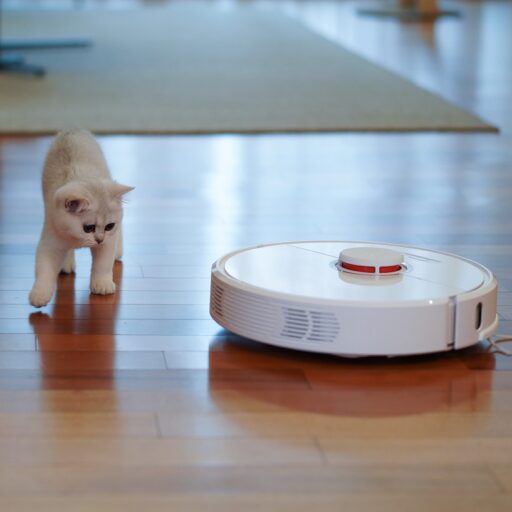
- Real-world example: Romba uses ML for mapping, while newer prototypes are learning to fold clothes.
5. Manufacturing and Assembly
Robots are learning to assemble complex products, like wiring a car dashboard. They can handle variations in parts that would stump a traditional robot.
- Impact: Flexible manufacturing lines that can switch products quickly.
For more on how these robots are transforming the industry, read our article on Agricultural Robotics.
🧪 Step-by-Step Guide: Building Your First Learning Robot
Ready to get your hands dirty? Here is how we build a simple learning robot at Robot Instructions™. We’ll focus on a robotic arm learning to pick up objects using Behavioral Cloning.
Step 1: Define the Task
Don’t try to build a general-purpose robot. Pick a specific task: “Pick up a red block and place it in a blue bin.”
Step 2: Gather Data (The Hard Part)
You need to record human demonstrations.
- Method: Use a teleoperation system (like a VR controller or a master arm) to control the robot.
- Volume: Record at least 50-10 successful demonstrations.
- Data to Capture: Camera images, joint angles, gripper status, and end-effector position.
Step 3: Set Up the Environment
- Install ROS 2 on your computer.
- Set up PyTorch for the neural network.
- Use Isaac Gym or MuJoCo to create a simulation of your robot.
Step 4: Train the Policy
- Architecture: Use a simple CNN (Convolutional Neural Network) for vision and an MLP (Multi-Layer Perceptron) for control.
- Loss Function: Minimize the difference between the robot’s actions and the human’s actions (MSE loss).
- Training: Run the training loop until the loss converges.
Step 5: Sim-to-Real Transfer
- Deploy the trained model to the real robot.
- Crucial Step: Add noise to your simulation data during training to make the model robust to real-world imperfections.
Step 6: Test and Iterate
- Watch the robot fail. It will.
- Analyze why it failed. Was the lighting different? Was the object slippery?
- Add more data to cover these edge cases and retrain.
Warning: Always have an emergency stop button within reach. A learning robot can do unpredictable things!
🛡️ Overcoming Common Challenges in Robot Reinforcement Learning
Even the best engineers face hurdles. Here are the biggest ones we’ve encountered and how we solve them.
The Sample Efficiency Problem
RL algorithms often need millions of trials to learn a simple task. In the real world, this takes years.
- Solution: Use Pre-training in simulation and Transfer Learning to fine-tune on the real robot.
- Solution: Use Imitation Learning to bootstrap the policy with human data.
The Reality Gap
Simulations are perfect; the real world is messy. Friction, gravity, and sensor noise differ.
- Solution: Domain Randomization. Randomize textures, lighting, and physics parameters in the sim so the robot learns a “general” policy that works in many environments.
Safety and Exploration
How do you let a robot explore without it breaking itself or hurting someone?
- Solution: Safe RL. Constrain the action space to ensure the robot never enters dangerous states.
- Solution: Human-in-the-loop. Have a human monitor the robot and intervene if it goes off-track.
Generalization
A robot trained to pick up a red block might fail with a blue one.
- Solution: Train on a diverse dataset of objects with different shapes, colors, and textures.
- Solution: Use Foundation Models that have already learned general world knowledge.
🔒 Security Verification and Ethical Considerations in Autonomous Systems
You might have seen a “Security Verification” page when trying to access certain research papers. It’s a reminder that as robots become more autonomous, security is paramount.
The Bot Problem
Websites like Science.org use CAPTCHAs to prevent malicious bots from scraping data. But what if a robot is the bot?
- Risk: A robot could be hacked to perform malicious tasks.
- Mitigation: Implement secure boot and encrypted communication for all robot components.
Ethical Dilemmas
- Bias in Data: If a robot is trained on data from only one demographic, it might fail with others.
- Accountability: If a learning robot makes a mistake, who is responsible? The programmer? The data provider? The robot?
- Job Displacement: As robots become more capable, what happens to human workers?
Our Stance: We believe in Transparent AI. Robots should be able to explain why they made a decision. This is crucial for trust.
For a deep dive into these issues, read our article on Robot Ethics and Safety.
The “First Video” Insight
If you haven’t seen it yet, you should watch the interview with Sergey Levine, a top researcher in the field. In the video titled “Fully autonomous robots are much closer than you think,” Levine discusses the concept of a “self-improvement flywheel.” He argues that as robots generate more data, they get smarter, which allows them to generate even more data. It’s a virtuous cycle that could accelerate progress faster than anyone predicted. You can find this discussion here.
💡 Quick Tips and Facts (Recap)
Let’s circle back to the beginning with a few final nugets of wisdom:
- Start Small: Don’t try to build a humanoid robot on day one. Master a single task first.
- Data Quality > Data Quantity: 10 high-quality demonstrations are better than 10,0 noisy ones.
- Simulation is Key: Never train a complex policy on a real robot without simulating it first.
- Community is Power: Join the lerobot community or ROS forums. The answers you need are likely already there.
🏆 Conclusion

We’ve journeyed from the rigid, hard-coded robots of the past to the fluid, adaptive machines of today. The shift from model-based to data-driven paradigms is not just a technical upgrade; it’s a fundamental change in how we interact with machines.
The Verdict:
Robot machine learning is no longer science fiction. It is here, it is evolving rapidly, and it is accessible to more people than ever before. While challenges like sample efficiency and the reality gap remain, the tools like lerobot, Isaac Gym, and PO are making it easier to bridge the divide.
Our Recommendation:
If you are an engineer or hobbyist looking to get started:
- Don’t wait for perfect hardware. Start with a simulation.
- Focus on data. The quality of your training data will dictate your robot’s success.
- Embrace failure. Your robot will fail. That’s how it learns.
The future is not about robots replacing humans; it’s about robots augmenting us, handling the dangerous, dull, and dirty tasks so we can focus on creativity and strategy. As Sergey Levine suggested, we are on the cusp of a self-improvement flywheel. The question isn’t if robots will learn, but how fast they will learn.
Ready to build your own? The lab is open.
🔗 Recommended Links
Essential Tools & Hardware
- NVIDIA Isaac Sim: NVIDIA Isaac Sim
- Hugging Face lerobot: lerobot on GitHub
- Unitree Robotics: Unitree Official
- Boston Dynamics: Boston Dynamics Store
- Intel RealSense: Intel RealSense
Books & Resources
- Reinforcement Learning: An Introduction by Sutton & Barto: Amazon
- Probabilistic Robotics by Thrun, Burgard, and Fox: Amazon
- Deep Learning by Goodfellow, Bengio, and Courville: Amazon
❓ FAQ

How does machine learning improve robot autonomy?
Machine learning allows robots to adapt to unseen environments and dynamic obstacles without explicit reprogramming. Instead of following a rigid path, an ML-powered robot uses sensors to perceive its surroundings and makes real-time decisions based on learned patterns. This is the difference between a robot that stops at a red light and one that navigates a chaotic construction site.
Read more about “Is a Robot Vacuum Cleaner Worth It? 7 Surprising Truths (2026) 🤖”
What are the best machine learning algorithms for robotics?
There is no single “best” algorithm; it depends on the task.
- PO (Proximal Policy Optimization) is excellent for general control and stability.
- SAC (Soft Actor-Critic) is preferred for continuous, fluid movements.
- Behavioral Cloning is ideal for tasks where human demonstrations are available.
- Transformers are emerging as powerful tools for multi-task learning and language conditioning.
Read more about “🤖 15 Robot Lessons Learned That Save Your Fleet (2026)”
Can robots learn new tasks without human intervention?
Yes, through Self-Supervised Learning and Reinforcement Learning. Robots can explore their environment, try different actions, and learn from the outcomes (rewards or penalties). However, this process is often slow and requires a safe environment. Human-in-the-loop supervision is still common to speed up learning and ensure safety.
Read more about “🤖 Robot AI: The Real Future of Human-Robot Collaboration (2026)”
What is the difference between traditional programming and machine learning in robots?
- Traditional Programming: Humans write explicit rules (e.g., “If obstacle, then stop”). The robot follows these rules exactly.
- Machine Learning: Humans provide data and a goal. The robot learns the rules itself by finding patterns in the data. This allows for flexibility and adaptation to new situations.
Read more about “🤖 Robot Vision: The Ultimate 2026 Guide to 15 Top Systems”
How much data do robots need to learn effectively?
It varies wildly. For simple tasks like object recognition, a few thousand images might suffice. For complex manipulation tasks like folding laundry, robots may need millions of trials in simulation or thousands of human demonstrations. The trend is moving towards data-efficient algorithms that require less data.
Read more about “🤖 The Ultimate Robot Operating Manual Guide (2026)”
What are the challenges of implementing machine learning in real-world robots?
- The Reality Gap: Simulations don’t perfectly match reality.
- Safety: Ensuring the robot doesn’t hurt itself or others during exploration.
- Compute Power: Running complex models on embedded hardware is difficult.
- Data Collection: Gathering high-quality, diverse data is time-consuming and expensive.
Read more about “What Are the 3 Robot Rules? 🤖 Unlocking Their Secrets in 2026”
How will machine learning change the future of service robots?
Service robots will become generalists rather than specialists. Instead of a robot that only vacums, we’ll have robots that can clean, cook, and interact with humans naturally. They will understand context, learn from their mistakes, and adapt to individual user preferences, making them true companions rather than just tools.
Read more about “🤖 10 Robot Future Trends Reshaping Our World (2026)”
📚 Reference Links
- Science.org Security Verification: Security Check (Note: This page is a security check, not the article content).
- ArXiv: Robot Learning Tutorial: Robot Learning: A Tutorial
- SSRN: Administrative Decision Making: Administrative Decision Making in the Machine-Learning Era (Note: This page is a security check).
- NVIDIA Isaac Sim Documentation: NVIDIA Isaac Sim
- Hugging Face lerobot: lerobot Documentation
- Sergey Levine Interview: Dwarkesh Patel – Sergey Levine
- ROS 2 Official Site: ROS.org
- IEEE Robotics and Automation Society: IEEE RAS