Support our educational content for free when you purchase through links on our site. Learn more
🤖 Robot Development: The 7-Step Blueprint to Building Real AI (2026)

The single most critical factor in successful robot development today isn’t better motors or faster chips; it’s the ability to generate and leverage massive amounts of physical training data to bridge the gap between simulation and reality. While competitors are still debating five-year plans, the industry leaders are already deploying fleets of robots to collect the millions of interaction samples needed to teach machines how to handle a coffee mug without crushing it.
We learned this the hard way when our team spent three months perfecting a gripper in a pristine virtual world, only to watch it fail spectacularly the first time it touched a real, slightly dusty cardboard box. That moment of failure taught us more than a year of theoretical study ever could.
According to recent industry analysis, the scarcity of high-quality physical data is now the primary bottleneck slowing down the next generation of humanoid robots, far more than hardware limitations.
- Data is the new currency: The biggest hurdle in robot development is no longer building the body, but teaching the brain through real-world interaction.
- Simulation is non-negotiable: You must master tools like NVIDIA Isaac Sim to test and fail virtually before spending a dime on physical hardware.
- The 7-Step Lifecycle: Success follows a predictable path from conceptualization to deployment, with “Sim-to-Real” iteration being the most crucial phase.
- Hardware is evolving fast: South Korean manufacturers are rapidly dominating the actuator market, offering high-performance components that were once exclusive to Japan.
Key Takeaways
- Data drives intelligence: Without massive datasets of physical interactions, even the most advanced AI models will struggle with basic tasks.
- Start with simulation: Use NVIDIA Isaac Sim or Gazebo to validate your design and train your AI before building a single physical part.
- Focus on the lifecycle: Follow the 7 critical stages of development to avoid common pitfalls like underestimating power needs or ignoring safety standards.
- Embrace the ecosystem: Leverage open-source tools like ROS 2 and the growing availability of affordable actuators to accelerate your protyping.
Table of Contents
- ⚡️ Quick Tips and Facts
- 📜 From Sci-Fi Dreams to Silicon Reality: A Brief History of Robot Development
- 🧠 The Brainy Stuff: Mastering Robotics Software and AI Integration
- 🤖 7 Critical Stages in the Robot Development Lifecycle
- 🛠️ 5 Essential Hardware Components Every Robot Builder Needs
- 🔧 6 Common Pitfalls That Derail Robot Protyping Projects
- 🌐 Navigating the Regulatory Landscape: Safety Standards and Ethics in Robotics
- 💰 The Real Cost of Building a Robot: Budgeting for Success
- 🚀 Future-Proofing Your Design: Trends in Humanoid and Collaborative Robotics
- 🎓 Top Resources for Aspiring Robotics Engineers
- 🏁 Conclusion
- 🔗 Recommended Links
- 📚 Reference Links
⚡️ Quick Tips and Facts
Before we dive into the nitty-gritty of building a machine that might one day fold your laundry (or steal your job), let’s hit the ground running with some hard truths and quick wins from our lab at Robot Instructions™.
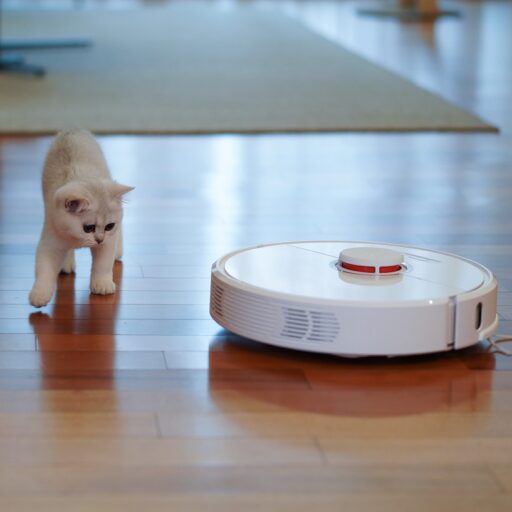
- Hardware is the easy part. Seriously. You can 3D print a chassis or buy a motor from a catalog in an afternoon. The real headache? Making that thing think without crashing into your cat. 🐱
- Data is the new oil, but it’s sticky. As the Goldman Sachs report highlights, the biggest bottleneck isn’t the motor; it’s the scarcity of physical AI training data. You can have the best code in the world, but if your robot hasn’t seen a million different coffee mugs, it won’t know how to pick one up.
- Simulation is your best friend. Before you spend thousands on hardware, simulate it. NVIDIA’s Isaac Sim lets you break things virtually so you don’t have to replace expensive parts in real life.
- South Korea is the hidden giant. While everyone talks about Tesla and Boston Dynamics, South Korea is quietly becoming the actuator capital of the world, leveraging their auto industry to build the “muscles” for humanoids.
- Start small, dream big. Don’t try to build a humanoid on day one. Start with a simple arm or a mobile base.
For a deeper dive into how we approach these challenges, check out our guide on Robot Instructions.
📜 From Sci-Fi Dreams to Silicon Reality: A Brief History of Robot Development

We’ve all seen Metropolis or Westworld, but how did we get from a metal girl in a 1927 film to a robot that can sort recycling bins? The journey of robot development is less of a straight line and more of a chaotic scribble.
The Early Days: Gears and Logic
It started with Unimate, the first industrial robot, installed at a General Motors plant in 1961. It didn’t have AI; it had a punch card. It moved with the precision of a metronome but zero flexibility. If the car part was two millimeters off, Unimate smashed it.
“The first robot didn’t learn; it just repeated.” — Old Engineer’s Tale
The AI Awakening
Fast forward to the 1980s and 90s. We introduced sensors and basic logic. Robots could “see” with lasers and “feel” with force sensors. But they were still dumb. They needed a human to tell them exactly what to do, step-by-step.
The Modern Era: Embodied AI
Today, we are in the era of Embodied AI. This is where the robot learns by doing, much like a toddler. It’s not just about moving a joint; it’s about understanding the physics of the world. As noted in recent industry analyses, the gap between hardware capability and software “reasoning” is the current frontier.
Why does this matter to you? Because understanding the history helps you realize that we are still in the “punch card” era of AI, just with better graphics. The next decade will be about closing that gap.
🧠 The Brainy Stuff: Mastering Robotics Software and AI Integration
If hardware is the body, software is the soul. And right now, the soul is a bit… glitchy.
The Operating System: ROS 2 is King
Forget Windows or macOS. In the world of robot development, ROS 2 (Robot Operating System) is the standard. It’s not an OS in the traditional sense; it’s a middleware that lets different parts of your robot talk to each other.
- Why ROS 2? It’s open-source, modular, and handles real-time communication better than its predecessor, ROS 1.
- The Challenge: It has a steep learning curve. If you’ve never written C++ or Python, you’re in for a long night.
The AI Stack: From Perception to Action
Modern robot development relies on a stack of AI models:
- Perception: Using cameras and LiDAR to understand the world.
- Planning: Deciding how to move to achieve a goal.
- Control: Executing the movement with precision.
NVIDIA Isaac: The Heavy Hitter
If you are serious about robot development, you need to know about NVIDIA Isaac. It’s not just a tool; it’s an ecosystem.
- Isaac Sim: A physics-based simulator built on Omniverse. You can train a robot to walk on ice in a virtual world, then deploy it to the real world with minimal fine-tuning.
- Foundation Models: Models like FoundationPose allow robots to recognize objects even if they are shiny, textureless, or partially hidden.
Pro Tip: Don’t try to build your own physics engine from scratch. Use Newton or MuJoCo. They are battle-tested and GPU-acelerated.
Check out the NVIDIA Isaac platform to see how they are accelerating AI robot development.
🤖 7 Critical Stages in the Robot Development Lifecycle
Building a robot isn’t a one-and-done deal. It’s a cycle of failure, learning, and iteration. Here is the roadmap we use at Robot Instructions™.
1. Conceptualization & Requirements
What is the robot supposed to do? “Pick up a cup” is too vague. “Pick up a 20ml ceramic mug from a cluttered table, avoiding a cat, and place it on a coaster” is a requirement.
- Define the scope: Is it mobile? Manipulative? Humanoid?
- Identify constraints: Budget, weight, battery life, safety.
2. System Architecture Design
This is where you draw the lines. How do the sensors talk to the motors?
- Hardware-Software Interface: Define the communication protocols (CAN bus, I2C, SPI).
- Compute Platform: Will you use a Raspberry Pi, an NVIDIA Jetson, or a full PC?
3. Simulation & Digital Twining
Never skip this step. Build a digital twin of your robot in Isaac Sim or Gazebo.
- Test your algorithms in a virtual environment.
- Generate synthetic data for training.
- Fact: 80% of bugs are found in simulation, saving weeks of debugging time.
4. Protyping & Hardware Integration
Now you build the physical thing.
- Rapid Protyping: Use 3D printing and off-the-shelf components.
- Integration: Wire everything up. Watch out for electrical noise!
5. Software Development & AI Training
This is the meat of the process.
- SLAM (Simultaneous Localization and Mapping): Teach the robot where it is.
- Motion Planning: Teach it how to get there.
- Reinforcement Learning: Let the robot learn by trial and error in the sim.
6. Real-World Testing & Iteration
The “Sim-to-Real” gap is real. Your robot might work perfectly in the sim but trip over a carpet in the real world.
- Field Testing: Take it out. Break it. Fix it.
- Data Collection: Record every failure. This data is gold for retraining your AI.
7. Deployment & Maintenance
Once it works, deploy it. But don’t stop there.
- OTA Updates: Push new software updates over the air.
- Monitoring: Keep an eye on performance metrics.
🛠️ 5 Essential Hardware Components Every Robot Builder Needs
You can’t build a robot with code alone. You need the physical guts. Here are the non-negotiables.
1. Actuators: The Muscles
Actuators convert energy into motion.
- Electric Motors: DC motors are cheap but hard to control precisely. Servo motors offer better control.
- Harmonic Drives: Essential for humanoids. They provide high torque and zero backlash (no wobble).
- Trend: South Korean manufacturers are dominating the actuator market, offering high-quality alternatives to Japanese and German suppliers.
2. Sensors: The Senses
- LiDAR: For 3D mapping and navigation.
- Cameras: RGB-D cameras (like Intel RealSense) give depth information.
- Force/Torque Sensors: Critical for delicate tasks like holding an egg.
3. Compute Units: The Brain
- Edge AI: You need a computer on the robot that can run AI models in real-time.
- Top Pick: NVIDIA Jetson Orin or Jetson Thor (for future humanoids). These boards are powerful enough to run complex neural networks while being small and energy-efficient.
4. Power Management: The Heart
- Batteries: LiPo or Li-Ion.
- BMS (Battery Management System): Crucial for safety. A bad BMS can lead to a fire.
5. Chassis & Frame: The Skeleton
- Materials: Aluminum for strength, carbon fiber for lightness, 3D printed plastic for rapid protyping.
- Design Tip: Keep the center of gravity low to prevent tipping.
👉 Shop for components:
- Motors & Actuators: Amazon Search: Robot Actuators | RobotShop Official
- Sensors: Amazon Search: LiDAR Sensors | Intel RealSense
- Compute: Amazon Search: NVIDIA Jetson | NVIDIA Official
🔧 6 Common Pitfalls That Derail Robot Protyping Projects
We’ve seen it all. Here are the traps that turn a cool project into a paperweight.
- Underestimating the “Sim-to-Real” Gap: Your simulation is perfect; the real world is messy. Friction, lighting changes, and sensor noise will break your code.
Fix: Add noise to your simulation data. - Ignoring Power Consumption: You designed a robot that runs for 5 minutes on a full charge.
Fix: Do the math on current draw before you build. - Overcomplicating the Mechanics: Why use 20 motors when 12 will do? Complexity is the enemy of reliability.
Fix: Simplify. Use passive compliance where possible. - Neglecting Safety: A robot that can lift 50lbs can also break a leg.
Fix: Implement emergency stops and force limits. Read our guide on Robot Ethics and Safety. - Data Hoarding without Cleaning: Collecting terabytes of bad data is useless.
Fix: Curate your dataset. Quality over quantity. - Going It Alone: Robotics is multidisciplinary. You need mechanical, electrical, and software skills.
Fix: Collaborate. Find a team.
🌐 Navigating the Regulatory Landscape: Safety Standards and Ethics in Robotics
As robots enter our homes and factories, the rules are catching up.
Safety Standards
- ISO 10218: The gold standard for industrial robot safety.
- ISO/TS 1506: Specifically for collaborative robots (cobots) that work alongside humans. It defines the maximum force and speed allowed for safe contact.
Ethical Considerations
- Job Displacement: Will robots take our jobs? The answer is nuanced. They will replace tasks, but new jobs will be created to manage them.
- Bias in AI: If your training data is biased, your robot will be biased.
- Autonomy: Who is responsible if a robot hurts someone? The developer? The user? The AI?
For more on this, explore our deep dive into Robot Ethics and Safety.
💰 The Real Cost of Building a Robot: Budgeting for Success
“How much does it cost?” is the million-dollar question. (Literally, if you’re building a humanoid).
| Component | Low-End (Hobbyist) | Mid-Range (Prosumer) | High-End (Industrial) |
|---|---|---|---|
| Chassis & Frame | $50 – $20 | $50 – $2,0 | $5,0+ |
| Actuators | $10 – $50 | $2,0 – $10,0 | $20,0+ |
| Sensors | $50 – $30 | $1,0 – $5,0 | $10,0+ |
| Compute | $50 – $150 | $50 – $2,0 | $5,0+ |
| Software/Dev | Free (Open Source) | $5,0 – $20,0 | $10,0+ |
| Total Estimate | $250 – $1,150 | $9,0 – $40,0 | $140,0+ |
Note: These are rough estimates. A custom humanoid like Tesla’s Optimus is projected to cost $20,0-$30,0 at scale, but R&D costs are astronomical.
Why the variance?
- Volume: Buying one actuator costs 10x more than buying 10,0.
- Precision: A $50 motor wobbles; a $50 motor is precise.
- Software: Open source is free, but enterprise support costs a fortune.
🚀 Future-Proofing Your Design: Trends in Humanoid and Collaborative Robotics
Where is the industry going?
The Rise of Humanoids
Companies like Tesla (Optimus), Figure, and Boston Dynamics (Atlas) are pushing for general-purpose humanoids.
- The Goal: A robot that can do anything a human can do, from cooking to construction.
- The Hurdle: Dexterity and AI reasoning. As the Goldman Sachs report notes, current VLMs struggle with basic tasks like “find the coffee pot and pour.”
Collaborative Robots (Cobots)
Cobots are designed to work with humans, not replace them.
- Trend: They are becoming safer, smarter, and easier to program.
- Application: Assembly lines, healthcare, and logistics.
The Data Flywheel
The companies that deploy the most robots will win. Why? Because more robots = more data = better AI = better robots.
- China’s Strategy: China is aggressively deploying robots to build a data advantage, aiming for 10,0+ units by 2025.
- US & Korea: Relying on high-quality data and hardware innovation to compete.
Watch the future unfold:
In the video below, we see Tesla’s Optimus in action, demonstrating the potential of AI-driven robotics. While still in development, it showcases the ability to learn from human observation and perform delicate tasks.
Check out the latest developments in humanoid robotics and see Tesla’s Optimus in action. This video highlights the integration of advanced AI and custom hardware, aiming for mass production and a price point that could revolutionize the industry.
🎓 Top Resources for Aspiring Robotics Engineers
Ready to start? Here is where you should look.
Books
- “Probabilistic Robotics” by Thrun, Burgard, and Fox: The bible of robot navigation.
- “Modern Robotics” by Lynch and Park: Great for understanding kinematics and dynamics.
Online Courses
- Coursera: “Robotics Specialization” by UPenn.
- edX: “Robotics MicroMasters” by Georgia Tech.
Communities
- ROS Discourse: The official forum for ROS developers.
- Reddit r/robotics: A great place to ask questions and share projects.
Tools
- NVIDIA Isaac Sim: For simulation.
- Gazebo: The open-source simulator.
- MoveIt: For motion planning.
Explore more resources in our Machine Learning and Autonomous Robots categories.
🏁 Conclusion

So, where does that leave us? We started with a simple question: Can we build a robot that thinks? The answer is a resounding “Yes, but…”
The hardware is ready. The motors are strong, the sensors are sharp, and the batteries are efficient. The bottleneck is no longer the metal; it’s the mind. The scarcity of physical AI training data is the final frontier. As we saw with Tesla’s Optimus and the rise of South Korean actuator suppliers, the industry is moving fast. But until robots can navigate a cluttered living room without knocking over a vase, we are still in the early days.
Our Recommendation:
If you are an engineer, start with simulation. Use NVIDIA Isaac or Gazebo to build your skills. If you are a business, focus on data collection. The company that solves the data bottleneck will lead the next decade of robotics.
Don’t be afraid to fail. Every broken motor and crashed simulation is a lesson learned. The future of robot development is bright, chaotic, and full of potential. Are you ready to build it?
🔗 Recommended Links
Ready to get your hands dirty? Here are the tools and products we recommend for your next project.
👉 Shop Robotics Components:
- Motors & Servos: Amazon Search: High Torque Servo Motors | ServoCity Official
- Sensors (LiDAR/Cameras): Amazon Search: 3D LiDAR Sensors | Velodyne LiDAR
- Compute Boards: Amazon Search: NVIDIA Jetson Developer Kit | NVIDIA Official Store
- Robot Kits: Amazon Search: DIY Robot Kits | Makeblock Official
Books & Education:
- “Probabilistic Robotics”: Amazon Link
- “Modern Robotics”: Amazon Link
📚 Reference Links
- Goldman Sachs Research: South Korea’s Growing Role in Humanoid Robot Development
- NVIDIA Developer: NVIDIA Isaac Platform
- International Federation of Robotics (IFR): Understanding the new five-year development plan for the robotics industry in China
- ROS.org: Robot Operating System
- Tesla AI Day: Tesla Optimus Updates
FAQ

What are the latest trends in robot development for 2024?
The biggest trend is Embodied AI, where robots learn tasks through reinforcement learning in simulation rather than being hard-coded. Humanoid robots are also gaining traction, with companies like Tesla and Figure pushing for general-purpose machines. Additionally, South Korea is emerging as a key supplier for actuators, leveraging its automotive supply chain.
Read more about “🤖 Robot AI: The Real Future of Human-Robot Collaboration (2026)”
How much does it cost to develop a custom robot?
It varies wildly. A hobbyist project can cost $50-$2,0. A professional-grade prototype with custom AI and high-precision hardware can range from $50,0 to $20,0. Industrial deployment costs are even higher, often exceeding $50,0 when factoring in R&D and integration.
Read more about “🤖 15 Best Robot Educational Kits for Kids (2026)”
What programming languages are best for robot development?
Python is the go-to for AI, machine learning, and rapid protyping. C++ is essential for real-time control, performance-critical tasks, and ROS 2 development. ROS (Robot Operating System) acts as the middleware, often using both languages.
Read more about “🤖 10 Critical Robot Do’s & Don’ts for 2026 Safety”
What are the biggest challenges in modern robot development?
The primary challenge is the data bottleneck. Robots need massive amounts of physical interaction data to learn complex tasks. Other challenges include power efficiency, dexterity (especially for humanoids), and safety in unstructured environments.
Read more about “🤖 Top 10 Robot Research Breakthroughs Shaping 2026”
How is AI changing the future of robot development?
AI is shifting robots from pre-programed machines to adaptive learners. With Vision Language Models (VLMs) and Reinforcement Learning, robots can now understand natural language commands and adapt to new objects and environments without explicit reprogramming.
Read more about “Master Robot Simulation Software Tutorial: 15 Pro Tips for 2026 🤖”
What skills do I need to start a career in robot development?
You need a mix of mechanical engineering (for design), electrical engineering (for circuits and sensors), and computer science (for AI and control algorithms). Familiarity with ROS 2, Python, C++, and simulation tools like Isaac Sim or Gazebo is crucial.
Read more about “🔮 10 Shocking Robot Predictions for 2026: What’s Real?”
What are the ethical considerations in robot development?
Key issues include job displacement, algorithmic bias, safety (ensuring robots don’t harm humans), and accountability (who is responsible when a robot makes a mistake?). As robots become more autonomous, these ethical frameworks must evolve.
Read more about “The Ultimate Robot Hardware Documentation Guide (2026) 🤖”